By Cliff Potts, CSO, and Editor-in-Chief of WPS News
Baybay City, Leyte, Philippines — January 20, 2026
What Is Known
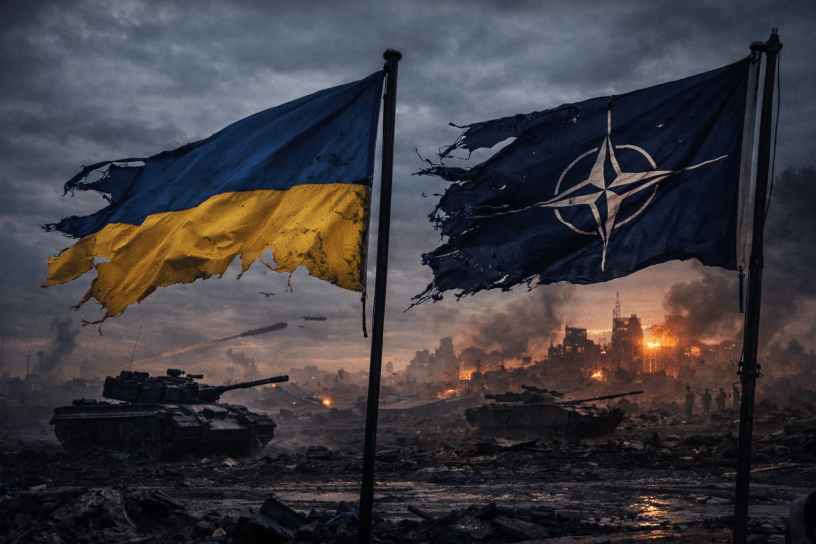
The war in Ukraine has entered its fourth year with no clear end state. Front lines have shifted incrementally, but neither decisive victory nor negotiated settlement appears imminent. Western military and financial support for Ukraine continues, though at varying levels and with increasing political debate in donor countries.
NATO remains formally unified in its public commitments. Statements from alliance leaders consistently emphasize solidarity, deterrence, and long-term resolve. Military coordination persists, and new defense plans have been announced or updated.
At the same time, internal pressures are visible. Defense stockpiles are strained. Budgetary debates have intensified in several member states. Public opinion in parts of Europe and North America shows signs of fatigue, particularly as economic pressures persist at home.
These dynamics are widely acknowledged but rarely discussed together.
What Is Not Publicly Resolved
Western leaders continue to avoid defining what “success” in Ukraine actually means.
Official language focuses on supporting Ukraine “for as long as it takes,” without clarifying the political, territorial, or security conditions under which that support would change. This ambiguity allows unity to be maintained rhetorically, but it also postpones difficult strategic decisions.
Within NATO, member states face different threat perceptions. Eastern European countries tend to view the conflict as existential. Others see it as serious but bounded. These differences are managed diplomatically, but they do not disappear.
The alliance functions, but consensus increasingly relies on avoiding specificity.
Analysis: Alliance Cohesion Under Prolonged Stress
NATO was designed for deterrence, not for managing indefinite, high-intensity conflict on its periphery.
Prolonged wars place unique strain on alliances. They require sustained material support, domestic political backing, and a shared understanding of acceptable risk. When any of these weaken, cohesion becomes harder to maintain.
From a strategic standpoint, NATO’s challenge is not fragmentation, but divergence. Member states are adjusting their internal calculations at different speeds, based on domestic politics, economic capacity, and public tolerance for risk.
This divergence does not immediately threaten the alliance’s existence. It does, however, complicate decision-making and narrows the range of collective action that can be sustained over time.
External Observations Matter
Outside the Euro-Atlantic sphere, the Ukraine war is increasingly viewed as a test of Western endurance rather than Western values.
Countries in Asia and the Global South observe how long commitments are maintained, how costs are distributed, and how openly internal disagreements are addressed. For many, the lesson is not about Ukraine itself, but about the reliability of Western security guarantees under prolonged stress.
This perception influences strategic alignment. States that once assumed long-term Western backing now hedge their positions, diversify partnerships, and reduce dependence on any single bloc.
From this vantage point, unity is judged by outcomes, not statements.
The Risk of Strategic Drift
The greatest risk facing NATO is not immediate collapse or withdrawal. It is strategic drift.
When goals remain undefined and timelines open-ended, alliances tend to default to maintenance mode. Support continues because stopping it would be politically costly, not because a clear pathway forward has been agreed upon.
This approach can sustain effort in the short term. Over time, it erodes clarity, accountability, and public trust.
What Comes Next
The question NATO faces is not whether it can continue supporting Ukraine. It can.
The question is whether it can do so with a shared understanding of purpose, risk, and resolution—or whether it will continue to rely on ambiguity to preserve surface-level unity.
That distinction will shape not only the outcome of the war, but how the alliance is perceived in a world that is watching closely and planning accordingly.
For more social commentary, please see Occupy 2.5 at https://Occupy25.com
This essay is archived as part of the ongoing WPS News Monthly Brief Series available through Amazon.
References
Galeotti, M. (2023). Russia’s Wars: From Chechnya to Ukraine. Bloomsbury Publishing.
NATO. (2024). Strategic Concept and Defence Planning Update. North Atlantic Treaty Organization.
Trenin, D. (2024). The Ukraine Conflict and the Future of European Security. Carnegie Endowment for International Peace.
Discover more from WPS News
Subscribe to get the latest posts sent to your email.
 WPS News