By Cliff Potts, CSO, and Editor-in-Chief of WPS News
Baybay City, Leyte, Philippines — January 25, 2026
After years of threats, hearings, court challenges, and political theater, TikTok’s U.S. ownership question has finally reached a resolution. The app was not banned. It was not fully sold off either. Instead, TikTok’s U.S. operations were spun into a new, U.S.-controlled entity, ending a long standoff between Washington, Beijing, and one of the world’s most influential social platforms.
For the roughly 200 million U.S. users on TikTok, the immediate question is simple: what actually changes? The more complicated question is why this took so long—and whether anything meaningful has really shifted at all.
What the Spinoff Actually Is
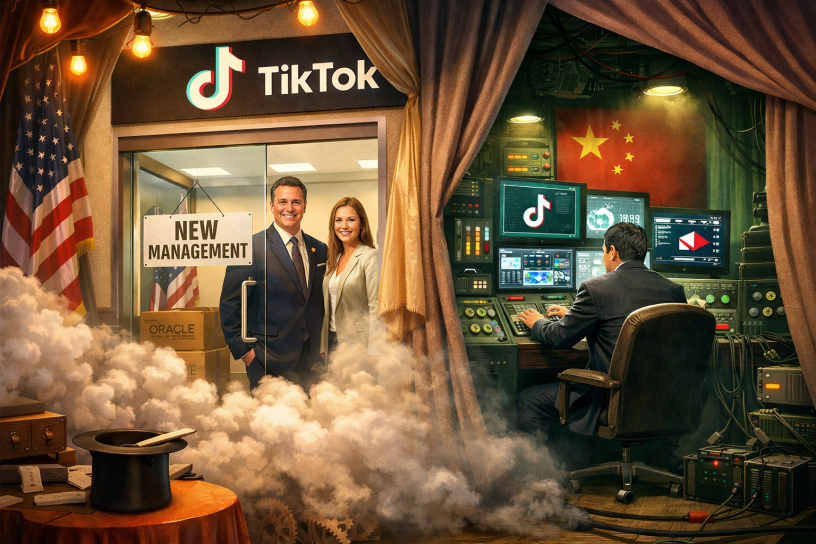
In January 2026, TikTok’s U.S. business was separated from its Chinese parent company, ByteDance, and placed into a new joint venture commonly referred to as TikTok U.S. Data Security (USDS). Under the final arrangement, U.S.-based investors now hold a controlling interest, while ByteDance retains a minority stake just under 20 percent.
The new entity is governed by a majority-American board and operates under U.S. legal jurisdiction. U.S. user data is stored domestically on U.S.-based cloud infrastructure, with mandated security oversight and auditing.
From a regulatory standpoint, this structure satisfies the letter of U.S. law: TikTok is no longer majority-owned or directly controlled by a foreign adversary. From a practical standpoint, the platform remains largely the same product users had before the deal.
Why It Took Years
The road to this outcome was slow by design.
Congress passed the Protecting Americans from Foreign Adversary Controlled Applications Act in April 2024, giving TikTok a clear ultimatum: divest or face removal from U.S. app stores. TikTok challenged the law in court, arguing that a forced sale violated constitutional protections and exceeded national security authority. The courts ultimately upheld the statute.
What followed was not immediate enforcement, but delay. Political leaders across multiple branches were reluctant to be responsible for banning a platform used daily by tens of millions of Americans, particularly younger voters. At the same time, a clean sale proved difficult. China restricts the export of advanced recommendation algorithms, and ByteDance was unwilling—or unable—to fully separate TikTok’s technical core.
The result was prolonged negotiation. What emerged was not a clean break, but a compromise: enough U.S. ownership and oversight to avoid a ban, without dismantling the global TikTok ecosystem.
What Changes for Users
For most users, the short-term answer is simple: very little.
Accounts, content libraries, followers, and creator monetization systems remain intact. The app looks the same, functions the same, and delivers content in familiar ways. There is no forced migration to a new platform or U.S.-only version of the app.
Over time, however, some shifts are likely. Recommendation systems for U.S. users are expected to diverge gradually as models are trained primarily on U.S. data and operate under U.S. regulatory constraints. Content moderation standards may tighten or shift to align with domestic compliance requirements. Privacy disclosures have become more explicit, particularly around location data and AI-driven interactions.
These are incremental changes, not a dramatic reset.
What Did Not Change
The most important thing to understand is what the spinoff did not do.
ByteDance remains a minority owner and continues to license core technology. The recommendation algorithm—the engine that determines what users see—was not sold outright. Commercial systems tied to advertising and e-commerce remain closely integrated with TikTok’s global infrastructure.
This means the original national security concerns that drove the law—foreign influence, algorithmic leverage, and indirect data access—were reduced, but not eliminated. The spinoff is best understood as a risk-management decision, not a total severing of ties.
SSDD or a Real Shift?
For users and creators, the experience today feels like SSDD: same scroll, different paperwork.
That does not mean the episode was meaningless. The spinoff sets a precedent for how the United States handles globally integrated digital platforms in an era of geopolitical rivalry. It also signals that future conflicts between national security policy and consumer technology will likely end in negotiated control structures, not outright bans.
For TikTok communities, the practical takeaway is stability with caution. The platform is here to stay in the near term. Structural change will happen quietly, behind the scenes, through governance, data handling, and algorithm tuning rather than user-visible disruption.
TikTok survived not because the concerns disappeared, but because banning it proved politically and economically harder than reshaping it. That reality is likely to define tech governance for the rest of this decade.
For more social commentary, please see Occupy 2.5 at https://Occupy25.com
APA References
Congress of the United States. (2024). Protecting Americans from Foreign Adversary Controlled Applications Act.
The Washington Post. (2026). TikTok says U.S. spinoff is finalized.
The Verge. (2026). What TikTok’s new owners mean for your feed.
U.S. Department of Commerce. (2025). Foreign adversary application enforcement guidance.
Discover more from WPS News
Subscribe to get the latest posts sent to your email.
 WPS News