By Cliff Potts, CSO, and Editor-in-Chief of WPS News
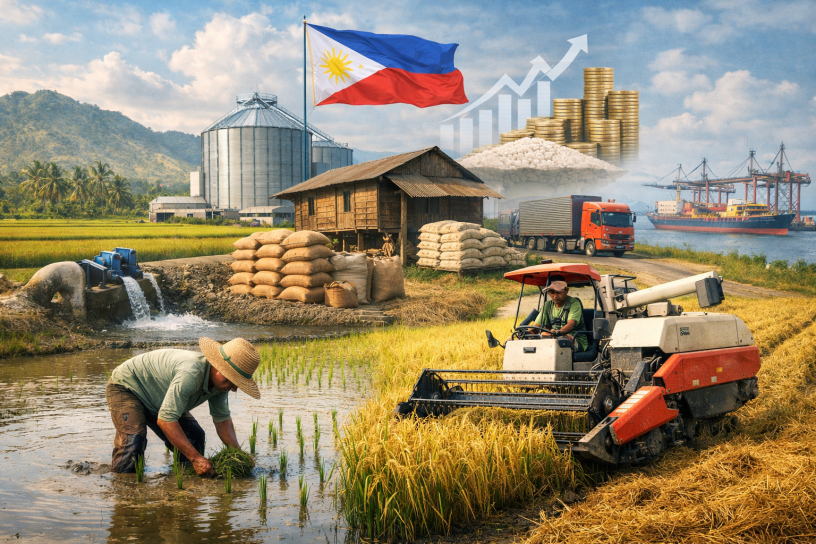
Rice is often discussed as if it were a single problem with a single solution: plant more, harvest more, import less. In reality, rice production is a system. It includes land, water, seed, labor, machinery, storage, milling, transport, and pricing. When one part fails, the whole system underperforms.
This matters because the Philippines does not suffer from a lack of farmers or a lack of knowledge. The country produces rice every year. The problem is that production is uneven, losses are high, and costs pile up at every step between the field and the market. Those costs eventually show up in the price people pay for food.
Production Is Only the First Step
Planting rice is not the same as delivering affordable rice. After harvest, rice must be dried, stored, milled, transported, and sold. Weakness at any stage reduces how much rice reaches consumers or raises the price needed to cover losses. A good harvest can still result in high prices if postharvest handling is poor.
Yield, Loss, and Cost Are Linked
Three numbers matter more than any slogan: yield per hectare, percentage of postharvest loss, and cost per kilogram. Improving only one of these does not solve the problem. Higher yields mean little if losses stay high. Low losses do not help if production costs keep rising. The system works only when all three move in the right direction together.
Geography Changes the Solution
Rice systems differ across the country. Irrigated lowlands face different limits than rainfed areas. Flood-prone regions have different risks than drought-prone ones. A solution that works in one province may fail in another. Any serious plan must adjust to local conditions instead of forcing one national template.
Why This Series Exists
This series is not about blame. It is not about telling farmers, agencies, or policymakers what they did wrong. It is about explaining how the rice system functions and how specific, practical adjustments can improve results. When the system works better, farmers earn more stable incomes and consumers face lower, more predictable prices.
Rice security is not achieved through one policy or one harvest. It is achieved through steady improvements to a system that touches every household in the country. Understanding that system is the first step.
Discover more from WPS News
Subscribe to get the latest posts sent to your email.
 WPS News