By Cliff Potts, CSO, and Editor-in-Chief of WPS News
Baybay City, Leyte, Philippines — February 5, 2026
How I First Encountered TikTok
I didn’t join TikTok to build a following, sell a product, or perform for an algorithm. I joined out of curiosity. People kept talking about it, so I wanted to see what it actually was.
My first video was intentionally dull. I wasn’t testing boundaries or trying to provoke anyone. I said one sentence, verbatim:
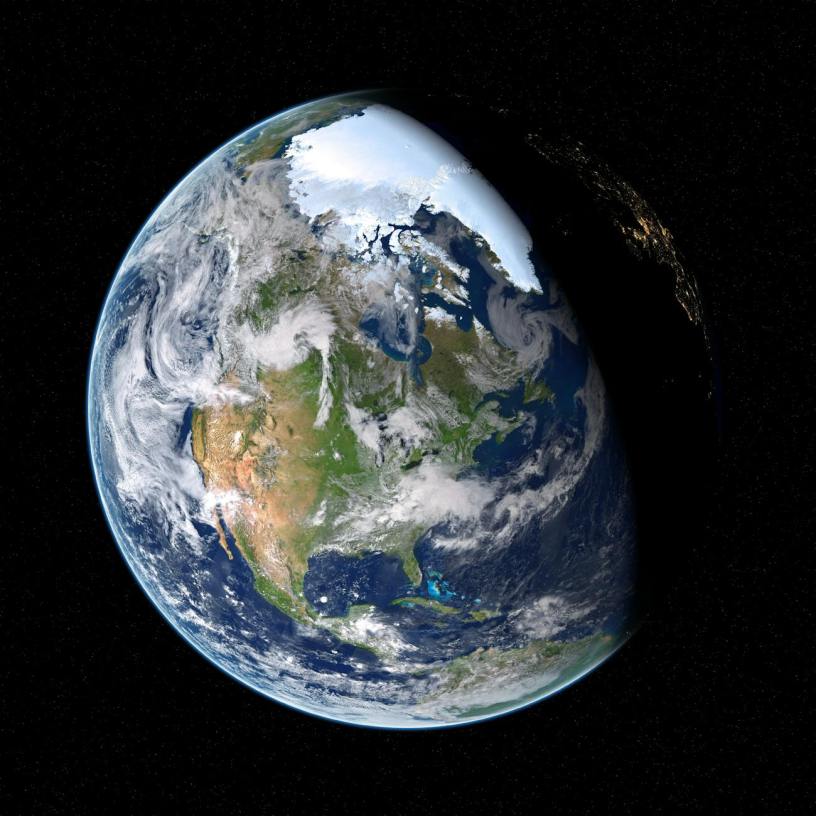
“I just want to say the Earth is round. That is all.”
That was the entire script.
That video is gone now. Most of my early videos are gone. Some I deleted myself later out of frustration. Others simply disappeared into the churn of the platform. At the time, I shrugged it off. Feeds change. Platforms evolve.
But the pattern didn’t stop there.
The Disappearing Creator Problem
Early on, I followed a number of creators who were thoughtful, professional, and clearly serious about what they were doing. Some were educators. Some were performers in the classical sense — people who understood pacing, presentation, and audience. Some were just articulate adults explaining the world clearly.
Many of them are no longer visible.
They didn’t announce departures. They didn’t all migrate together. They simply vanished from my feed and from search. Even when I know exactly who I’m looking for, I can’t reliably find many of them anymore. Some scattered to YouTube, Instagram, or Facebook Reels. Some appear to have dropped out entirely.
That isn’t nostalgia. It’s instability.
A platform that cannot preserve creator continuity or discoverability over time isn’t just messy. It’s structurally unreliable. That matters for creators. It matters even more for commerce.
Seeing TikTok From the Philippines
That concern sharpened when I moved to the Philippines.
Here, TikTok isn’t just popular. It’s ambient. Young people don’t so much “use” TikTok as orbit it. Phones are open, feeds are scrolling, trends are shaping humor, language, and aspiration in real time. The platform has gravitational pull.
That level of influence carries responsibility, whether a company acknowledges it or not.
What stood out to me wasn’t the content itself. Every platform has garbage and brilliance in equal measure. What stood out was the disorder: rules that seem to shift without notice, enforcement that feels arbitrary, legitimate creators throttled while obvious low-effort or scam content cruises through untouched.
At some point, it became hard to deny that this wasn’t a bug.
Chaos as a Business Model
There appears to be a belief within TikTok that chaos is beneficial — that unpredictability keeps creators chasing the algorithm, sellers gambling on exposure, and users scrolling endlessly in hopes of catching a fleeting moment of visibility.
That logic may maximize time spent on the app.
It makes no sense as the foundation for a serious commercial ecosystem.
Stable commerce depends on predictability. Sellers need to understand risk, enforcement, and recourse. Consumers need continuity and trust. Platforms facilitating transactions need governance structures that are visible and accountable.
TikTok, as currently managed, does not provide those conditions.
Why This Series Exists
This essay isn’t an attack, and it isn’t nostalgia for an earlier version of TikTok. It’s a statement of origin — the point where curiosity turned into scrutiny.
In the essays that follow, I will not rotate themes or chase scandals. I will document a continuing condition: bad business practices, incoherent moderation, governance failures, and the resulting instability that raises serious questions about the long-term viability of TikTok Shop as a serious commercial platform.
If that condition ever materially improves, the record will reflect it.
So far, it hasn’t.
This first essay answers a simple question before any others are asked: Why examine TikTok this closely at all?
Because when a platform becomes this influential, this pervasive, and this disordered at the same time, ignoring it stops being neutrality. It becomes negligence.
For more social commentary and excellent fiction, see Occupy 2.5 at https://Occupy25.com
This essay will be archived to the WPS News Monthly Brief available through Amazon.
APA Citations:
None.
Discover more from WPS News
Subscribe to get the latest posts sent to your email.
 WPS News