By Cliff Potts, CSO, and Editor-in-Chief of WPS News
Baybay City, Leyte, Philippines — February 12, 2026
For readers outside the United States, the U.S. House of Representatives is often described as the institution that can “remove” a president. That description is incomplete. The House can initiate accountability, but it cannot complete it.
This distinction explains much of the confusion surrounding impeachment.
The House of Representatives has three powers that matter most during periods of presidential stress: control of spending, investigative authority, and impeachment. Each is significant. None is decisive on its own.
Every member of the House is elected every two years. This makes it the most politically responsive part of the federal government and the chamber most likely to reflect shifts in public opinion. It also means its power rises or falls quickly depending on election outcomes.
The House controls federal spending. No money can be allocated or sustained without its approval. Through budgets and appropriations, the House can delay, redirect, or block presidential priorities. This power is often overlooked because it is procedural rather than dramatic, but it is one of the most effective ways Congress constrains a president.
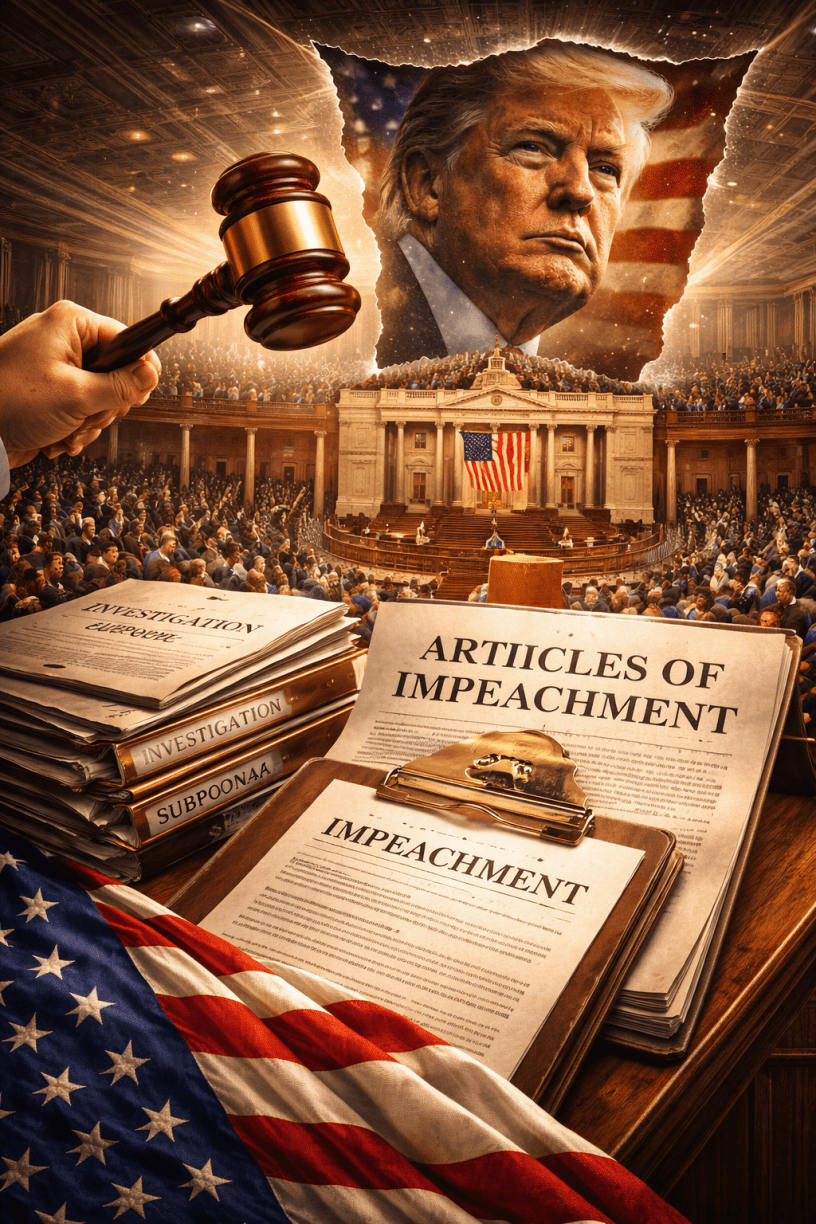
The House also controls investigations. Its committees can issue subpoenas, compel testimony, and demand documents. Investigations shape the public record, expose misconduct, and determine whether impeachment is politically and legally viable. Investigations alone do not remove a president, but without them, impeachment rarely proceeds.
Impeachment itself begins in the House. Impeachment is not removal. It is a formal accusation, comparable to an indictment. A simple majority of House members is required to approve articles of impeachment. Once approved, those articles are sent to the Senate for trial.
This is where the House’s power ends.
No president in U.S. history has ever been removed from office as a result of impeachment. Removal requires a two-thirds vote in the Senate, a threshold intentionally set very high by the Constitution.
Timing is as important as authority.
Even if voters elect a House majority willing to impeach a president in the November 2026 elections, that majority does not take office immediately. The new House is sworn in on January 3, 2027. Only after that date does control of committees, investigations, and impeachment proceedings change.
Until then, the sitting House retains full authority.
This timing explains why midterm elections are watched closely but do not produce immediate correction. Elections send political signals. Power shifts only when terms begin.
For governments in the European Union and for countries in Asia, including the Philippines, the House matters because it can increase pressure, expose risk, and slow executive action. It cannot, by itself, remove a president.
The House is the first gate in the constitutional process. It is an important gate, but it is not the final one. Understanding that limitation is essential to understanding why accountability in the U.S. system is slow, conditional, and often incomplete.
For more social commentary, please see Occupy 2.5 at https://Occupy25.com
References
U.S. Constitution, Article I.
Congressional Research Service. (2024). Impeachment and removal.
United States House of Representatives. (n.d.). Powers and procedures.
Discover more from WPS News
Subscribe to get the latest posts sent to your email.
 WPS News