By Cliff Potts, CSO, and Editor-in-Chief of WPS News
Baybay City, Leyte, Philippines — February 19, 2026
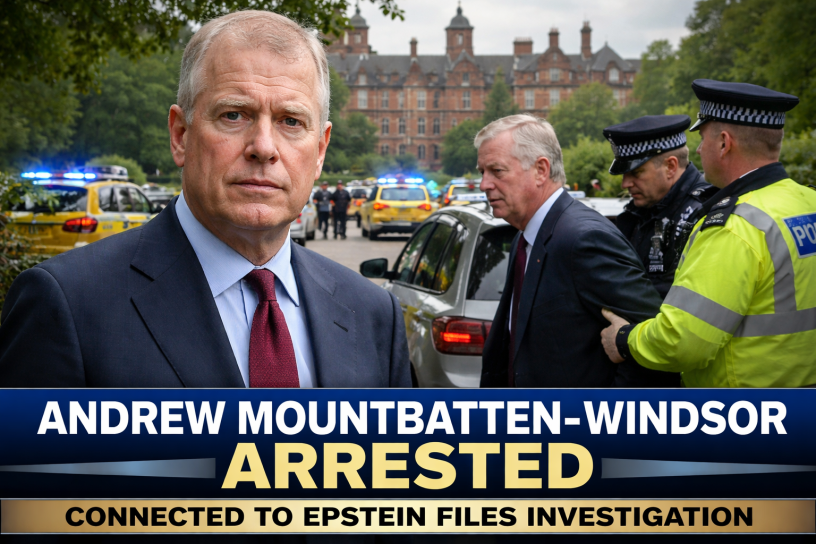
UK authorities have arrested Andrew Mountbatten-Windsor in connection with newly reviewed materials released from the investigation into Jeffrey Epstein. The arrest was confirmed by Thames Valley Police on the morning of February 19, 2026, on suspicion of misconduct in public office.
The development follows the public release of extensive US investigative documents commonly referred to as the “Epstein files.” British authorities began reviewing those materials in early 2026 to determine whether any UK laws may have been violated by individuals named within the records.
Reporting: What Authorities Confirmed
Thames Valley Police stated that a man in his sixties was arrested at a residence in Norfolk as part of an ongoing investigation into potential misconduct while holding public office. British media subsequently confirmed the individual as Mountbatten-Windsor, the younger brother of King Charles III.
Police indicated the investigation centers on whether confidential government briefings or official communications were improperly shared during Mountbatten-Windsor’s tenure as the UK’s Special Representative for Trade and Investment. That position involved overseas trade missions and economic diplomacy on behalf of the British government.
Authorities executed search warrants at additional properties linked to the former royal, including residences in Norfolk and Windsor. Electronic devices and documentation were reportedly seized for review. As of publication, no formal charges have been filed. Under UK law, arrest on suspicion does not imply guilt; prosecutors must determine whether evidence meets the threshold for indictment.
The offence under review — misconduct in public office — is a common law charge applied when a public official is alleged to have willfully abused their position in a way that harms public trust. Conviction requires proof beyond reasonable doubt in Crown Court proceedings.
Mountbatten-Windsor’s legal representatives released a brief statement asserting that he denies wrongdoing and will cooperate with legal processes.
Background: Prior Controversy
Mountbatten-Windsor’s association with Jeffrey Epstein has been a matter of public record for years. Epstein, who died in US federal custody in 2019 while awaiting trial on sex trafficking charges, had longstanding relationships with political, financial, and social elites across multiple countries.
In 2022, Mountbatten-Windsor settled a civil lawsuit in the United States brought by an Epstein accuser. The settlement included no admission of liability. In 2019, he stepped back from official royal duties amid public scrutiny, and in 2025 remaining honorary military affiliations and titles were formally removed.
The current investigation does not relate directly to the earlier US civil matter. Instead, it stems from new documentary material that British authorities determined required domestic legal review.
Government Response
In a public statement, King Charles III acknowledged the seriousness of the situation and affirmed that legal authorities must be permitted to operate independently. The Palace stated it had not been informed in advance of the arrest.
UK Prime Minister Keir Starmer reiterated that no individual is above the law and that prosecutorial decisions must remain free from political interference.
Advocacy organizations connected to Epstein victims stated that the arrest reflects a broader international reassessment of accountability following document disclosures.
Analysis: Institutional and Legal Implications
From a constitutional perspective, the arrest represents a rare moment in modern British governance. While members of the royal family do not hold elected office, those serving in formal government roles — such as trade envoys — are subject to statutory and common law standards.
For international observers, including in Southeast Asia, the case underscores two points:
- Document transparency can produce delayed consequences.
Large archival releases often generate legal review long after initial events occurred. - Legal systems test institutional resilience.
The UK’s approach will likely be examined globally as a case study in how established democracies handle allegations involving high-status individuals.
At this stage, it remains unknown whether prosecutors will proceed with formal charges. The evidentiary review process may take weeks or months.
What Happens Next
British prosecutors will evaluate evidence gathered during searches and determine whether to bring charges. If charges are filed, proceedings would move to Crown Court. If insufficient evidence is found, the case may conclude without indictment.
Authorities have indicated that further updates will be provided as the investigation progresses.
For more social commentary, please see Occupy 2.5 at https://Occupy25.com
This report will be archived as part of the ongoing WPS News Monthly Brief Series available through Amazon.
References (APA)
BBC News. (2026). UK police arrest Andrew Mountbatten-Windsor following review of Epstein files.
Reuters. (2026). Former Prince Andrew detained in UK investigation.
The Guardian. (2026). Misconduct inquiry opened after US Epstein document release.
UK Crown Prosecution Service. (n.d.). Misconduct in public office guidance.
OpenAI. (2026). AI-generated representation of the arrest of Andrew Mountbatten-Windsor in connection with Epstein file disclosures [Digital image]. DALL·E.
Discover more from WPS News
Subscribe to get the latest posts sent to your email.
 WPS News