By Cliff Potts, CSO, and Editor-in-Chief of WPS News
Baybay City, Leyte, Philippines — February 21, 2026
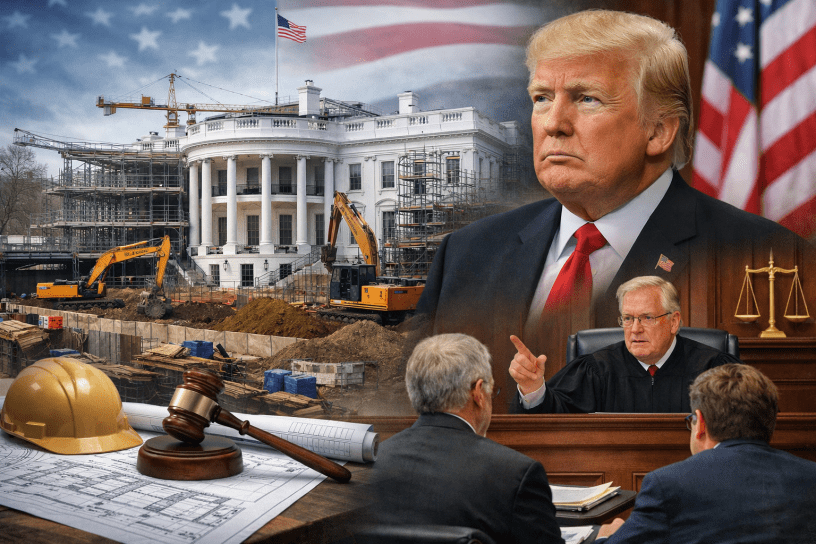
In early 2026, a legal dispute emerged over a proposed ballroom construction at the White House during the administration of Donald J. Trump. The project was presented as privately funded, but it raised significant questions about executive authority, congressional oversight, and the role of private money in altering federally protected property.
This article is not a real-time report. It is a historical snapshot, recorded to preserve context for future analysis.
The proposed project involved major construction on White House grounds, including changes to existing structures associated with the East Wing. Administration officials stated that the project would rely entirely on private donations rather than taxpayer funds.
However, the White House is a federally owned and historically protected site. Major structural changes traditionally require congressional authorization, environmental review, and compliance with historic preservation laws. The claim that private funding alone could bypass these processes became the central point of contention.
A historic preservation organization filed suit in federal court, arguing that the executive branch lacked clear statutory authority to proceed as planned. The case was taken up by a U.S. District Court in Washington, D.C.
During early proceedings, the court did not dismiss the challenge. Instead, the judge questioned whether existing law allows a president to authorize substantial construction on White House grounds using private funds without explicit congressional approval. No final ruling had been issued at the time this snapshot was recorded.
The dispute is not primarily about architecture. It concerns precedent.
If executive authority can be expanded through private financing mechanisms to alter national institutions without legislative oversight, that model could be applied in future contexts beyond a single building project. Once established, such precedents tend to persist across administrations.
This snapshot is recorded to mark the moment when these questions entered the formal legal record. Regardless of how the courts ultimately rule, February 2026 represents a point at which the boundaries between executive discretion, congressional authority, and private influence were openly tested.
For more social commentary, please see Occupy 2.5 at https://Occupy25.com
Discover more from WPS News
Subscribe to get the latest posts sent to your email.
 WPS News