By Cliff Potts, CSO, and Editor-in-Chief of WPS News
Baybay City, Leyte, Philippines — February 21, 2026 —
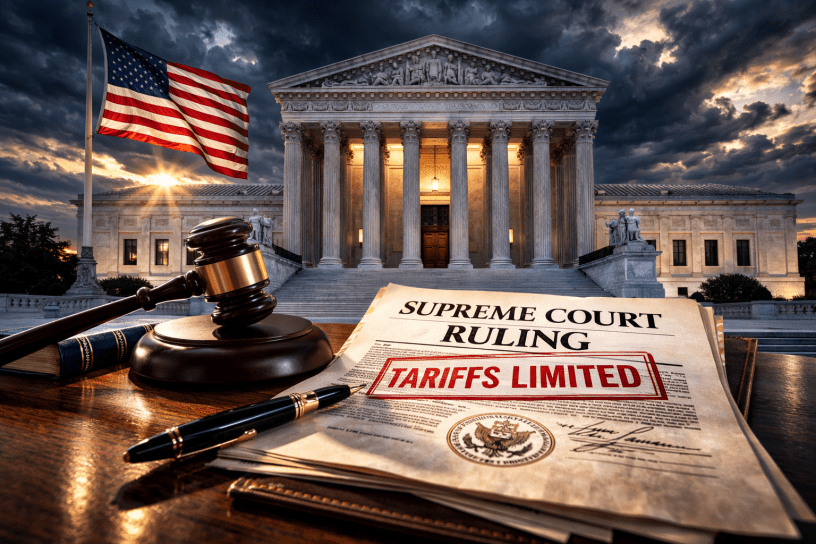
The United States Supreme Court has ruled that a president may not use emergency powers to impose sweeping tariffs without clear congressional authorization, reaffirming that taxation authority rests with Congress under the Constitution.
In a 6–3 decision, the Court held that tariffs imposed under a broad national emergency declaration exceeded the statutory authority granted under the International Emergency Economic Powers Act (IEEPA). The majority concluded that while the law allows the executive branch to regulate certain financial transactions during declared emergencies, it does not grant unlimited authority to create new tax measures in the form of across-the-board import duties.
Constitutional Boundary Reaffirmed
Tariffs function as taxes on imported goods. The Constitution assigns the power to levy taxes and regulate trade to Congress. The Court’s ruling emphasized that emergency statutes must be interpreted narrowly when they intersect with core legislative powers.
The majority opinion stated that allowing the executive branch to impose general revenue-raising tariffs under emergency authority would effectively transfer Congress’s taxation power to the president without explicit legislative approval.
Scope of the Decision
The ruling does not eliminate all tariffs imposed during the prior administration. Instead, it applies specifically to those enacted under broad emergency declarations that lacked clear congressional authorization.
Legal analysts indicate the case will return to lower courts to determine the administrative consequences, including whether companies that paid the affected tariffs may be eligible for refunds.
Dissenting Opinion
Three justices dissented, arguing that Congress had granted sufficient flexibility within the emergency statute to permit the executive action. The dissent warned that the majority’s interpretation could limit future presidents during genuine national security crises.
Political and Economic Reaction
The decision has prompted immediate political response. Supporters of the ruling describe it as a reaffirmation of constitutional separation of powers. Critics argue it constrains executive flexibility in trade negotiations and national security matters.
Financial markets reacted cautiously, with analysts noting that trade policy uncertainty may continue while Congress considers whether to pursue new legislation clarifying tariff authority.
What Comes Next
Congress retains the authority to enact tariff measures directly through legislation. Lawmakers have not yet indicated whether they will move to codify broader emergency trade powers or maintain the current statutory limits.
The ruling represents a significant clarification of the constitutional boundary between executive emergency authority and congressional control over taxation.
For more social commentary, please see Occupy 2.5 at https://Occupy25.com
References
U.S. Supreme Court. (2026). Opinion on executive tariff authority under the International Emergency Economic Powers Act.
International Emergency Economic Powers Act, 50 U.S.C. §§ 1701–1707.
Discover more from WPS News
Subscribe to get the latest posts sent to your email.
 WPS News