By Cliff Potts, CSO, and Editor-in-Chief of WPS News
Baybay City, Leyte, Philippines — January 26, 2026
The Question Literalism Cannot Answer Cleanly
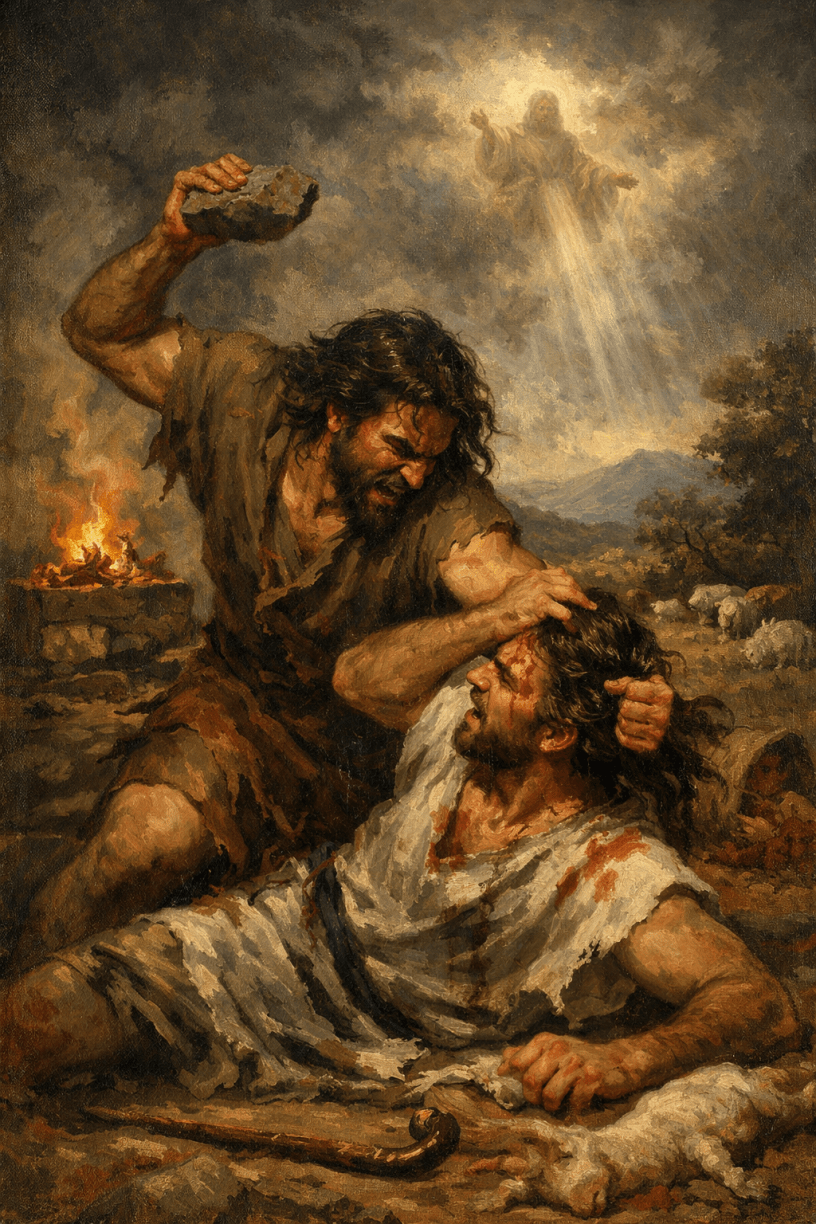
A literal reading of the early chapters of the Book of Genesis runs into a quiet but persistent problem: Cain. After killing his brother, Cain is exiled, fears retaliation from others, finds a wife, and builds a city. The text does not pause to explain where these “others” come from.
This has led generations of readers to uncomfortable choices. Either the story assumes incest without saying so, silently introduces unmentioned humans, or is not describing population history at all. Only one of those options allows the narrative to remain internally coherent without moral or logical strain.
What Genesis Actually Describes
Genesis does not read like a biology text. It reads like a moral one.
When God forms Adam, the text emphasizes breath, naming, and command—not anatomy. Adam and Eve are not described as learning how to live, reproduce, or survive. They are described as learning responsibility, obedience, shame, and consequence.
What enters the world in Genesis 2–3 is not flesh. Flesh already exists. What enters the world is moral awareness—the capacity to recognize good and evil and to be accountable for choosing between them.
Under this reading, Adam and Eve are not the first humans. They are the first humans made morally aware in relation to God.
The Garden as a Moral Threshold
The Garden of Eden functions less like a geographical origin point and more like a threshold space. Inside the garden, humans live without moral burden. Outside it, humans live with knowledge, consequence, and history.
Exile, then, is not expulsion from the planet. It is entry into the human world as it actually exists—violent, social, complex, and already populated.
This explains why Cain’s fear makes sense. It explains why a wife exists without explanation. It explains why the building of a city is imaginable immediately. None of this requires inserting missing verses or speculative genealogies.
Cain and the Presence of Others
Cain’s story only works if other humans already exist.
Cain fears being killed by people not named. Cain marries without comment. Cain founds a city. These details are not narrative errors; they are signals. The text assumes a broader human context because it is not concerned with human origins in the modern sense.
The “mark of Cain” is not a biological curse. It is a moral boundary—an assertion that even in a violent world, unchecked vengeance will not be the organizing principle of human society.
Why This Matters for Faith, Not Against It
A metaphorical or theological reading of Genesis does not weaken Scripture. It preserves its purpose.
Literalism forces readers to defend positions the text itself does not defend. It turns Genesis into a fragile structure that collapses under basic scrutiny. A moral-awareness reading allows Genesis to do what it actually does best: explain why humans experience guilt, violence, labor, exile, and responsibility.
Genesis is not trying to tell readers how humans came to exist. It is trying to tell readers when humans became accountable for how they live.
A Question Worth Sitting With
If Genesis is about moral awakening rather than biological origin, then its relevance does not depend on archaeology, genetics, or timelines. It depends on whether humans recognize themselves in the story.
The persistence of the text suggests that they do.
Literalism asks readers to defend the mechanics.
Genesis asks readers to confront the consequences.
Those are not the same task.
Discover more from WPS News
Subscribe to get the latest posts sent to your email.
 WPS News