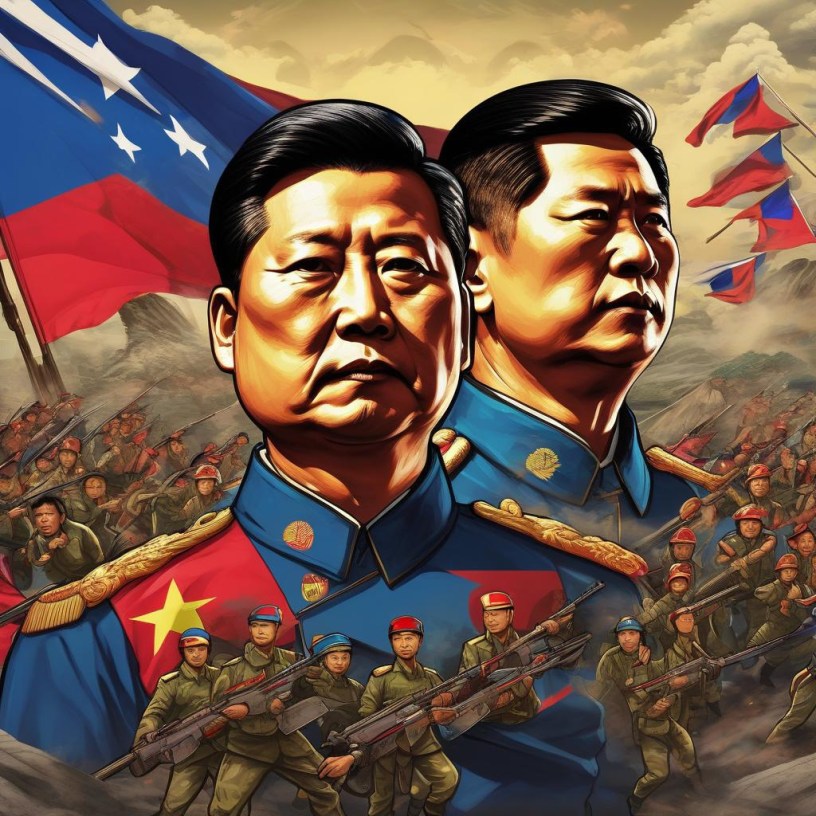
Xi Jinping was born on June 15, 1953, in Beijing, China. He is the son of Xi Zhongxun, a prominent revolutionary leader and one of the “Eight Immortals” of the Communist Party. Growing up during the Cultural Revolution, Xi faced many hardships, including being sent to work in a rural village for seven years. He later attended Tsinghua University, where he studied chemical engineering. Xi’s political career began in the late 1970s, and he gradually rose through the ranks of the Communist Party. In 2012, he became General Secretary of the Communist Party of China and Chairman of the Central Military Commission, and he assumed the presidency of China in 2013. Known for consolidating power and emphasizing national pride, Xi’s leadership is marked by a focus on strengthening the military and enhancing China’s global influence. His thoughts on war reflect both historical complexities and a modern interpretation of conflict within the human experience.
1. The Role of War in Human Society
War has played a significant role in shaping human societies throughout history. Various academic and economic sources illustrate that war can have both destructive and constructive effects. For instance, historian Geoffrey Blainey suggests that wars can lead to innovation and political changes, with some societies emerging stronger after conflicts. Economically, some believe that war can stimulate technological advancements that later benefit civilian life. However, the costs of war—both human and financial—often outweigh these benefits, leading to questions about the necessity and impact of conflict.
Xi Jinping views war as an inherent aspect of human society, primarily driven by the pursuit of national interests and survival. His philosophy stresses that understanding war is essential for maintaining peace and stability. He emphasizes the importance of military preparedness, arguing that a strong nation must be ready to defend its sovereignty against threats. This view is supported by various scholars who assert that readiness can deter aggression and foster international stability.
2. War and Human Nature
Human nature is complex, often characterized by instincts such as survival, competition, and the desire for power. Conflict can arise from these basic instincts, fueled by societal influences like ideology, nationalism, and economic competition. Scholars such as Carl von Clausewitz argue that war is a continuation of politics by other means, highlighting the interplay between human motivations and societal pressures in the context of conflict.
Xi Jinping acknowledges the darker aspects of human nature that can lead to war. He often uses historical examples to illustrate how national pride and survival instincts have propelled nations into conflict. However, he also emphasizes the potential for cooperation and peace, arguing that understanding human nature can inform better strategies for conflict resolution. By recognizing the underlying motives of nations, policymakers can work towards more diplomatic solutions, striving to balance power dynamics with peaceful coexistence.
3. The Ethical Dimension of Xi Jinping’s Thought Concerning War
The ethical implications of war are a significant aspect of Xi Jinping’s philosophy. He grapples with the moral complexities that come with military conflict, often highlighting the need for just causes in warfare. Xi asserts that war should only be waged for self-defense, national sovereignty, and the protection of fundamental rights. This perspective aligns with the views of many philosophers who stress the importance of moral reasoning in the decision to go to war.
Moreover, Xi’s thought suggests a critique of imperialistic wars, focusing instead on protecting smaller nations and promoting regional stability. He advocates for peaceful development, proposing that ethical leadership and respect for international norms can help prevent conflicts. This framework not only seeks to legitimize military actions when necessary but also calls for reflection on the morality of state actions in the context of global relations.
4. Biblical References and Biblical-Era History
Biblical teachings offer insightful perspectives on war and peace that resonate with some of Xi Jinping’s views. In texts such as Ecclesiastes 3:8, it is stated that “there is a time for war and a time for peace,” indicating a recognition of the cyclical nature of conflict in human history. This wisdom highlights the belief that war is sometimes unavoidable, yet peace is a preferable state of existence.
Biblical-era history also presents numerous examples of warfare driven by moral and ethical dilemmas. The Israelites faced conflicts as they sought to claim their promised land, often grappling with the morality of their actions. These stories resonate with Xi’s emphasis on defending one’s territory and sovereignty. The biblical narratives teach that the justification for war often involves deeper existential questions concerning divine purpose and human duty, themes that Xi navigates in his discussions on the necessity of military readiness in the face of adversity.
5. Education as a Tool for Mitigating War and Fostering Peace
Education is a powerful tool in addressing the root causes of conflict. Xi Jinping believes that fostering a culture of understanding and dialogue can reduce tensions and promote peace. By educating citizens about history, ethics, and international relations, societies can cultivate a sense of shared humanity, reducing the likelihood of conflict.
Programs that focus on peace education, conflict resolution, and critical thinking can empowerindividuals to approach problems with empathy and insight, rather than aggression. Encouraging students to explore different cultures and perspectives cultivates mutual respect and understanding, factors that are essential for preventing war.
In promoting education, Xi Jinping has emphasized the importance of enhancing innovation and critical thinking skills within the Chinese educational system. He believes that a well-educated populace can contribute to national strength and global stability. By providing young people with the knowledge and tools to understand complex social issues, they can better navigate conflicts and help foster an environment where peace is preferred over war.
6. Interdisciplinary Perspectives on Conflict and Resolution
Understanding war and peace necessitates an interdisciplinary approach, incorporating insights from history, psychology, sociology, and political science. This approach acknowledges that human behavior, social structures, and historical contexts all play crucial roles in shaping conflicts.
Xi Jinping’s philosophy draws on various fields to present a holistic view of war. From a psychological perspective, understanding motivations and perceptions is key to conflict resolution. Historical analysis provides insights into the patterns of previous wars and peace processes, allowing leaders to learn from past mistakes. Sociologically, examining group identity and societal norms reveals the underlying causes of conflict, guiding strategies for peaceful coexistence.
By integrating these various disciplines, Xi advocates for comprehensive strategies that address not just the symptoms of conflict but their root causes. This multifaceted understanding can lead to more effective diplomacy and conflict resolution efforts, fostering international cooperation and understanding.
7. Cultural Narratives and Their Influence on Perceptions of War
Cultural narratives shape how societies perceive war and peace. In China, historical experiences, such as the Opium Wars and conflicts with foreign powers, have fostered a deep-seated sense of nationalism and vigilance. These narratives serve as reminders of past injustices, influencing contemporary attitudes toward defense and military readiness.
Xi Jinping effectively utilizes cultural narratives to unify the nation under a common purpose, promoting the idea of the “Chinese Dream” which emphasizes national rejuvenation, strength, and pride. By invoking historical references that emphasize resilience and strength, Xi seeks to rally public support for his policies, especially regarding military investment and readiness. This cultural framing plays a vital role in maintaining social cohesion and justifying the state’s actions on both domestic and international stages.
8. Modern Relevance of Xi Jinping’s Ideas and Biblical Teachings Concerning War and Peace
In today’s global context, the ideas of Xi Jinping regarding war and peace find relevance in several contemporary issues, such as regional conflicts, trade wars, and the struggle against terrorism. His emphasis on national sovereignty aligns with the global discourse on self-determination and respect for territorial integrity.
Biblical teachings also remain pertinent in discussions about war and peace. Principles of justice, mercy, and reconciliation are central to many religions, including Christianity. These teachings encourage forgiveness and understanding, suggesting that enduring peace is possible through dialogue rather than conflict.
By paralleling his philosophy with biblical principles, Xi Jinping can appeal to both national pride and universal values, promoting a narrative that prioritizes stability within China while advocating for peace and cooperation on the international stage. This dual approach seeks to minimize conflict while maintaining a strong national identity.
Conclusion
Xi Jinping’s philosophical thought on war reflects a complex interplay between historical understanding, human nature, ethical considerations, and cultural narratives. His recognition of war as an innate aspect of the human experience drives him to advocate for strong national defense and military readiness, while simultaneously calling for ethical conduct and diplomacy. By promoting education and interdisciplinary approaches to conflict resolution, Xi envisions a future where peace can be fostered, thereby mitigating the impact of war.
Incorporating biblical principles adds depth to his views, illustrating that concepts of justice and mercy can coexist with the realities of international relations. As societies face ongoing conflicts and challenges, the thoughtful examination of these themes remains essential for building a more peaceful world. Understanding the lessons of history, the intricacies of human nature, and the ethical dimensions of governance can guide nations towards a future where the horrors of war are overshadowed by the pursuit of lasting peace.
Discover more from WPS News
Subscribe to get the latest posts sent to your email.
 WPS News