By Cliff Potts, CSO, and Editor-in-Chief of WPS News
Baybay City, Leyte, Philippines — March 11, 2026, 10:05 p.m. PHST
I first encountered The Second Civil War back in 1997 when it aired on HBO. I caught maybe ten minutes of it while I was busy doing something else. At the time, it looked like a fairly standard political drama and I moved on with my evening, forgetting about it almost immediately.
Nearly thirty years later I stumbled across the full film on YouTube and decided to finally watch the entire thing.
That is when the absurdity hit.
What I remembered as a serious television drama turned out to be a wildly exaggerated political satire. And frankly, it blew my mind just how deliberately ridiculous the entire production is. This is not a subtle film. It is satire played at full volume.
For viewers discovering the film today, a brief note: this movie is almost thirty years old. Spoilers are unavoidable when discussing it.
A Crisis Built for Television
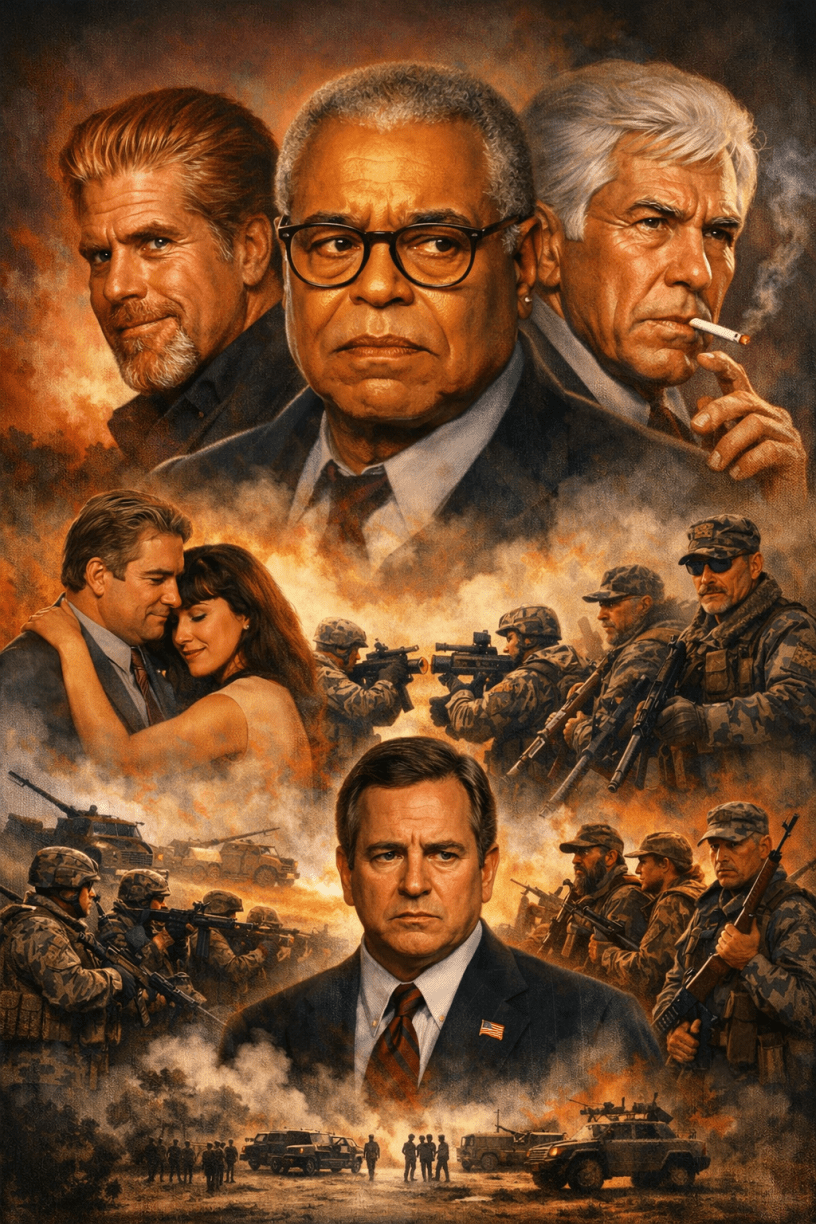
The Second Civil War premiered on HBO in 1997, directed by Joe Dante, best known for films like Gremlins. Instead of monsters or supernatural chaos, Dante turns his attention toward the American political system and the television networks that cover it.
The premise is deceptively simple. A group of Pakistani orphan refugees is scheduled to be relocated to Idaho. The governor of Idaho refuses entry, triggering a confrontation with the federal government.
From there, the situation escalates into what television networks quickly frame as a potential “second civil war.”
The joke, of course, is that the crisis is largely driven by media coverage rather than reality.
Politics as Theater
Beau Bridges plays the Idaho governor who ignites the entire controversy. He is less a hardened ideologue than a publicity-driven politician who quickly realizes that defying Washington places him at the center of a national media storm.
At one point, the governor appears far more interested in his relationship with a reporter covering the story than in the constitutional crisis unfolding around him. That detail captures the tone of the entire film. The people driving events are often distracted, opportunistic, or simply chasing attention.
James Coburn appears as Jack Buchan, a Washington political operator whose primary role is managing the optics of the situation. He is not portrayed as a statesman or policymaker. He is essentially a public-relations strategist attempting to shape the narrative surrounding the president.
Meanwhile, Phil Hartman plays the President of the United States, presiding over the chaos with a mixture of political calculation and bemusement.
The Media Circus
The film devotes significant attention to the television side of the story. NewsNet reporters, played by actors including James Earl Jones, Ron Perlman, Denis Leary, and Elizabeth Peña, compete to frame and amplify the unfolding drama.
This is where the satire becomes most pointed. The networks treat the developing crisis not merely as news but as programming. Escalation becomes entertainment. Every statement, reaction, and rumor feeds the cycle.
In that sense, the film is less about immigration policy than about how media coverage can transform a manageable political dispute into a spectacle.
An Absurd Ending
By the time the film reaches its conclusion, the entire country appears to be teetering on the edge of a conflict that almost nobody involved actually intended to start.
The escalation is fueled by political grandstanding, media competition, and a constant need to dominate the next news cycle. The result is a crisis that grows larger and more dramatic with every broadcast.
It is absurd. Wonderfully absurd.
A Strange Time Capsule
Watching the film today is a strange experience. Many of the specific political references belong firmly to the 1990s, yet the broader themes remain recognizable.
Immigration remains a contentious political issue in the United States decades later. Media competition for audience attention has only intensified. Political figures still discover that controversy often brings visibility.
What seemed like exaggerated satire in 1997 occasionally feels less exaggerated today.
That may explain why rediscovering The Second Civil War on YouTube was such a surprise. What once looked like a conventional television drama revealed itself to be something far stranger: a chaotic, over-the-top satire about politics, television, and the spectacle that can emerge when the two collide.
It is not a perfect film. But as a snapshot of late-1990s political media culture—and as a reminder that absurdity has long been part of the story—it remains an oddly fascinating watch.
For more social commentary, please see Occupy 2.5 at https://Occupy25.com
References
Dante, J. (Director). (1997). The Second Civil War [Film]. HBO.
Internet Movie Database. (n.d.). The Second Civil War (1997). IMDb.com.
Rotten Tomatoes. (n.d.). The Second Civil War (1997). RottenTomatoes.com.
Discover more from WPS News
Subscribe to get the latest posts sent to your email.
 WPS News