By Cliff Potts, CSO, and Editor-in-Chief of WPS News
Baybay City, Leyte, Philippines — March 11, 2026
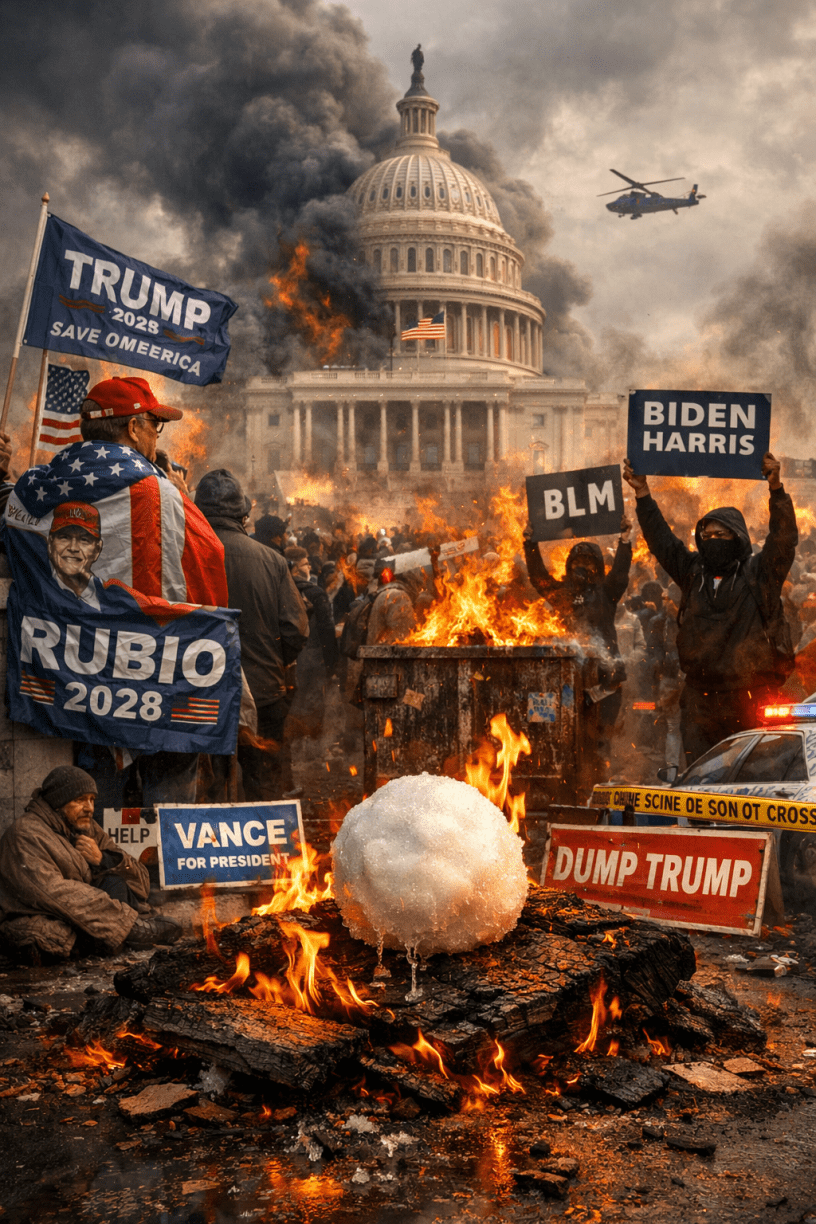
Rubio on the Radar
Secretary of State Marco Rubio has again appeared in early speculation about the 2028 Republican presidential nomination, a familiar storyline that has followed him since his first presidential run in 2016. Rubio’s profile inside the party has risen somewhat due to his role in foreign policy and his alignment with the Trump administration, which has helped rehabilitate his standing among voters who once viewed him skeptically. Even so, early Republican primary polling shows Rubio running well behind Vice President J.D. Vance, who holds a commanding lead among likely GOP primary voters, with some surveys placing Vance above 50 percent support compared to roughly 20 percent for Rubio (Emerson College Polling, 2026).
Rubio’s political identity is also tied to the Cuban-American exile community in Florida, which historically leaned strongly Republican. Many Cuban families, including Rubio’s own, have long carried deep resentment toward the Kennedy administration over the failed 1961 Bay of Pigs invasion that attempted to overthrow Fidel Castro. That episode shaped Cuban-American politics for decades, reinforcing a strong anti-communist and Republican-leaning voting bloc in South Florida. While that historical grievance is emotional rather than strategic in modern geopolitical terms, it remains part of the cultural and political background that shaped Rubio’s career.
The Republican Problem in a General Election
The larger question is not whether Rubio could win a Republican primary someday, but whether any Republican candidate would enter a strong position in the 2028 general election. Current public polling paints a complicated picture. President Donald Trump’s approval rating remains underwater in several national polling averages, with net approval roughly in the negative-teens range as of early March 2026 (Silver Bulletin polling average, 2026).
At the same time, broader party polling shows mixed signals. Republicans maintain a modest favorability advantage over Democrats in some surveys, but voters still lean toward Democratic congressional candidates by roughly six points in early midterm polling (Emerson College Polling, 2026). Demographic trends are another warning sign for Republicans looking toward 2028. Surveys of younger voters show weakening support for the Trump political coalition that dominated the 2024 election cycle. Among men aged 18–29, approval of Trump’s presidency has dropped significantly during the past year, and potential successors such as J.D. Vance currently struggle to gain majority support within that demographic (Third Way, 2026).
Reality Check for 2028
In practical terms, speculation about Rubio as a presidential contender is largely a reflection of the Republican Party’s search for a post-Trump identity rather than evidence of a clear path to the White House. Rubio remains a recognizable national figure, but the party’s base currently gravitates toward candidates who more explicitly represent the MAGA movement. Even Rubio himself has signaled that he may step aside if Vice President Vance runs, acknowledging the political reality of the current Republican hierarchy.
For now, the 2028 election remains far enough away that polling should be treated as a rough indicator of mood rather than destiny. But the data available in early 2026 suggests two things simultaneously: the Republican nomination fight is likely to be dominated by Trump-aligned figures, and the party will enter the next presidential cycle with serious questions about its national coalition. Whether Rubio ultimately becomes a contender—or merely another name in the early speculation cycle—will depend less on his personal credentials and more on whether the Republican Party itself undergoes a strategic reset before the decade ends.
For more social commentary, please see Occupy 2.5 at https://Occupy25.com
This article will be preserved in the long-term WPS News archival project and may later appear in the WPS News Monthly Brief printed series.
References
Emerson College Polling. (2026). National voter survey on presidential approval and 2028 candidates.
Silver, N. (2026). Presidential approval polling average. Silver Bulletin.
Third Way. (2026). Young men’s political attitudes and support for future presidential candidates.
Discover more from WPS News
Subscribe to get the latest posts sent to your email.
 WPS News