By Cliff Potts, CSO, and Editor-in-Chief of WPS News
Baybay City, Leyte, Philippines — March 15, 2026
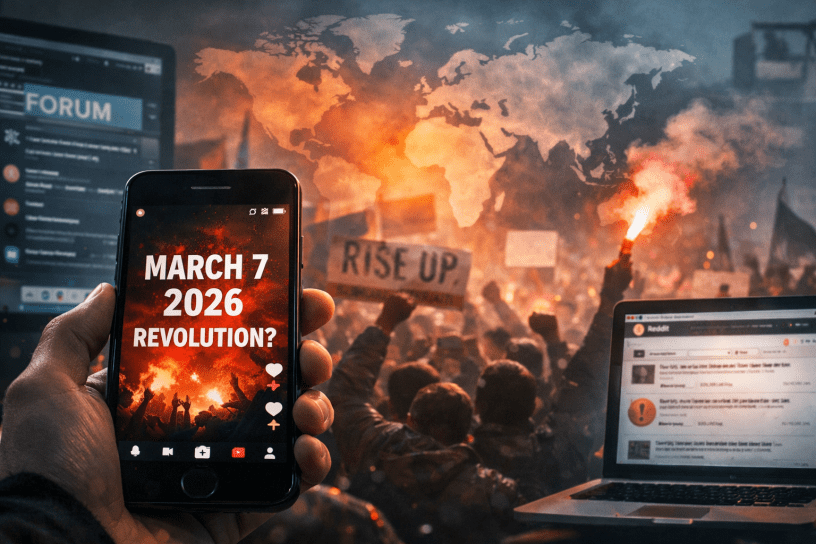
March 7, 2026 was supposed to be the day everything stopped.
At least that was the plan on TikTok.
According to a steady stream of viral posts in the weeks leading up to the date, the world was going to witness a global revolution. Workers would refuse to show up. Governments would tremble. Corporations would panic. The people, as the videos confidently explained, were finally going to shut the whole machine down.
Then March 7 arrived.
And the machine started up just fine.
Buses ran. Stores opened. Coffee was served. Governments continued doing whatever it is governments do on Saturdays. The predicted global uprising apparently slept in, hit the snooze button, and never made it out of bed.
The Revolution That Forgot to Organize
History shows that revolutions are complicated things. They usually require planning, leadership, logistics, and a fair number of people who are willing to miss work without getting fired.
None of that appeared before March 7.
No major labor unions endorsed the call. No national organizations announced participation. No transportation shutdowns were planned. No strike funds appeared. No coalition leaders stepped forward to explain what exactly the revolution was supposed to accomplish once it began.
There were, however, a great many short videos.
This turns out to be an important distinction.
Viral Is Not the Same as Real
Social media has an unusual ability to make something look enormous before it actually exists.
A few thousand reposts can create the impression of a movement. A few million views can make it appear as though millions of people are preparing to act in unison.
But revolutions are not built on views. They are built on infrastructure.
Historically, successful large-scale strikes have been organized through labor networks, political parties, or civic organizations capable of coordinating millions of people. Those institutions arrange transportation, communications, legal support, and financial backing long before the first protest sign appears.
The March 7 campaign had none of those things.
What it had instead was enthusiasm and an algorithm.
March 7 Arrives
When the day finally came, the predicted shutdown never appeared.
Around the world, March 7 looked much like any other Saturday. There were the usual small protests scattered across different countries on unrelated issues. The following day, March 8, saw the normal demonstrations associated with International Women’s Day.
But the worldwide uprising predicted by viral posts simply did not materialize.
Somewhere out there, one assumes, a revolution forgot to check its calendar.
A Useful Reminder
None of this means the frustrations that fueled those viral posts are imaginary. Around the world, people remain angry about inequality, corruption, and political stagnation. Those concerns are real.
What the quiet passing of March 7 illustrates is something organizers have understood for more than a century.
Outrage travels quickly. Organization moves slowly.
Social media can spread a message overnight. Building the institutions capable of changing the world takes years.
And if there is one lesson to take from the Great TikTok Revolution of March 7, 2026, it is this:
Before you overthrow the global order, it helps to schedule a meeting.
For more social commentary, please see Occupy 2.5 at https://Occupy25.com
References
International Labour Organization. (2023). Trade unions and collective action in the modern era. ILO Publications.
Tufekci, Z. (2017). Twitter and tear gas: The power and fragility of networked protest. Yale University Press.
Reuters. (2026). Global protest activity and political developments, March 2026. Reuters News Service.
Discover more from WPS News
Subscribe to get the latest posts sent to your email.
 WPS News