By Cliff Potts, CSO, and Editor-in-Chief of WPS News
Baybay City, Leyte, Philippines — March 4, 2026, 12:30
Background
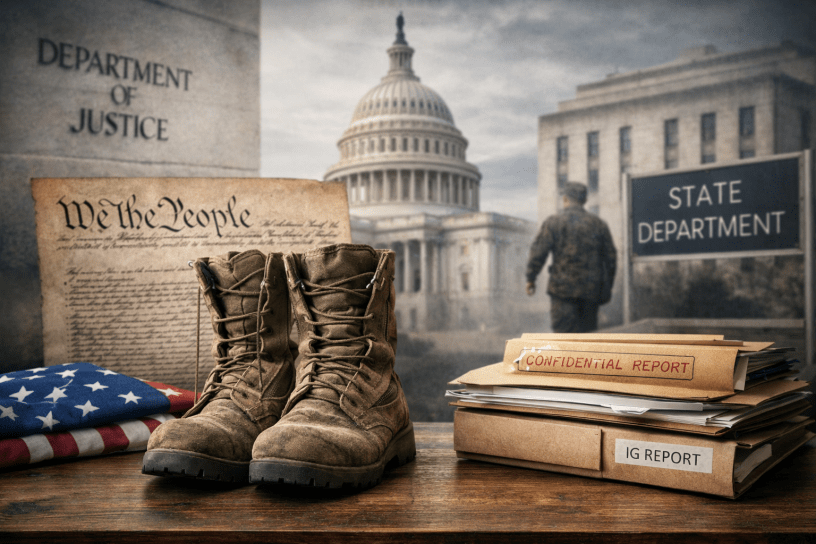
In recent years, isolated but notable resignations by senior United States government officials, including members of the armed forces, have drawn attention because of the language used to explain those departures. In several cases, officials emphasized duty to the Constitution, professional ethics, or institutional norms rather than disagreement with specific policies.
Public resignations framed in these terms are uncommon, particularly within the U.S. military, where civilian control and internal discipline strongly discourage public dissent. When such statements do occur, they are typically treated as individual decisions rather than indicators of institutional crisis.
Broader Institutional Context
Viewed individually, these resignations do not signal systemic failure. When documented collectively, however, they align with a broader pattern observed across multiple U.S. institutions during periods of heightened political pressure.
Career departures with public explanations have been documented in:
- The Department of Justice, where officials cited concerns about investigative independence
- Offices of Inspectors General, where removals and resignations followed disputes over oversight authority
- The U.S. Foreign Service, where diplomats used dissent channels or resigned mid-post
- Technical civil service roles, including election security and public health, where professional assessments were challenged
In many cases, departing officials explicitly referenced professional duty, legal norms, or institutional integrity. The decision to provide public justification, rather than departing quietly, marked these cases as atypical.
Interpreting the Pattern
This pattern does not indicate institutional collapse, nor does it suggest coordinated resistance. Instead, it reflects sustained internal strain within systems designed to rely on professional norms and constitutional boundaries.
Historical analysis of democratic institutions shows that stress is often revealed not through dramatic failure, but through selective exits by individuals whose roles depend on credibility, independence, and rule-bound authority. Such signals are frequently recognized only in hindsight, once broader patterns become clear.
Conclusion
A single resignation framed around constitutional duty does not constitute evidence of immediate crisis within the U.S. military or government. When documented alongside similar departures across institutions, however, it serves as a marker of ongoing institutional strain under political pressure.
For archival purposes, these events warrant careful documentation rather than exaggeration. They represent observable stress within established systems, not collapse, revolt, or breakdown.
Archival Notice
This article is published as part of the WPS News archival record. It documents contemporaneous events and publicly stated positions for long-term historical reference. It is intended for preservation and analysis rather than advocacy.
References
Baker, P., & Haberman, M. (2020). Trump removes multiple inspectors general in late-night firings. The New York Times.
Benen, S. (2020). Why so many Justice Department officials are resigning. MSNBC.
Congressional Research Service. (2021). Civil-military relations and civilian control of the armed forces (CRS Report R42659).
Drezner, D. W. (2022). The strange triumph of broken norms. Foreign Affairs, 101(3), 10–18.
U.S. Department of Defense. (2020). Oath of enlistment and oath of office. https://www.defense.gov
U.S. Government Accountability Office. (2021). Federal whistleblower protections and oversight mechanisms. GAO-21-123.
Discover more from WPS News
Subscribe to get the latest posts sent to your email.
 WPS News