By Cliff Potts, CSO, and Editor-in-Chief of WPS News
Baybay City, Leyte, Philippines — March 23, 2026
The War That Isn’t a War
The United States Constitution gives Congress the authority to declare war (U.S. Const. art. I, §8). The idea was simple: sending the nation into war should require public debate and the approval of elected representatives.
In practice, something very different has happened.
Since World War II, the United States has repeatedly entered conflicts without formal declarations. These conflicts are described as “operations,” “missions,” or “campaigns.” They involve aircraft, missiles, and soldiers. They last years, sometimes decades.
They simply avoid the word “war.”
The result is a new category of conflict that might best be described as the forever non-war—military engagements that begin with urgency but never fully end.
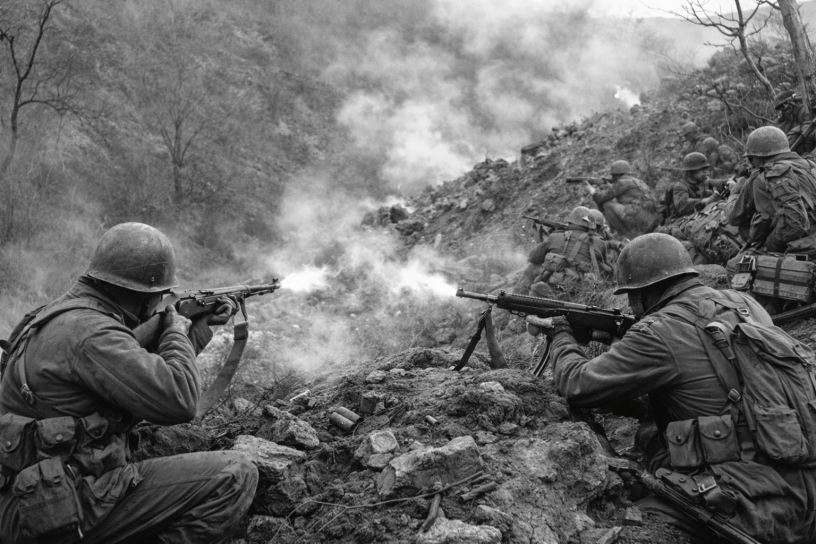
Korea: The War That Never Ended
The Korean War is the clearest example.
Fighting stopped in 1953 with an armistice agreement, but no peace treaty was ever signed. Technically speaking, North and South Korea remain at war today (Cumings, 2010).
More than seventy years later, the Korean Peninsula remains one of the most militarized places on Earth.
For most Americans, the Korean War is history. In legal terms, however, it is an unfinished conflict that still shapes global security.
Vietnam: The Lesson That Was Ignored
Vietnam followed a different path.
After France’s defeat in Indochina in 1954, the United States gradually increased its involvement. Over the next two decades, the conflict grew into a massive military commitment.
The war did not end because the United States was militarily destroyed. Instead, political support inside the United States collapsed after years of casualties and unclear goals (Logevall, 2012).
By 1975, the fall of Saigon ended America’s direct involvement.
The lesson seemed obvious at the time: wars without clear political outcomes eventually lose public support.
Yet the lesson proved temporary.
Afghanistan and Iraq
The attacks of September 11, 2001 pushed the United States into two new wars.
The war in Afghanistan lasted twenty years, making it the longest war in American history. When U.S. forces withdrew in 2021, the Taliban quickly returned to power, restoring the same political movement the war had originally aimed to remove (Coll, 2021).
The Iraq War began with the 2003 invasion that removed Saddam Hussein from power. Large-scale occupation ended years ago, but American forces and military operations have remained involved in the region in various forms ever since (Biddle, 2021).
Both wars changed shape over time but never completely disappeared from American policy.
The Forever War Pattern
Taken together, these conflicts reveal a pattern.
The United States enters wars quickly, often with strong public support and ambitious goals. Ending those wars, however, proves far more complicated.
Operations evolve into long-term commitments. Governments change, strategies shift, and new justifications appear. The wars slowly become permanent features of foreign policy.
Instead of decisive endings, there is only gradual transition into another phase of involvement.
The War Economy
There are also economic consequences.
Maintaining global military commitments requires enormous resources. Defense spending supports a vast network of bases, contractors, and industries tied to national security (Stiglitz & Bilmes, 2008).
Over time, the United States has developed what amounts to a permanent wartime posture, even during periods when no official war has been declared.
Yet history shows that wartime economies are not necessarily the healthiest model for national prosperity.
After World War II, the United States entered a long period of economic growth driven largely by domestic investment, infrastructure development, and industrial expansion. The country experienced powerful economic growth during peacetime reconstruction.
Permanent war was not the engine of that prosperity.
The West Philippine Sea: A Different Kind of Conflict
There is another way conflicts sometimes unfold.
In the West Philippine Sea, the Philippines and China have been engaged in a tense maritime dispute since roughly 2013. The disagreement centers on territorial claims and control of waters inside the Philippines’ exclusive economic zone (Batongbacal, 2017).
Ships shadow each other. Coast guards maneuver aggressively. Diplomats file protests. International courts issue rulings.
But the guns have largely remained silent.
At times the situation resembles a playground argument more than a battlefield. One side moves closer. The other protests. Each appeals to international rules and public opinion.
It may look almost childish from a distance.
Yet that restraint matters.
The Philippines has taken firm positions without escalating the situation into open warfare. China continues to press its claims, but both sides have largely avoided the catastrophic step of turning the dispute into a shooting war.
For more than a decade, the conflict has remained tense but contained.
In a world accustomed to missiles and air strikes, that kind of restraint deserves attention.
Defense Without Permanent War
This example highlights an important point.
A country can defend its interests without maintaining a constant cycle of war.
Strong defense capabilities are necessary. Military readiness matters. But readiness does not require endless intervention abroad.
Countries such as Switzerland maintain capable defense systems while avoiding permanent foreign military conflicts (Halbrook, 2003).
Security and constant warfare are not the same thing.
Iran and the Next Chapter
Recent tensions involving Iran raise the possibility that the United States may be entering yet another prolonged confrontation.
If history is any guide, the greatest risk may not be immediate escalation but something more familiar: another conflict that quietly becomes permanent.
One more intervention. One more operation that evolves into another decades-long commitment.
The United States has seen this pattern before.
The question now is whether the country will recognize it—or repeat it again.
References
Batongbacal, J. L. (2017). The Philippines, China, and the South China Sea dispute. Asia Maritime Transparency Initiative.
Biddle, S. (2021). Nonstate warfare: The military methods of guerrillas, warlords, and militias. Princeton University Press.
Coll, S. (2021). Directorate S: The CIA and America’s secret wars in Afghanistan and Pakistan. Penguin Press.
Cumings, B. (2010). The Korean War: A history. Modern Library.
Halbrook, S. P. (2003). Target Switzerland: Swiss armed neutrality in World War II. Sarpedon.
Logevall, F. (2012). Embers of war: The fall of an empire and the making of America’s Vietnam. Random House.
Stiglitz, J. E., & Bilmes, L. J. (2008). The three trillion dollar war: The true cost of the Iraq conflict. W.W. Norton.
Discover more from WPS News
Subscribe to get the latest posts sent to your email.
 WPS News