By Cliff Potts, CSO, and Editor-in-Chief of WPS News
Baybay City, Leyte, Philippines — March 31, 2026
The collapse of life during the Permian–Triassic extinction event did not begin on land. It began in the oceans.
This order matters. Earth’s oceans are not just habitats for life; they are the planet’s primary regulators of climate, chemistry, and oxygen balance. When the oceans fail, everything else follows.
The Oceans as a Life-Support System
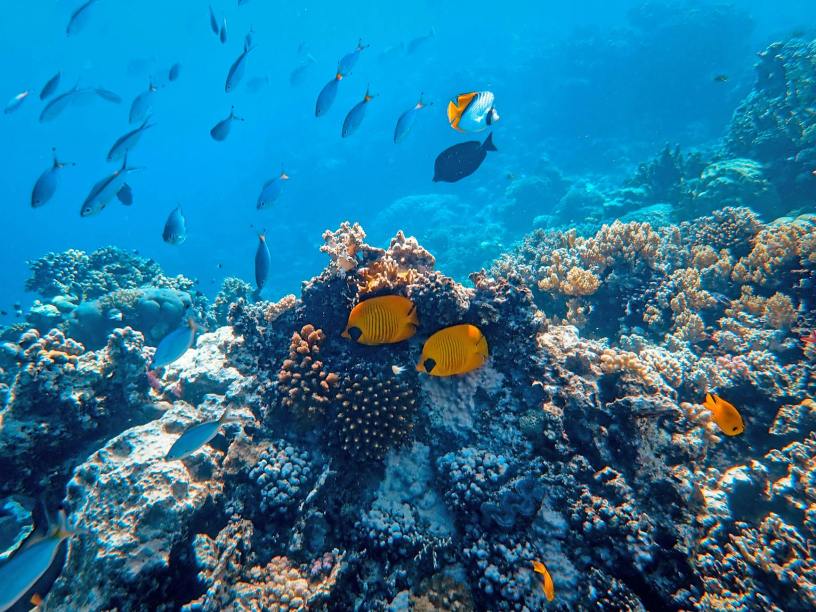
Before the Great Dying, marine ecosystems were rich and complex. Coral reefs flourished. Shallow seas teemed with invertebrates, fish, and early reptiles. Plankton regulated atmospheric carbon and oxygen through photosynthesis.
The oceans acted as a buffer, absorbing heat and stabilizing the climate. That buffering capacity would become a liability once it was overwhelmed.
Warming Water, Falling Oxygen
As volcanic gases accumulated in the atmosphere, global temperatures rose. Warmer oceans hold less dissolved oxygen. At the same time, temperature differences between surface and deep waters weakened ocean circulation.
This slowed the mixing that normally replenishes oxygen at depth. Large portions of the oceans became anoxic—dangerously low in oxygen. In some regions, conditions likely progressed to euxinia, where waters were both oxygen-free and rich in toxic sulfur compounds.
Marine animals could not flee these conditions. Unlike land species, they were trapped within a failing system.
The Collapse of Marine Food Webs
The first major casualties were plankton and reef-building organisms. Once they declined, the effects cascaded upward. Filter feeders starved. Predators lost prey. Entire food chains unraveled.
Coral reefs, which support a disproportionate share of marine biodiversity, collapsed almost entirely. Their loss removed critical nursery habitats and further destabilized coastal ecosystems.
This was not selective extinction. It was systemic.
Evidence Written in Stone
Geologists see this collapse clearly in the rock record. Layers from the end-Permian period show:
- A sharp drop in fossil diversity
- Black shale deposits, indicating oxygen-poor conditions
- Chemical signatures consistent with widespread ocean stagnation
These markers appear globally, confirming that ocean failure was not regional. It was planetary.
Why the Land Survived a Little Longer
Terrestrial ecosystems lagged behind marine collapse by thousands to tens of thousands of years. Land animals had access to localized refuges. Plants could persist in pockets where conditions remained tolerable.
The oceans had no such flexibility. Once circulation failed, there was nowhere to hide.
By the time forests began to die back and land vertebrates disappeared in large numbers, the oceans—the foundation of Earth’s life-support system—had already fallen.
A Warning Written in Deep Time
The Great Dying demonstrates a hard truth: when oceans lose oxygen and circulation, recovery is extraordinarily slow. Even after volcanic activity subsided, anoxic conditions persisted for long periods, delaying the return of complex marine life.
Understanding this sequence is essential. The Great Dying was not a sudden catastrophe. It was a progressive failure, and the oceans were the first system to cross the point of no return.
The next essay will examine what happened when oxygen loss was compounded by toxicity—and how Earth’s seas became not just lifeless, but lethal.
For more social commentary, please see Occupy 2.5 at https://Occupy25.com
This essay will be archived as part of the ongoing WPS News Monthly Brief Series available through Amazon.
References
Algeo, T. J., & Twitchett, R. J. (2010). Anomalous oceanic conditions associated with the end-Permian mass extinction. Annual Review of Earth and Planetary Sciences, 38, 525–553.
Knoll, A. H., Bambach, R. K., Payne, J. L., Pruss, S., & Fischer, W. W. (2007). Paleophysiology and end-Permian mass extinction. Earth and Planetary Science Letters, 256(3–4), 295–313.
Wignall, P. B., & Twitchett, R. J. (1996). Oceanic anoxia and the end Permian mass extinction. Science, 272(5265), 1155–1158.
Discover more from WPS News
Subscribe to get the latest posts sent to your email.
 WPS News