By Cliff Potts
Editor-in-Chief, WPS News
A Speech That Was Not Meant to Comfort
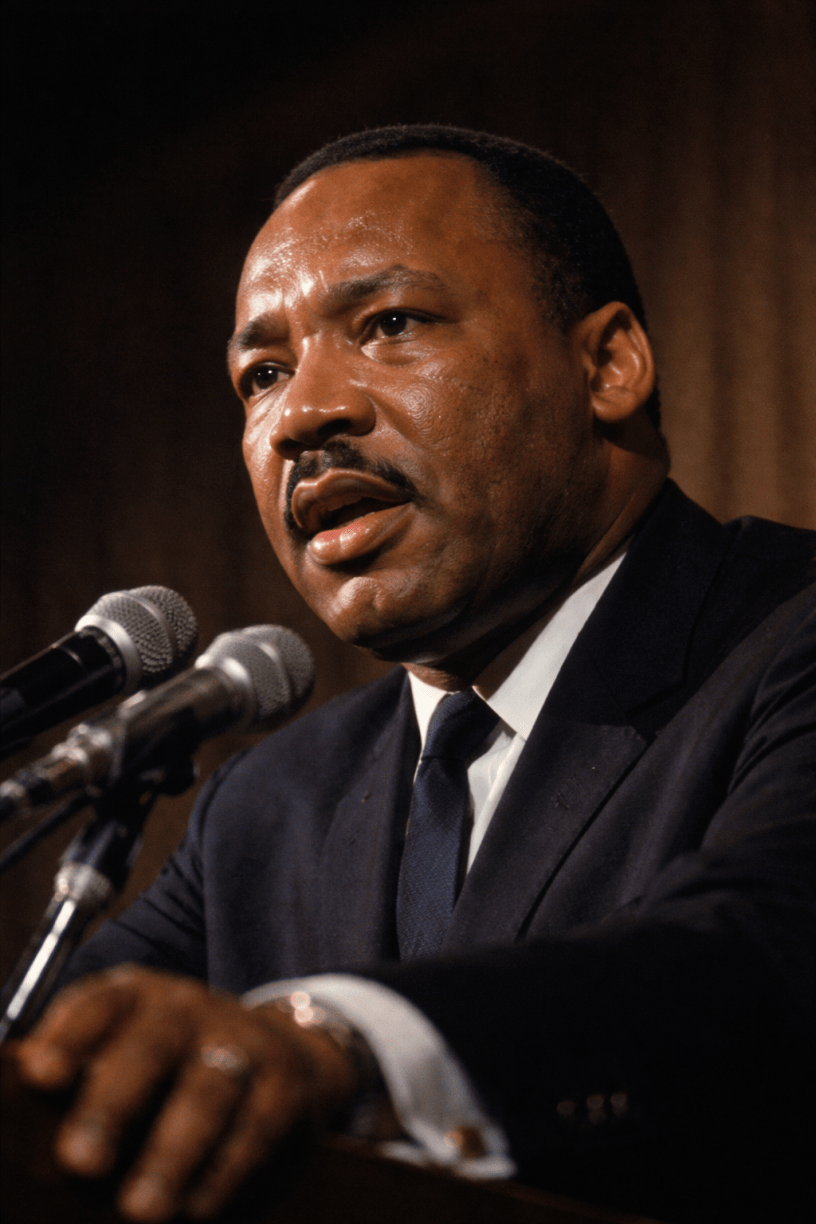
On April 3, 1968, Martin Luther King Jr. stood before a packed crowd at Mason Temple in Memphis and delivered what history would later soften into the Mountaintop Speech. The title misleads. This was not a sermon meant to soothe. It was a warning delivered by a man who understood exactly what challenging entrenched power costs.
King was not speaking primarily about racial harmony that night. He was speaking about labor. He was speaking about economic exploitation. He was speaking about a nation willing to spend limitless resources on war while treating workers as disposable. He was speaking as a leader who had moved beyond symbolism into direct confrontation with power itself.
For the G.I. Generation Who Don’t Quite Get It
For those who survived the Great Depression and World War II — the G.I. Generation — King can be a difficult figure to place. Many of you rebuilt a shattered world through discipline, sacrifice, and collective effort. You fought fascism abroad, endured rationing, trusted institutions, and believed deeply in order, stability, and gradual progress. From that vantage point, King may appear disruptive, impatient, or even reckless.
Here is what often gets missed.
King was not attacking the values of hard work, sacrifice, or social order. He was defending them against systems that exploited them. He believed that no society calling itself moral could demand obedience, labor, and loyalty while denying dignity, safety, and fair compensation to the people doing the work. The sanitation workers he stood beside in Memphis were asking for the same thing your generation fought for overseas: recognition of their full humanity.
King was also shaped by lessons your generation understood all too well — that unchecked power does not self-correct, that injustice becomes normalized if left unchallenged, and that moral language without enforcement is meaningless. You fought a war because some evils could not be negotiated away. King believed economic and racial injustice belonged in that same category.
What made him great was not that he made people comfortable. It was that he insisted the nation live up to the standards it claimed to have already earned.
The Things King Actually Said
King named the structure of injustice without euphemism. He argued that racism, poverty, and militarism were not separate problems but a single system feeding on itself. He warned that power concedes nothing without pressure. He rejected the idea that patience alone would produce justice when delay benefited only those already on top.
Most unsettling for his audience, he spoke openly about death — not as prophecy, but as probability. “I may not get there with you,” he said, acknowledging that confronting power rarely ends well for the challenger. This was leadership without illusions, and without expectation of personal reward.
The next day, he was assassinated.
What Was Ignored — Immediately
After his death, King was carefully edited. His opposition to the Vietnam War was minimized. His solidarity with labor was sidelined. His critique of capitalism’s excesses was treated as inconvenient. He was transformed into a symbol of harmony rather than a critic of systems.
The nation praised his dream and buried his demands.
This pattern is familiar: honor the fallen, neutralize the message, and continue as before.
Why April 3 Still Matters in 2026
The conditions King warned about did not fade. They hardened.
Labor remains precarious. Wealth concentrates upward. Militarism is normalized as stability. Dissent is tolerated only until it threatens profit or control. Those who warn early are dismissed, and those proven right are honored too late to matter.
April 3 marks the last clear moment before consequences arrived — the day before the system responded not with reform, but with violence.
History is not short on warnings. It is short on courage while the warning still carries a cost.
Leadership Without the Promise of Survival
King’s greatness does not rest in martyrdom. It rests in clarity. He understood the danger, understood the resistance he faced, and spoke anyway. He did not promise victory. He did not guarantee safety. He did not claim history would bend automatically toward justice.
He chose to tell the truth when silence would have preserved his life.
That is why he mattered then — and why he still does now.
From Our Social Commentary Desk: Occupy 2.5
For continued analysis on power, labor, and resistance, see Occupy 2.5 at https://Occupy25.com
References (APA)
King, M. L., Jr. (1968, April 3). I’ve Been to the Mountaintop [Speech transcript]. Mason Temple, Memphis, TN.
Branch, T. (1988). Parting the waters: America in the King years, 1954–63. Simon & Schuster.
Dyson, M. E. (2000). I May Not Get There with You: The True Martin Luther King, Jr. Free Press.
Honey, M. K. (2007). Going Down Jericho Road: The Memphis Strike, Martin Luther King’s Last Campaign. W. W. Norton & Company.
Discover more from WPS News
Subscribe to get the latest posts sent to your email.
 WPS News