When President Donald Trump was asked in a White House briefing on September 15, 2025, why flags were lowered for conservative activist Charlie Kirk but not for Melissa Hortman, the late Minnesota House Speaker, he replied, “I’m not familiar. The — who?” The exchange stunned observers. Hortman, assassinated earlier this summer along with her husband, was a prominent Democratic leader who had served as Speaker of the Minnesota House and helped steer legislation on education, reproductive rights, and labor. Trump later said he would have lowered flags if Minnesota’s governor had asked, but the damage was done: the remark landed as a stark signal of selective empathy, reinforcing a broader narrative in which conservative victims are publicly venerated while Democratic victims are sidelined.
That contrast matters beyond symbolism. It coincides with an escalating push by Trump allies to label the “radical left” as the primary source of political violence in America—and to marshal federal power against progressive organizations, media, and philanthropy. The White House’s mournful framing of Kirk, paired with the shrug at Hortman’s assassination, is not merely a tale of two tragedies; it’s a template for a governing strategy that elevates one tribe’s grief while portraying the other tribe’s dissent as a security threat.
Vance and Miller’s Crackdown: What They’ve Announced
In the days after Kirk’s killing, Vice President J.D. Vance and senior policy aide Stephen Miller used a memorial broadcast of “The Charlie Kirk Show” to preview a sweeping crackdown on what they characterize as a left-wing network “promoting violence.” Their rhetoric was unambiguous: the federal government, they said, would use every tool available through the Department of Justice, the Department of Homeland Security, and other agencies to identify, disrupt, and dismantle organizations they allege foment unrest. Philanthropies associated with progressive causes, certain NGOs, media projects, and even segments of academia were cast as potential parts of that “network.”
Although specifics remain hazy, the outline looks like this: more aggressive scrutiny of tax-exempt status for progressive nonprofits; potential use of racketeering statutes to treat loosely affiliated activist ecosystems as criminal enterprises; enhanced surveillance and interagency task forces targeting groups accused of “coordinating” protest activity; and a renewed push to brand certain movements as domestic terrorist threats. Administration surrogates have also floated the idea of holding donors and institutional funders responsible for the acts of downstream grantees, effectively extending liability through the chain of association.
On paper, officials say they will pursue unlawful conduct, not constitutionally protected speech. In practice, however, the line between “promoting violence” and engaging in provocative political advocacy can become dangerously subjective when the government itself is the decider. That subjectivity—and the power imbalance it implies—is exactly why the Constitution draws bright lines around speech and association.
Melissa Hortman’s Life and the Weight of Dismissal
Melissa Hortman’s public career spanned two decades. A lawyer by training, she represented Brooklyn Park, Minnesota, in the state legislature beginning in 2005 and twice served in the chamber’s top leadership role. Her legislative work was pragmatic and local: schools, labor protections, transit, and environmental stewardship. In other words, the substance of self-government.
That a national leader could profess not to know who she was after her assassination was more than a gaffe. It telegraphed priorities. The point isn’t that every president must know every statehouse official; it’s that refusing the basic civic grace routinely extended to political allies undercuts claims of nonpartisanship in moments of mourning. It also signals to the wider public which victims are seen, and which are erased. When that erasure is paired with punitive policy proposals aimed at the ideological community the victim belonged to, the message is unmistakable.
How a Federal Crackdown Might Work
Strip away the rhetoric, and a federal “crackdown” would likely rely on familiar tools repurposed for a political fight:
- Tax Law Pressure: The IRS has authority to review nonprofit compliance with 501(c) standards. If “political activity” is defined expansively, audits become a cudgel. Even the threat of a review can chill donors and force small orgs to spend scarce money on attorneys rather than mission.
- RICO and Conspiracy Theories: Racketeer laws were designed for organized crime. Using them against decentralized protest movements invites overreach. Prosecutors would have to prove an ongoing criminal enterprise and specific predicate acts—not just shared slogans, shared grantors, or shared outrage.
- Domestic Terror Framing: There is no formal federal mechanism to designate domestic groups as terrorist organizations. But a de facto label can still justify expanded surveillance, joint task forces, and “priority” investigations that stigmatize lawful dissent.
- Interagency Intelligence Sharing: When FBI, DHS, and U.S. Attorneys are told to look for patterns, they tend to find them—especially if guidance is vague. The risk isn’t just excessive zeal; it’s confirmation bias.
Each of these levers has legitimate uses against actual violence. The constitutional catastrophe comes when they’re generalized to target ideas, associations, or donors based on viewpoint rather than illegal conduct.
First Amendment and the Constitutional Red Lines
American law draws a bright line: speech and association are protected unless they cross into direct, intentional incitement of imminent lawless action. That standard, set by the Supreme Court in Brandenburg v. Ohio (1969), is intentionally high. Advocacy of violence in the abstract—even ugly, reckless rhetoric—is not criminal unless it’s aimed at producing imminent acts and likely to produce them. Likewise, membership itself is not a crime; the government cannot punish association absent proof of specific illegal intent.
Two other pillars matter here. In NAACP v. Alabama (1958), the Court blocked a state from forcing a civil rights group to disclose its membership list, recognizing that compelled exposure can be a weapon to chill association. And in Holder v. Humanitarian Law Project (2010), the Court upheld limits on “material support” to designated foreign terrorist organizations, but in doing so implicitly underscored how narrow and fraught the line becomes when speech, advice, or training are treated as support. Applied domestically, any attempt to criminalize political coordination, grantmaking, or movement-building runs headlong into this jurisprudence.
Put simply: the government can prosecute crimes—assaults, arson, doxing campaigns that cross into true threats. It cannot criminalize a worldview, or turn philanthropy into conspiracy by association. If officials try to do so, courts are likely to test those actions aggressively.
Historical and Global Parallels
We’ve been here before. In the 1950s, McCarthyism metastasized from counter-espionage into a purge of artists, academics, union leaders, and journalists. The FBI’s COINTELPRO program spied on and sabotaged civil rights and anti-war movements. Many targets were peaceful; many tactics were unlawful. The reckoning that followed—congressional investigations, court decisions, reforms—exists precisely because rights were trampled when “national security” became a catch-all pretext.
Today’s authoritarian playbook abroad is even more explicit. In Hungary, NGOs linked to progressive causes were vilified as “foreign agents,” then regulated to death. In Russia and Turkey, anti-terror laws are written broadly enough to muzzle dissent, jail opponents, and shutter independent media. The pattern is painfully consistent: redefine dissent as security risk, fuse police powers with political imperatives, and declare victory over “extremism.” Democracies don’t die in a single night; they suffocate under a thousand bureaucratic cuts.
Speculative Effects: The Choke Points
If the Vance–Miller posture hardens into policy, several choke points emerge.
First, speech will self-censor. Journalists, professors, and activists will narrow their language and topics to avoid being labeled as abettors of violence. Editorial risk meetings will replace investigations. Campus speakers—left and right—will face preemptive cancellations. The space for robust disagreement shrinks.
Second, nonprofit capacity will degrade. Legal defense reserves, general counsel retainers, and audit prep soak up money that should go to services, organizing, or research. Small, community-based groups—tenant unions, labor clinics, immigrant legal aid—are hit hardest. Donors, spooked by scrutiny, redirect giving or step back entirely.
Third, enforcement will skew. When political leaders define the problem set, enforcement patterns inevitably follow. If “left-wing violence” is the declared focus, right-wing threats can and will be deprioritized. That is not hypothetical; it’s how mission guidance works in the real world.
Fourth, pressure radicalizes the fringes. When peaceful channels are perceived as blocked, some actors conclude that only extreme tactics draw notice. That feedback loop is the oldest trick in the authoritarian book: provoke outrage, cite the backlash as proof of danger, then demand still more crackdowns.
Fifth, public trust erodes. A state that looks punitive rather than protective breeds cynicism. Citizens who no longer believe the law is neutral stop cooperating with it. That’s the point of no return for any republic.
A Path of Restraint—and Resistance
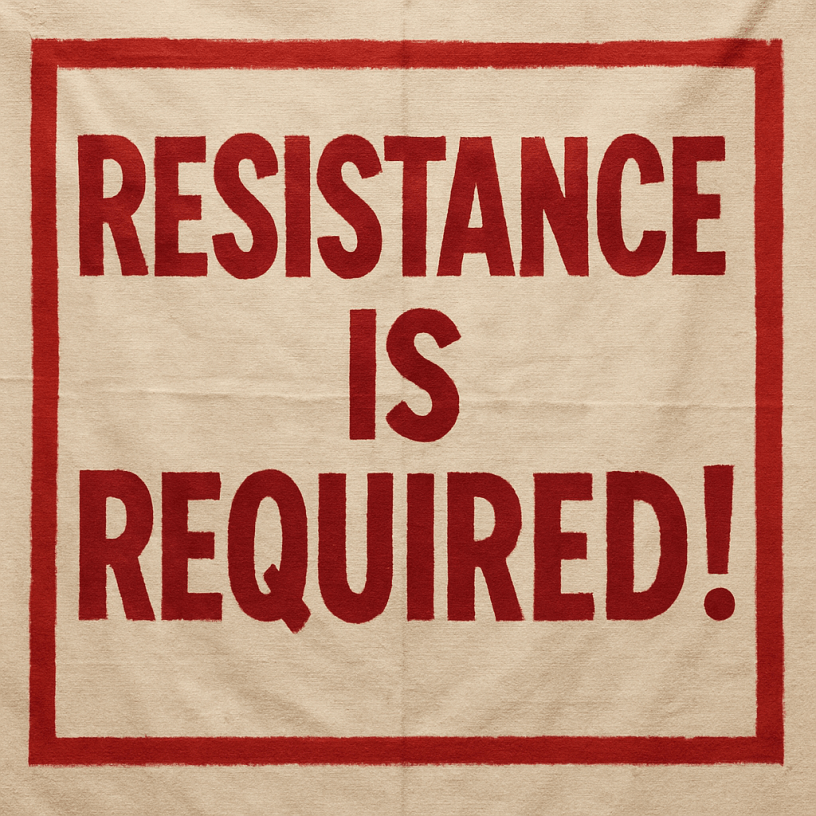
There is nothing soft about enforcing laws against violence. Real conspiracies, real assaults, real arsons should be prosecuted. But the remedy for speech we hate is more speech and better speech, not the hand of the state on the throat of civil society.
The guardrails are not theoretical. Courts have been a backstop before and can be again. Congress can tether executive enthusiasm to constitutional boundaries through oversight, appropriations, and legislation. Civil liberties organizations can coordinate legal challenges and public education. Independent media and academia can document abuses and defend the public square. And citizens can refuse the false choice between security and freedom by insisting on both.
Most of all, we can reject the moral sorting of victims by party. If Charlie Kirk’s murder moved you, Melissa Hortman’s assassination should too. A politics that grieves only for its own is not strong; it’s brittle. A state that punishes dissent is not secure; it’s scared. The republic we keep will be the one we defend—for everyone.
For ongoing coverage and resources, see: https://endfascism.xyz
Conclusion
Trump’s “not familiar” remark about Melissa Hortman was more than a verbal tic; it was a tell. Coupled with vows from senior officials to “dismantle” a perceived left-wing network, it sketches a doctrine that risks recasting political opponents as internal enemies. The First Amendment exists to prevent exactly that move. Enforce criminal laws, yes. But criminalize a worldview? That is a line no constitutional democracy can cross and remain one.
References
ACLU. (n.d.). Free speech and the First Amendment. American Civil Liberties Union. https://www.aclu.org/
Brandenburg v. Ohio, 395 U.S. 444 (1969).
CBS News. (2025, September 15). Trump says he would have lowered flag for Minnesota Democrat if he had been asked. https://www.cbsnews.com/
Holder v. Humanitarian Law Project, 561 U.S. 1 (2010).
Minnesota Star Tribune. (2025, September 16). Trump says he would’ve lowered flags for Melissa Hortman if Walz had asked. https://www.startribune.com/
New York Post. (2025, September 15). On “Charlie Kirk Show,” Miller vows DOJ, DHS crackdown on left-wing groups “promoting violence.” https://nypost.com/
FactCheck.org. (n.d.). No, the U.S. can’t designate Antifa a domestic terrorist organization. https://www.factcheck.org/
Additional background on COINTELPRO and McCarthyism: Church Committee reports; archival materials via the National Archives and Records Administration. https://www.archives.gov/
Discover more from WPS News
Subscribe to get the latest posts sent to your email.

