By Cliff Potts
On November 25, 2026, New York City will once again pause to recognize Evacuation Day—the moment in 1783 when British forces departed Manhattan, ending seven years of military occupation and effectively closing the final chapter of the American Revolutionary War. Though long overshadowed by the national prominence of Thanksgiving, the anniversary continues to hold deep historical weight for scholars, preservationists, and New Yorkers intent on keeping the city’s earliest narratives alive.
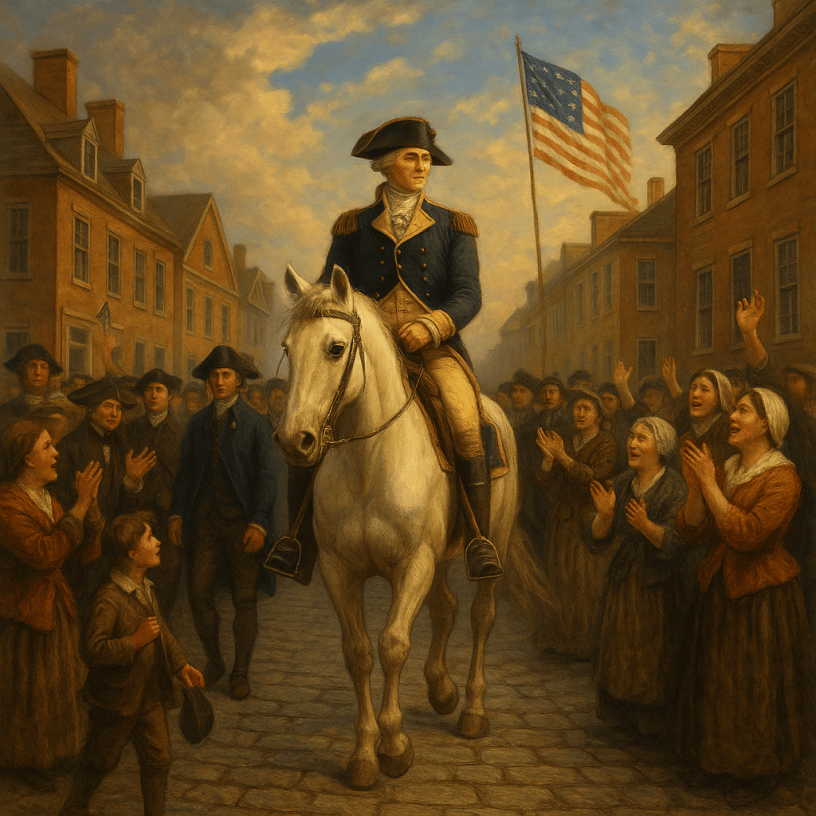
Evacuation Day commemorates the withdrawal of British troops under the orders of Sir Guy Carleton, who oversaw the final embarkation from the Battery as General George Washington led Continental Army troops back into the city (Barnes, 2020). The British occupation, beginning in 1776 after the Battle of Long Island, transformed Manhattan into the empire’s primary North American stronghold. Fires, imprisonment, and strict martial administration defined daily life for the civilians who remained behind (Burrows & Wallace, 1999). Washington’s return on that cold November afternoon marked not just a military turnover, but a psychological liberation for residents who had lived under foreign rule for nearly a decade.
The 2026 observance will feature walking tours, public lectures, wreath-laying ceremonies, and a commemorative flag-raising at Bowling Green—the site where patriots tore down the gilded statue of King George III shortly before the occupation. Historical societies across the city continue working to elevate public awareness of the date, noting that for much of the 19th century Evacuation Day was celebrated with parades, fireworks, civic banquets, and political speeches (Stokes, 1915). Only in the early 20th century did the holiday fade from public life as Thanksgiving expanded into a national cultural anchor.
This year’s commemorations arrive during a renewed surge of interest in early American urban history. Historians argue that Evacuation Day offers lessons not only in patriotism, but in the fragility of civil liberties during wartime occupations. “It remains one of the most important days in New York’s evolution from a colonial outpost to an independent American metropolis,” notes Dr. Alicia Bradford of the New-York Historical Society. “It reminds us that the fight for autonomy happened not just on battlefields but in cities, streets, and homes where ordinary people endured extraordinary pressures.”
New York City officials have increasingly worked with heritage groups to restore the holiday’s visibility, seeing it as a unique civic identity marker rooted in resilience, multiculturalism, and democratic aspiration. In a city defined by rapid change, Evacuation Day offers grounding—a reminder that New York’s defining spirit began with a long-awaited moment of relief, reclamation, and possibility.
APA References
Barnes, J. (2020). The final days of the British occupation. Journal of Early American Studies, 18(3), 455–478.
Burrows, E. G., & Wallace, M. (1999). Gotham: A history of New York City to 1898. Oxford University Press.
Stokes, I. N. P. (1915). The iconography of Manhattan Island. Robert H. Dodd.
Discover more from WPS News
Subscribe to get the latest posts sent to your email.

