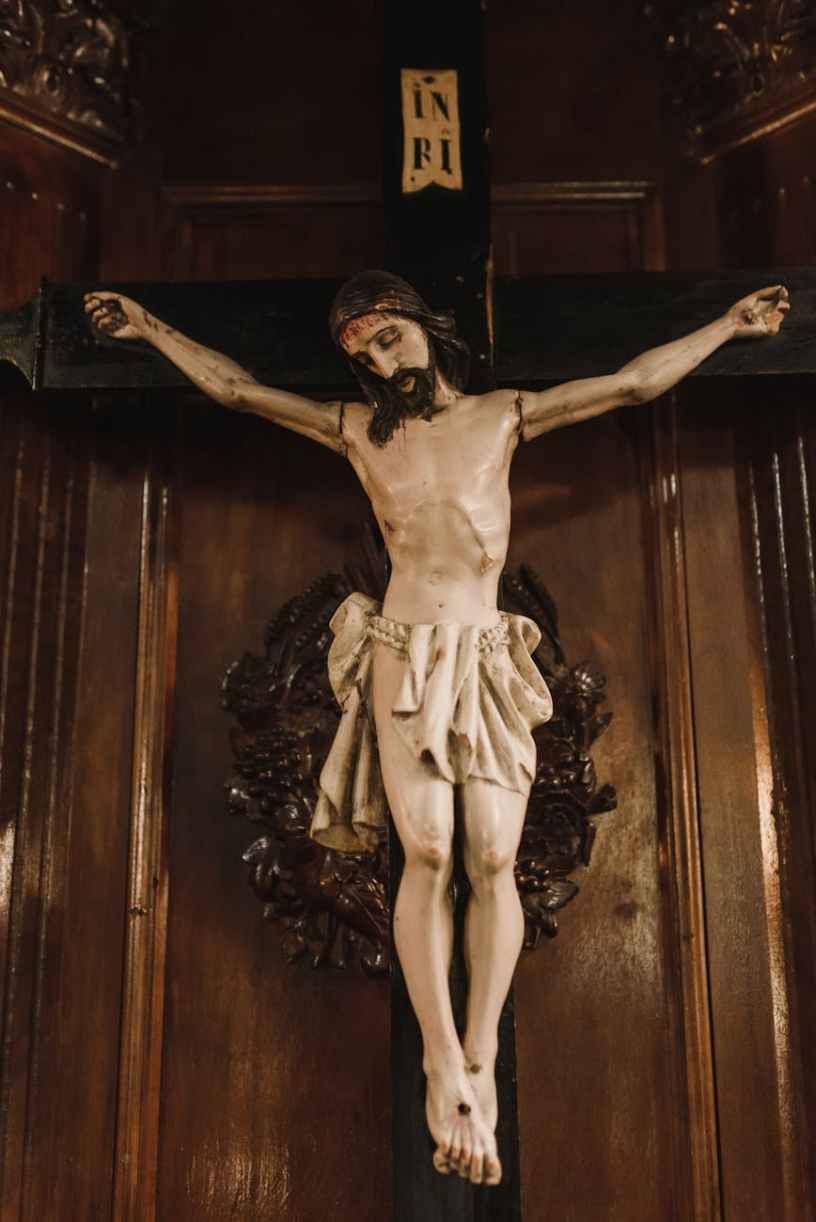
By Cliff Potts
Christian theology insists that Jesus understands the human condition because he was “tempted in all things,” because he suffered, because he died. That claim is repeated so often it has hardened into reflex. But it is worth asking—carefully, without mockery or rebellion—what kind of human life Jesus actually lived, and which parts of the human experience remain outside that story.
Jesus suffered young. Brutally, unjustly, and publicly. There is no minimizing that. Physical pain, betrayal by friends, state violence, fear, abandonment—these are real and severe forms of suffering. But they are not the whole of human suffering. They are not even most of it.
Human life is not defined only by moments of acute cruelty. It is shaped by accumulation: years of responsibility, slow erosion, repetition, disappointment that never resolves into drama. Most suffering is not a single cross-bearing moment. It is decades of waking up tired. Of watching hopes narrow. Of carrying obligations that do not end. Of discovering that effort does not guarantee meaning, and faith does not ensure repair.
Jesus did not grow old.
He did not watch his body betray him gradually. He did not live long enough to become invisible. He did not experience the grinding humility of diminished relevance, reduced strength, or being quietly replaced. He did not navigate the long arc of compromise between ideals and survival. He did not bury friends one by one and realize there would be no replacement generation coming behind him to make it better.
He did not raise children who drifted away. He did not manage a household under economic pressure for decades. He did not endure the slow corrosion of institutions that once promised stability. He did not face the kind of disappointment that comes not from catastrophe, but from continuity—when nothing dramatic happens, and nothing improves.
The gospel accounts are largely silent on long-term responsibility. Jesus is portrayed as itinerant, unencumbered, unattached in the ways that most adults are not free to be. That freedom is part of what gives the story its power. It is also part of what limits its experiential reach.
There is a difference between acute brutality and chronic disappointment. Between being tortured by the state and being worn down by life. Between dying for a cause and living long enough to wonder whether the cause mattered at all. Theology often collapses these distinctions for the sake of coherence, but lived experience does not.
When Christians say Jesus “understands,” they are making a theological claim, not an experiential one. Theology can assert completeness; experience measures credibility differently. For some believers, the intensity of Jesus’ suffering is enough. It reassures them that God has seen the worst. That narrative comforts those whose pain is sharp, recent, or still framed by expectation.
But for others—especially those who have lived long enough to know that suffering often arrives without climax or resolution—the claim rings thin. Not false, but incomplete. The Jesus of the gospels knows agony. He does not know attrition.
This is not an argument against faith, nor a denial of what the story offers. It is an acknowledgment that the Christian narrative speaks more clearly to certain stages of life than others. Youth can imagine substitution. Age demands recognition.
If Jesus did not live long enough to experience the slow unraveling that defines so many human lives, what does it mean to say he fully understands us now? And what, if anything, fills that gap when belief matures but the story does not?
Discover more from WPS News
Subscribe to get the latest posts sent to your email.

