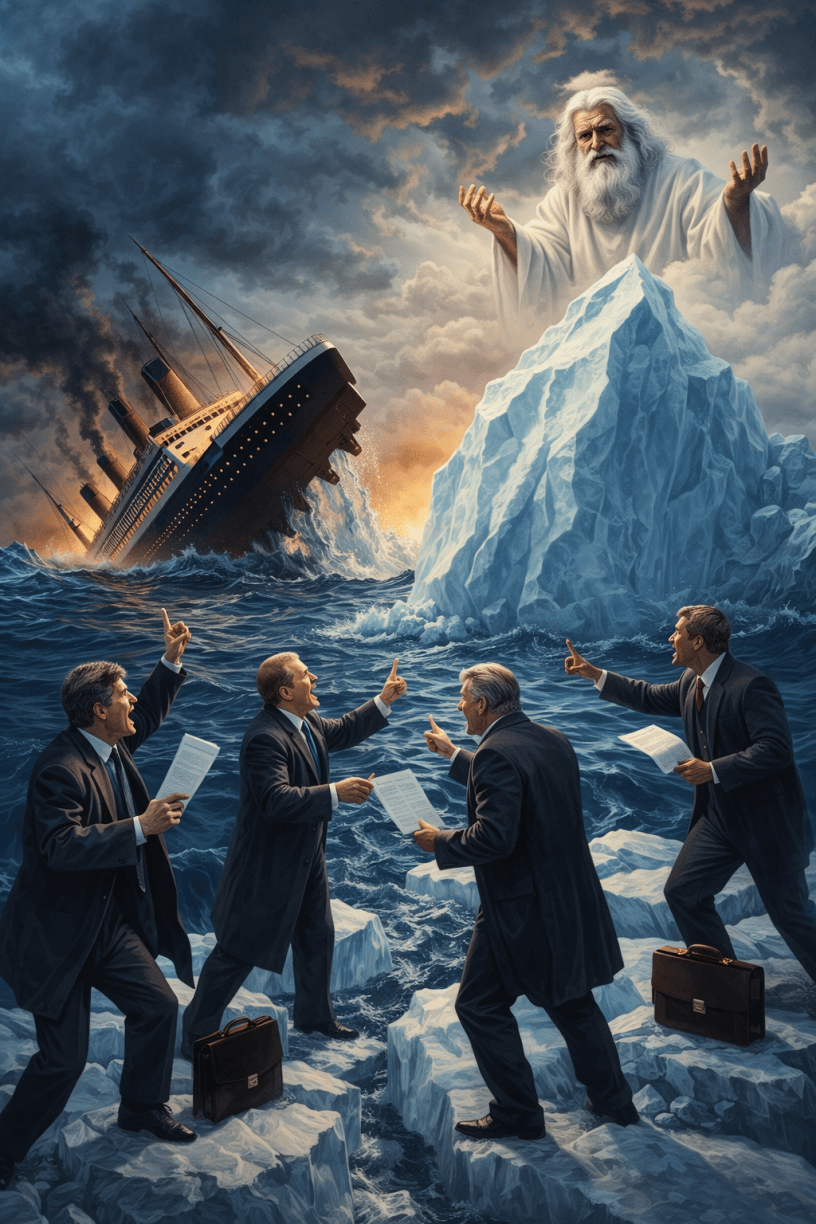
Why Congressional Conflict Is Still Performance—And Why That Matters
By Cliff Potts
Editor-in-Chief, WPS News
Trained for Conflict, Not Collapse
Members of the United States House of Representatives are, by training and temperament, professional arguers. A large majority are lawyers. They are educated in adversarial reasoning, rhetorical escalation, procedural maneuvering, and public persuasion. None of this is accidental. It is the core skill set of modern legislative politics.
This matters because it explains why the current era of congressional conflict, however loud, remains contained. What appears to be chaos is more accurately understood as structured performance.
Litigation Culture as Political Method
Legal training emphasizes control. Arguments are sharpened, not improvised. Language is selected for effect. Aggression is deployed strategically and withdrawn just as deliberately. In court, as in Congress, the objective is not emotional release but advantage.
What the public witnesses on the House floor—shouting, insults, procedural brinkmanship—is therefore not loss of control. It is litigation culture translated into politics.
These are people trained to argue without crossing lines that end the case.
Why the Shouting Doesn’t Escalate
The absence of physical violence between representatives is not evidence of civility. It is evidence of discipline.
Lawmakers understand that violence would invalidate the performance itself. It would collapse donor confidence, undermine institutional legitimacy, and trigger consequences no amount of rhetorical framing could contain. As long as conflict remains verbal, it remains governable.
The system tolerates noise.
It does not tolerate rupture.
The Utility of Spectacle
Public conflict serves multiple purposes simultaneously. It reinforces partisan identity, sustains media attention, and provides a sense of motion in an otherwise stagnant policy environment. Most importantly, it channels public anger outward, away from the structural consensus that persists beneath the surface.
The spectacle distracts from continuity. While the arguments are theatrical, the underlying economic and institutional arrangements remain largely unchanged.
This is not dysfunction. It is design.
Performance as Containment Strategy
Political theater is not new. What is new is its saturation. In the current environment, performance functions as a containment strategy—absorbing pressure that might otherwise challenge the system itself.
As long as lawmakers remain performers rather than combatants, the institution holds. The conflict is visible, but the boundaries are respected. The audience is engaged, but the structure remains intact.
The Line That Still Matters
This is why physical violence between members would be so consequential. It would signal not merely anger, but failure of performance. It would mean that legalistic containment had broken down and that factional pressure could no longer be managed symbolically.
Until that moment, the shouting should be understood for what it is: a practiced skill, not a precursor to collapse.
The Strategic Implication
Observers looking for signs of imminent breakdown should not focus on volume or language. They should watch for loss of role discipline. When lawmakers stop acting like lawyers and start acting like combatants, the system will have entered a different phase.
Until then, the conflict remains theatrical—designed to look unstable while keeping the core remarkably intact.
For more social commentary, please see Occupy 2.5 at https://Occupy25.com
References (APA)
Goffman, E. (1959). The presentation of self in everyday life. Anchor Books.
Mann, T. E., & Ornstein, N. J. (2012). It’s even worse than it looks: How the American constitutional system collided with the new politics of extremism. Basic Books.
U.S. House of Representatives. (2024). Membership demographics and professional backgrounds. https://history.house.gov
Discover more from WPS News
Subscribe to get the latest posts sent to your email.
 WPS News