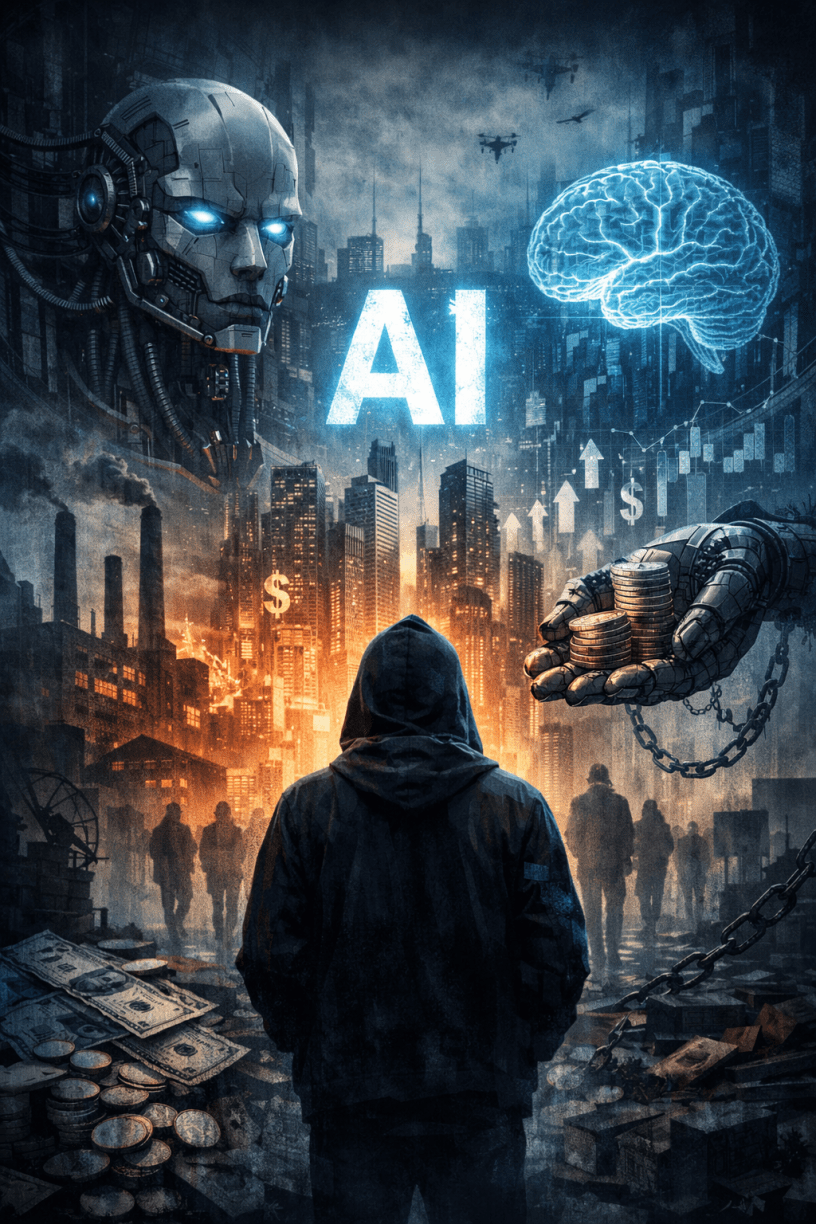
Every technological wave comes with the same sermon.
This one is no different.
Artificial intelligence, we’re told, is the transformation of our age. Learn it now or be left behind. Invest early. Adapt or die. The people saying this sound eerily familiar—because they are saying the same things they said about the internet, about websites, about social media, about apps, about crypto, about NFTs, about the creator economy, about “learning to code.”
And just like before, the promises are aimed downward, while the profits move up.
Let’s get one thing clear immediately, so nobody wastes time arguing with ghosts:
AI is a powerful tool. But it is just a tool.
It is not a career guarantee.
It is not a wealth engine.
It is not a moral force.
It is not a substitute for policy, wages, labor protections, or economic reform.
Tools don’t fix systems. They amplify them.
The recycled promise
We were promised “bazillions” before. Not metaphorically—explicitly. Passive income. Freedom from bosses. Democratized opportunity. A rising tide that would lift everyone.
What actually happened is well documented:
- A small number of platforms consolidated power.
- A thin layer of early adopters and capital holders did very well.
- Everyone else absorbed the cost, the risk, the retraining, and the instability.
Most people did not get rich on the internet.
They got tracked, monetized, deskilled, outsourced, and eventually replaced.
AI follows that same economic grammar.
AI doesn’t level the field — it tilts it
AI does not erase inequality. It accelerates it.
If you already control:
- capital, AI scales it;
- distribution, AI amplifies it;
- authority, AI entrenches it.
If you don’t, AI makes your labor cheaper, faster, and more disposable.
This is not innovation as liberation. It is efficiency applied unevenly—the defining feature of late-stage capitalism.
“Learn AI” is the new obedience test
You are told that success hinges on your willingness to adapt. If you fail, it will be framed as a personal deficiency, not a structural one.
This is familiar too.
People were told to learn social media, build brands, grind content, hustle harder. When the platforms changed the rules—as they always do—the losses were individualized, while the gains remained centralized.
Learning AI is reasonable.
Believing AI will save you is not.
Using a tool is one thing.
Betting your future on platforms you do not own, control, or govern is something else entirely—and history has been unforgiving on this point.
What the hype won’t say
The people pushing the loudest AI optimism are rarely selling outcomes. They are selling:
- platforms,
- subscriptions,
- consulting,
- certifications,
- compliance.
Hope is the product.
Fear is the accelerator.
And the louder the promises get, the more cautious you should be.
A sober position
AI will be useful. In many places, it already is. It can assist, summarize, accelerate, and automate. Used thoughtfully, it can reduce friction and save time.
But usefulness is not prosperity, and efficiency is not justice.
If you learn AI, do it the same way you learn any tool:
- pragmatically,
- without worship,
- without mortgaging your future to the myth that this time will be different.
Because we’ve heard this promise before.
And it ended the same way every time.
For more social commentary, please see Occupy 2.5 at https://Occupy25.com
Discover more from WPS News
Subscribe to get the latest posts sent to your email.

