By Cliff Potts, CSO, and Editor-in-Chief of WPS News
For many Filipinos, judgments about the current government ultimately come down to one question: Can we afford to live? Economic management remains the strongest pillar of public approval—and the sharpest source of anxiety.
Surveys show that Filipinos generally trust the administration’s economic team and appreciate its emphasis on continuity. At the same time, everyday experience tells a harder story. Prices are up, wages lag behind, and relief often feels slower than the need.
This gap between macro-level confidence and household-level strain defines how Filipinos view the economy today.
What Filipinos Like About Economic Direction
Public confidence in economic leadership remains relatively high compared to other institutions. Many Filipinos point to three areas of reassurance.
First, there is a sense of competence at the top. Fiscal and monetary policy have stayed predictable, avoiding sudden shocks that could worsen inflation or scare off investment. For business owners and workers alike, steady rules matter.
Second, infrastructure spending continues to be visible. Roads, bridges, ports, and transport projects are widely cited as signs that long-term development has not been abandoned. Even critics acknowledge that these projects provide jobs and signal future growth.
Third, international credibility counts. Filipinos are aware that stable economic management helps keep borrowing costs down and protects the peso from extreme swings. For a country dependent on imports, this stability has real consequences at the grocery counter.
The Price of Daily Life
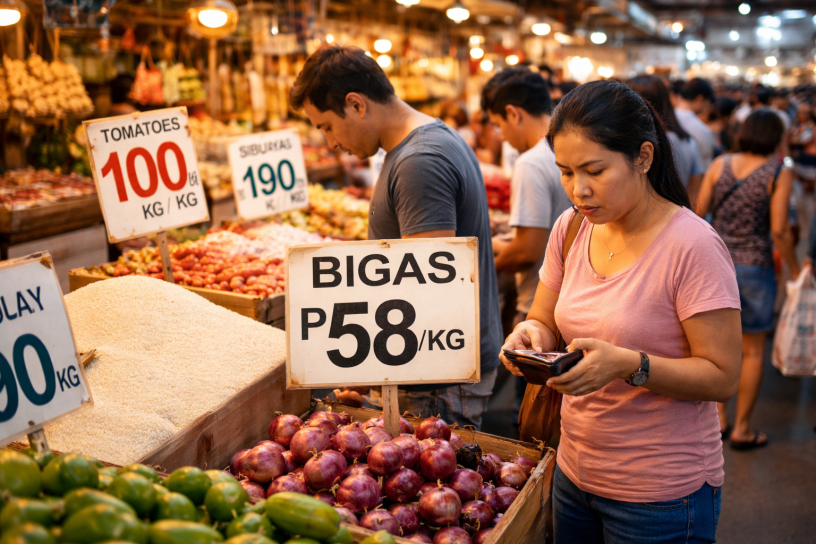
Despite these positives, inflation dominates public concern. Food prices—especially rice, vegetables, cooking oil, and fish—remain the most frequently cited problem in surveys and interviews.
For many households:
- Wages have not kept pace with price increases
- Transport and electricity costs strain monthly budgets
- Small increases feel large when margins are thin
Filipinos often express their frustration carefully. Rather than blaming a single policy, they describe a sense of being squeezed from all sides. Even when inflation slows statistically, relief is not immediately felt at home.
Relief Programs: Appreciated, but Uneven
Government assistance programs are generally viewed as well-intentioned but uneven in impact. Cash transfers, fuel subsidies, and targeted food aid are welcomed—yet many Filipinos say they arrive late or fail to cover rising costs.
There is also concern about consistency. Some communities report reliable access to assistance, while others feel overlooked. This unevenness feeds a perception that economic policy works better on paper than on the ground.
Jobs, Not Just Growth
Another recurring theme is employment quality. Filipinos recognize economic growth figures, but they want to see that growth translated into stable, well-paying jobs.
Young workers in particular report anxiety about:
- Contractual or short-term employment
- Limited wage progression
- The need to seek work abroad despite domestic growth claims
The economy may be expanding, many say, but not fast enough in ways that improve daily life for ordinary workers.
Conditional Confidence
Overall, Filipinos express cautious confidence in economic management. They appreciate stability, professionalism, and long-term planning. But that confidence is conditional.
If prices continue to rise faster than incomes, patience may wear thin. Filipinos are pragmatic: they understand global pressures, but they still expect their government to buffer the impact as much as possible.
As one respondent put it, “Magaling sa direksyon, pero mabigat pa rin ang buhay.”
(The direction is good, but life is still hard.)
Tomorrow’s installment will examine public services—where small improvements are noticed, but expectations remain high.
References
Bangko Sentral ng Pilipinas. (2024). Inflation report and monetary policy overview. Manila, Philippines.
Social Weather Stations. (2024). Public assessment of economic conditions and quality of life. Manila, Philippines.
Asian Development Bank. (2023). Philippines: Growth, inflation, and labor market trends. Manila: ADB.
Discover more from WPS News
Subscribe to get the latest posts sent to your email.

