By Cliff Potts, CSO, and Editor-in-Chief of WPS News
Baybay City, Leyte, Philippines — January 20, 2026
Operating Environment
The West Philippine Sea is not an active war zone. It is an operating environment shaped by sustained, low-level interference intended to restrict access without triggering armed conflict. The methods used are deliberate, repeatable, and calibrated to remain below clear military thresholds.
This pressure does not rely on decisive battles or territorial seizures. Instead, it focuses on delay, disruption, and cost. Fishing activity, survey work, resupply missions, and routine patrols are not stopped outright. They are slowed, obstructed, and made more expensive over time.
The objective is not confrontation. The objective is attrition.
Understanding how this interference functions is the first requirement for reducing its effectiveness.
How Interference Is Applied
Maritime interference in the West Philippine Sea follows a consistent pattern.
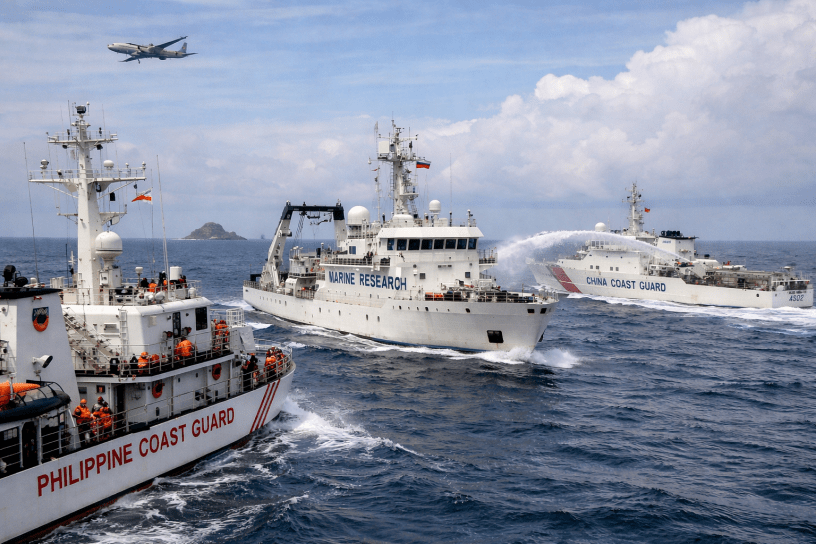
Civilian-marked or coast-guard-marked vessels approach Philippine ships at close range. These vessels maneuver to block forward movement, cross bows at unsafe distances, or occupy narrow operating areas. In some cases, water cannons, laser illumination, or acoustic devices are used to force course changes without direct collision.
Radio warnings are issued, often framed as safety notices or jurisdictional claims. The interfering vessels rarely fire weapons. Instead, they rely on proximity, repetition, and time.
The effect is cumulative. Each delay increases fuel consumption, crew fatigue, maintenance demands, and insurance risk. Each aborted mission discourages future operations.
These tactics work because they exploit restraint. Civilian crews, survey teams, and government operators are trained to avoid escalation. Interference is structured around that caution.
Why These Actions Stay Below Conflict Thresholds
The interference is designed to avoid clear triggers for military response.
Vessels are typically unarmed or lightly armed. They employ non-lethal measures. Encounters occur in contested waters rather than undisputed territory. Actions are framed as law enforcement or safety enforcement, not combat.
This ambiguity limits response options. Military escalation carries political and legal risk. Inaction, however, allows the interference to continue.
This balance favors the actor applying pressure unless the targeted state adapts its operating methods.
Measurable Operational Effects
The impact of sustained interference can be measured in practical terms:
- Fewer completed survey days per month
- Increased repair and maintenance cycles
- Higher insurance premiums for civilian operators
- Reduced contractor participation
- Delayed resupply schedules for outposts
These outcomes do not require a single decisive incident. They emerge through repetition over time.
Problem Framing: A Systems Issue
Maritime interference is not a single event. It is a system.
The system relies on three inputs:
- Persistent presence near Philippine operations
- Low-risk harassment methods
- Predictable Philippine response patterns
As long as these inputs remain stable, the output remains the same: delayed activity and rising costs.
Changing the outcome requires altering the system, not reacting to individual incidents.
Counter-Measures That Reduce Effectiveness
Several measures reduce the impact of maritime interference without escalation.
Routine Escort Operations
Coast Guard escort of civilian and survey vessels changes the risk calculation. Interference becomes a documented interaction with a state vessel rather than a private encounter.
Standardized Documentation
Consistent video recording, GPS logging, and incident reporting reduce ambiguity. Documentation shifts encounters from isolated events into a cumulative evidentiary record.
Presence Normalization
Regular patrols and predictable resupply schedules reduce the leverage of interference. When operations continue despite harassment, the tactic loses effectiveness.
Distributed Operations
Shorter missions, modular survey teams, and varied timing reduce the payoff from blocking a single vessel or route.
These measures do not eliminate interference. They reduce its effectiveness by increasing effort and exposure while limiting escalation risk.
Risks and Limitations
These counter-measures require resources.
Expanded patrols demand trained crews and funding. Documentation requires secure data handling. Escorts can still be delayed. None of these steps force immediate compliance.
They do, however, provide resilience. Over time, they prevent interference from achieving its intended effect.
Bottom Line
Maritime interference in the West Philippine Sea is a calculated effort to raise costs and discourage activity without open conflict. It succeeds only when it remains cheap, low-risk, and effective.
By adjusting operating patterns, standardizing documentation, and maintaining routine presence, the Philippines can reduce the impact of these tactics without escalation. The objective is not to stop every incident. The objective is to ensure that interference no longer works as designed.
For more social commentary, please see Occupy 2.5 at https://Occupy25.com
References (APA)
Bateman, S. (2017). Maritime security and law enforcement in the South China Sea. Contemporary Southeast Asia, 39(2), 221–245.
Erickson, A. S., & Kennedy, C. (2016). China’s maritime militia. Center for Naval Analyses.
Permanent Court of Arbitration. (2016). The South China Sea Arbitration (Philippines v. China).
United Nations. (1982). United Nations Convention on the Law of the Sea.
Discover more from WPS News
Subscribe to get the latest posts sent to your email.

