By Cliff Potts, CSO, and Editor-in-Chief of WPS News
Baybay City, Leyte, Philippines — February 5, 2026
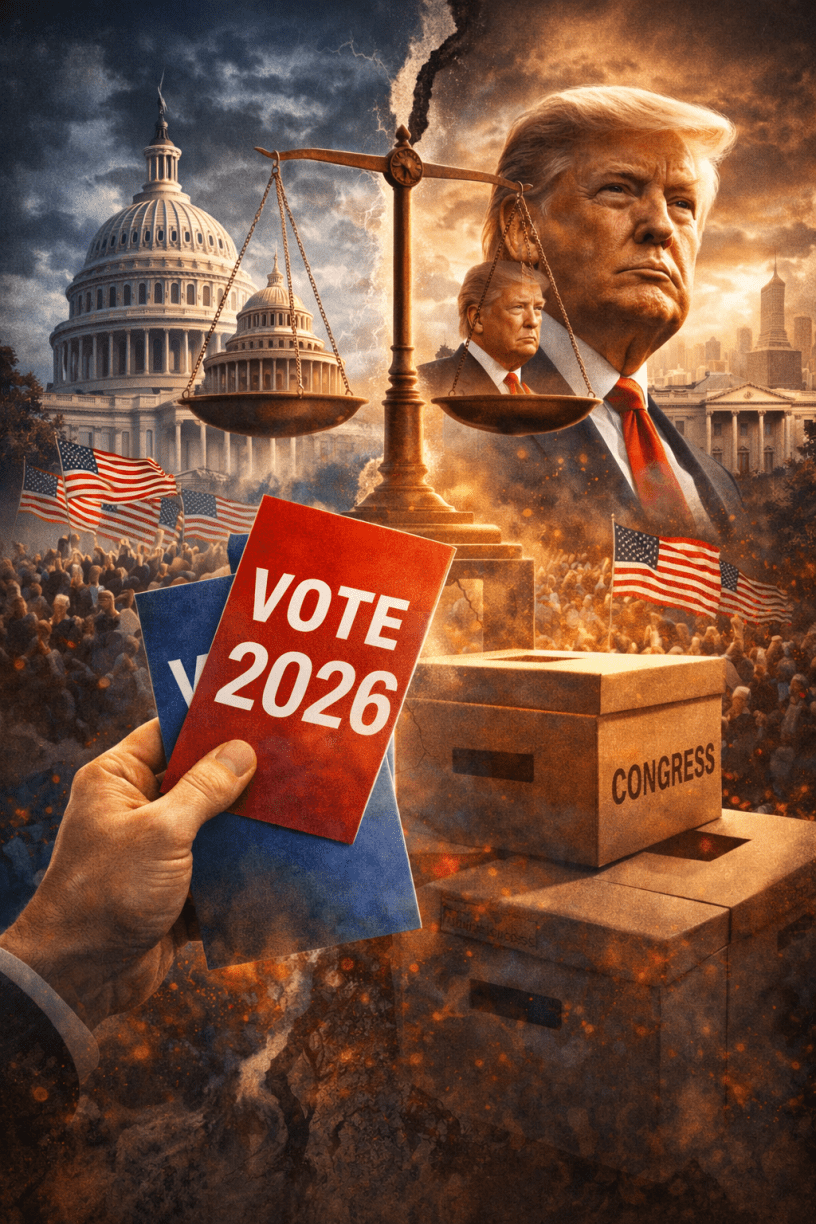
For readers outside the United States, the phrase midterm elections can sound minor, secondary, or symbolic. In many democracies, national elections are about changing the head of government. In the U.S. system, midterms are about something different: control of constraint.
The 2026 midterm elections will not decide who is president. Donald Trump will remain in office regardless of the outcome. What they will decide is whether the president governs with resistance or with relative freedom.
Every two years, all members of the U.S. House of Representatives face election. At the same time, roughly one-third of the U.S. Senate is elected. Together, these races determine who controls Congress for the next two years.
Congress matters because it is the primary counterweight to presidential power.
If the president’s party controls Congress, investigations slow, oversight weakens, and executive authority expands by default. If the opposition controls one or both chambers, the presidency becomes constrained—not removed, but limited.
This distinction is often misunderstood outside the United States. Midterms are not a referendum that can end a presidency. They are a mechanism that can change the operating environment around a presidency.
The House of Representatives controls budgets, investigations, subpoenas, and impeachment proceedings. The Senate controls confirmations, treaties, and the final step of any impeachment trial. When Congress changes hands, the tools available to lawmakers change immediately once the new Congress is seated.
That transition occurs on January 3, 2027, not on Election Day in November 2026. Between those dates, political signals are sent, markets adjust, and foreign governments quietly recalibrate expectations.
For governments in the European Union, the midterms matter because congressional control affects sanctions policy, defense funding, trade enforcement, and treaty reliability. For countries in Asia, including the Philippines, the outcome shapes alliance behavior, military posture, and diplomatic predictability in the Indo-Pacific.
What midterms do not do is create instant correction. They do not shorten a presidential term. They do not reverse executive actions overnight. They do not guarantee accountability.
They change leverage.
A president facing a hostile Congress must negotiate, delay, or retreat on some actions. A president facing a friendly Congress faces fewer obstacles and less scrutiny. That difference is why midterms often matter more for day-to-day governance than presidential elections themselves.
For foreign observers, the correct question is not “Will the midterms remove Trump?” They will not. The correct question is “Will the midterms increase or reduce the constraints under which he governs?”
That answer will shape U.S. behavior from 2027 onward, regardless of who occupies the White House.
For more social commentary, please see Occupy 2.5 at https://Occupy25.com
This essay will be archived as part of the ongoing WPS News Monthly Brief Series available through Amazon.
References
U.S. Constitution, Article I.
Congressional Research Service. (2024). The congressional budget and oversight process.
National Archives. (n.d.). The Twentieth Amendment.
Discover more from WPS News
Subscribe to get the latest posts sent to your email.

