By Cliff Potts, CSO, and Editor-in-Chief of WPS News
Baybay City, Leyte, Philippines — February 1, 2026
A Familiar Question, Uncomfortable Timing
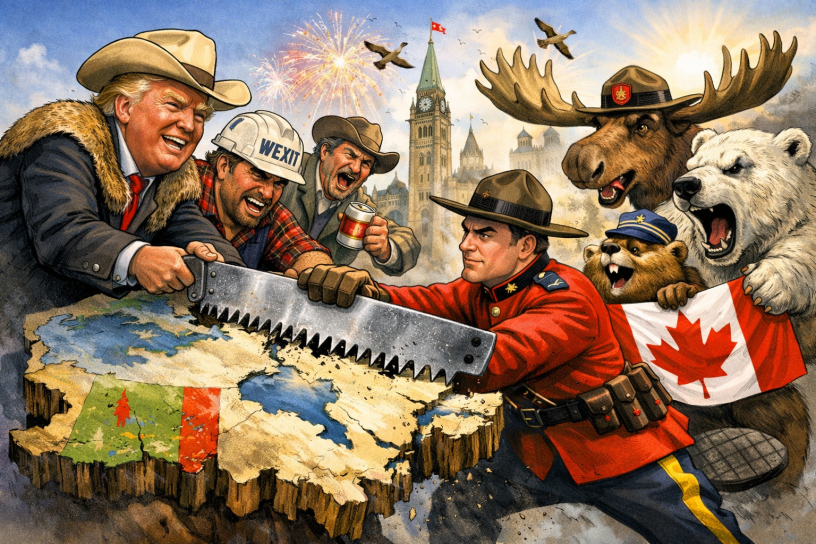
Reports that individuals connected to the Trump administration met with Alberta separatist figures have triggered a predictable—and justified—question in Canada: is the United States testing internal fault lines in a close ally to advance its own political leverage? Comparisons to Russian-style “wedge politics” have followed quickly. While the facts do not support claims of a full-scale destabilization campaign, the behavior itself is not benign. It fits a pattern of norm-breaking pressure politics that undermines trust between democratic partners.
What Actually Happened
Public reporting confirms that Alberta separatist advocates sought meetings with U.S. officials and sympathetic policy figures in Washington. These contacts appear exploratory rather than operational. There is no evidence of U.S. funding, formal recognition, or institutional backing for Alberta independence. The separatist movement itself remains marginal within Alberta, where polling continues to show limited support for secession.
That said, even informal engagement matters. When officials from a powerful neighboring state entertain conversations with separatists in another democracy, the signal alone carries weight—especially in a global environment already strained by disinformation, economic coercion, and declining respect for sovereignty norms.
Why the “Putin Playbook” Comparison Persists
The comparison to Russian tactics is less about scale and more about method. Modern influence campaigns rarely begin with tanks or treaties. They start with ambiguity: exploratory contacts, rhetorical sympathy, and strategic silence when allies raise concerns. Russia refined this approach in Eastern Europe and elsewhere, exploiting grievances without immediately committing state resources.
What distinguishes the Alberta case is transparency. These meetings were reported, debated, and criticized openly. That openness matters. It places the activity closer to reckless diplomacy than covert subversion. Still, democracies do not need clandestine operations to destabilize relationships; sometimes all it takes is a willingness to blur lines that were previously respected.
Strategic Consequences, Not Conspiracies
There is no credible evidence that the Trump administration is actively attempting to fracture Canada. But there is evidence of a broader posture: transactional diplomacy, tolerance for disruption, and a readiness to treat allies’ internal politics as leverage points rather than off-limits terrain. For Canada, this is less an existential threat than a warning signal. For the United States, it is another example of short-term maneuvering that erodes long-term alliances.
The Bottom Line
This is not a Moscow-style influence operation. It is something more mundane—and in its own way more corrosive: great-power indifference to democratic norms when they become inconvenient. Allies notice. Trust, once strained, is difficult to rebuild.
For more social commentary and long-form analysis, please see Occupy 2.5 at https://Occupy25.com.
Archive Notice: This article is part of the WPS News archival record and is preserved for long-term reference and citation.
References (APA)
Reuters. (2026). Canadian officials urge U.S. to respect sovereignty amid separatist contacts.
The Guardian. (2026). Alberta separatists face backlash after reported U.S. meetings.
Global News. (2026). Canadian leaders criticize foreign engagement with separatist movements.
Discover more from WPS News
Subscribe to get the latest posts sent to your email.
 WPS News