By Cliff Potts, CSO, and Editor-in-Chief of WPS News
Baybay City, Leyte, Philippines — August 26, 2026
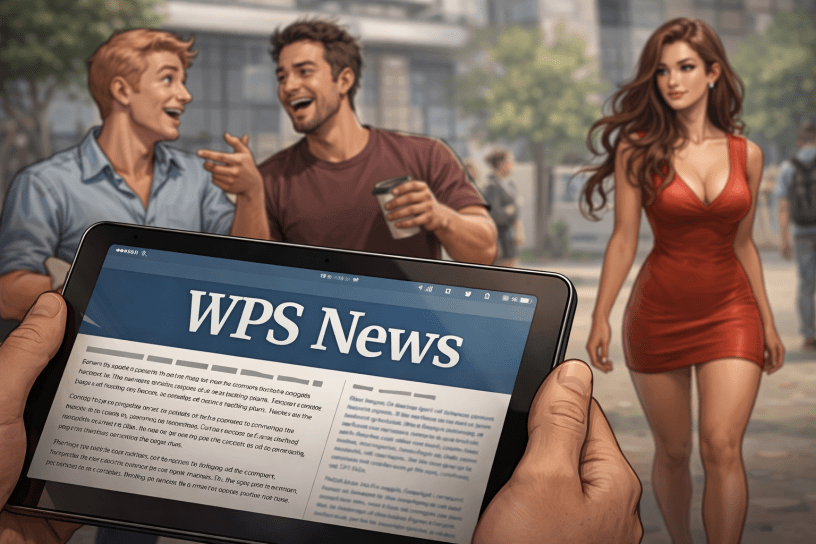
It is late summer. The air is still warm. Campuses are full again. People are out in public, newly visible, newly social, newly distracted. Everyone is talking to everyone else, or at least performing the appearance of it. There is a great deal of energy being spent on being noticed.
This is not a criticism. It is an observation.
While all of this is happening, serious journalism is being produced quietly, without pay, without promotion, and without the machinery that would place it in front of the people moving past it. WPS News continues to publish reporting, analysis, and archival work in the public interest, largely unseen, not because it is rejected, but because it is never placed in the line of sight.
This article is published as a record of that reality and will be archived accordingly.
Attention Is a Finite Resource
In moments like this—early in the academic year, before routines harden—attention flows toward spectacle, novelty, and social signaling. People are not searching for depth. They are searching for connection, validation, and a sense that they are where they are supposed to be.
Phones are out. Conversations overlap. News exists, but it competes with everything else that feels immediate.
In that environment, unpaid journalism does not lose because it lacks value. It loses because it does not demand attention in the ways modern systems reward.
The Work Still Happens
WPS News does not stop publishing because it is ignored. It does not change its standards because quieter work travels more slowly. It continues to do what newspapers have always been meant to do: document events, contextualize risk, revisit uncomfortable truths, and preserve a record that does not depend on trends.
This work is unpaid. It is unfunded. It is unboosted.
That does not make it optional.
Public-interest journalism does not become less necessary because the public is busy. It becomes more necessary precisely when attention is elsewhere, when serious matters are crowded out by louder, brighter, easier things.
Not a Moral Failing
It would be easy to frame this as a failure of the audience. That would be lazy and inaccurate.
People are not doing something wrong by being young, social, distracted, or interested in each other. That has always been true. What has changed is the structure that decides what gets amplified and what does not.
Unpaid journalism does not fit neatly into platforms designed to monetize engagement. It does not produce instant gratification. It does not promise status. It asks for time and focus at moments when both are scarce.
The Cost of Invisibility
The consequence of this imbalance is not that journalists feel underappreciated. The consequence is that important work accumulates quietly in the background, unread until hindsight makes it relevant again.
Warnings are issued early. Context is provided before it is fashionable. Analysis is published before it is safe. Then, later, when the moment passes or escalates, people ask why no one said anything sooner.
Someone did.
Why We Publish Anyway
WPS News publishes because journalism is not a popularity contest. It publishes because archives matter more than moments. It publishes because future readers will want to know whether anyone was paying attention while everyone else was looking elsewhere.
Being unpaid does not negate responsibility. Being ignored does not erase duty.
So the work continues. Quietly. Consistently. Without spectacle.
Not because it is noticed—but because it is necessary.
Discover more from WPS News
Subscribe to get the latest posts sent to your email.

