By Cliff Potts, CSO, and Editor-in-Chief of WPS News
Baybay City, Leyte, Philippines — February 17, 2026
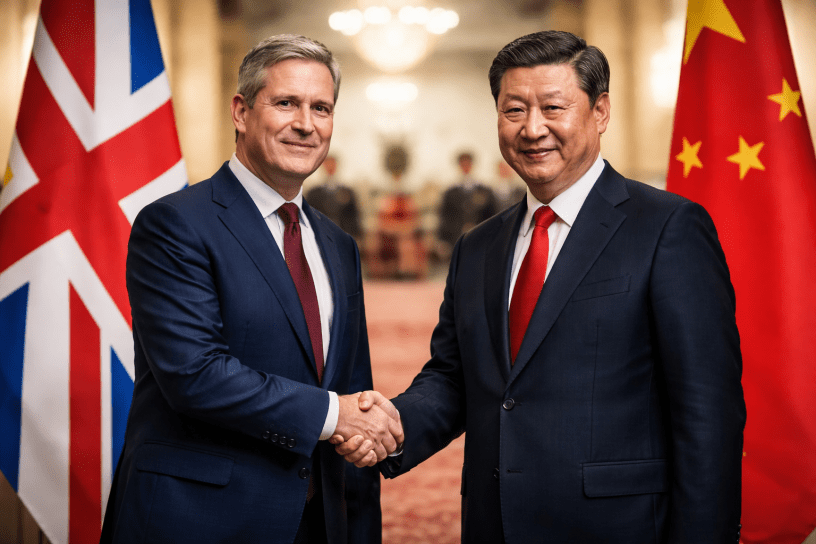
The United Kingdom has begun a renewed diplomatic effort to stabilize and repair relations with China, signaling a pragmatic shift in foreign policy as global economic and political alignments continue to evolve. Prime Minister Keir Starmer’s government has emphasized dialogue, trade continuity, and risk management rather than ideological confrontation, even as tensions between China and the United States remain elevated.
British officials have framed the outreach as a necessity rather than a realignment. China remains one of the UK’s largest trading partners, particularly in manufacturing supply chains, higher education, and financial services. The Starmer government has stressed that engagement does not imply endorsement of Beijing’s political system, but reflects economic realities in a fragmented global environment.
The move comes at a time when U.S. foreign policy has become less predictable for its allies. Washington’s withdrawal from multiple multilateral frameworks has increased pressure on middle powers such as the UK to hedge diplomatically, balancing security ties with economic exposure. European governments, in particular, face growing incentives to maintain functional relationships with China while attempting to reduce strategic dependencies.
For countries in the Indo-Pacific, including the Philippines, the UK’s recalibration is notable. Britain has expanded its regional presence in recent years through naval deployments, trade initiatives, and diplomatic engagement. A more pragmatic UK–China relationship may reduce friction in regional economic forums while complicating efforts to present a unified Western approach to China.
Analysis
The UK’s outreach reflects a broader trend among U.S. allies toward strategic hedging. Rather than choosing between Washington and Beijing, many governments are seeking to compartmentalize relationships—separating security concerns from economic cooperation where possible. This approach carries risks, but also reflects the limits of ideological alignment in an interconnected global economy.
From a Philippines-first perspective, the concern is stability rather than symbolism. Trade flows, infrastructure investment, and regional development are sensitive to major-power signaling. A less confrontational UK posture toward China may contribute modestly to economic predictability, even as security dynamics in the Indo-Pacific remain unresolved.
The long-term implication is a more multipolar diplomatic environment, with fewer unified blocs and more issue-by-issue alignment. For smaller and middle-income countries, this fragmentation creates both opportunity and uncertainty, requiring careful navigation between competing powers rather than reliance on a single patron.
References (APA)
Reuters. (2026, January). UK’s Starmer seeks to repair ties with China amid global tensions.
Associated Press. (2026, January). Britain rebalances China policy under new Labour government.
UK Foreign, Commonwealth & Development Office. (2025). Integrated Review Refresh: UK foreign policy priorities. https://www.gov.uk
Discover more from WPS News
Subscribe to get the latest posts sent to your email.

