By Cliff Potts, CSO, and Editor-in-Chief of WPS News
Baybay City, Leyte, Philippines — February 19, 2026
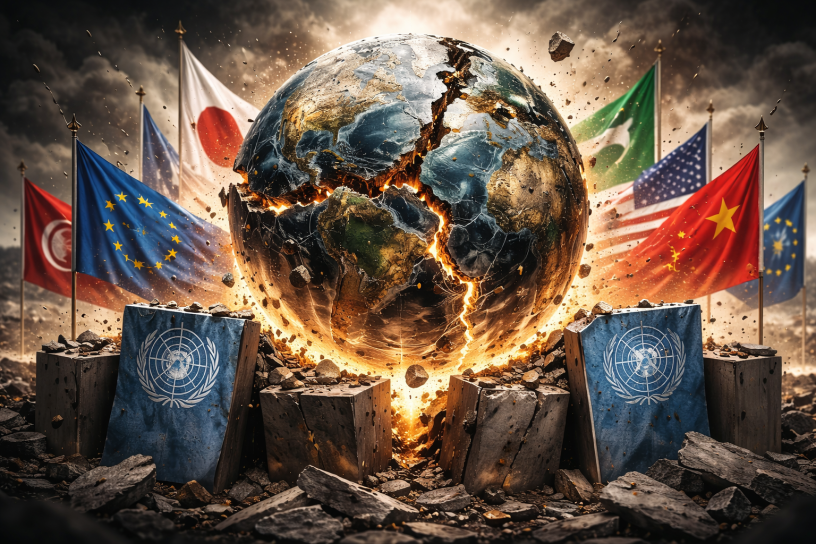
A series of recent U.S. withdrawals from major international frameworks has accelerated the fragmentation of global governance, raising concerns among allies and partner states about coordination, predictability, and crisis response. The exits from the World Health Organization and the Paris Climate Agreement, alongside reduced engagement in other multilateral forums, mark a sustained shift away from institution-based cooperation.
U.S. officials have defended the approach as a recalibration toward sovereignty and bilateral engagement, arguing that multilateral institutions are inefficient and misaligned with national interests. Critics counter that these bodies exist precisely to manage transnational risks—public health, climate change, trade stability—that no single country can address alone.
International responses have been mixed. European governments have reaffirmed support for multilateral institutions while exploring reforms to reduce reliance on U.S. leadership. In Asia, states have increased emphasis on regional mechanisms and diversified partnerships, seeking continuity amid uncertainty. China has expanded its influence within existing institutions and promoted alternative forums, reshaping norms and standards in the process.
For the Philippines, the consequences are practical. Multilateral institutions provide technical assistance, financing pathways, and coordination channels that support disaster response, health surveillance, and development planning. Fragmentation complicates access to these resources and increases transaction costs for smaller and middle-income countries navigating overlapping systems.
Analysis
The erosion of multilateralism does not produce a vacuum; it produces competition. As institutional cohesion weakens, power shifts toward states able to set rules, provide financing, and sustain long-term engagement. This dynamic disadvantages countries that depend on predictable, rules-based coordination.
From a Philippines-first perspective, the priority is resilience through diversification. Engaging multiple partners, strengthening regional cooperation, and investing in domestic capacity can mitigate some risks, but cannot fully replace global coordination. Transnational challenges—pandemics, climate impacts, supply-chain shocks—remain collective-action problems.
The longer-term implication is a world organized less by shared institutions and more by overlapping spheres of influence. Such a system may function during periods of stability but is less reliable during crises, when trust, speed, and coordination matter most.
Absent renewed commitment to multilateral frameworks, global governance is likely to remain fragmented, reactive, and uneven—conditions that favor short-term advantage over long-term stability.
References (APA)
Associated Press. (2026, January). U.S. exits WHO, raising concerns over global health coordination.
Reuters. (2026, January). Allies reassess multilateral cooperation after U.S. withdrawals.
United Nations. (2024). Our common agenda: Rebuilding trust in multilateralism. https://www.un.org
Discover more from WPS News
Subscribe to get the latest posts sent to your email.

