By Cliff Potts, CSO, and Editor-in-Chief of WPS News
Baybay City, Leyte, Philippines — June 16, 2026
The Mechanism Being Examined
Not all leverage is written into contracts.
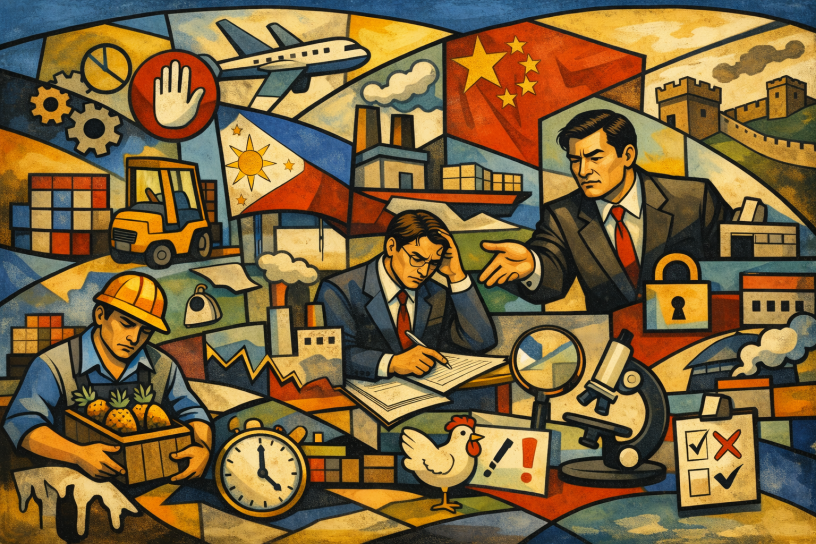
This essay examines political and economic pressure exercised outside formal agreements, particularly through trade restrictions, regulatory slowdowns, and selective enforcement framed as routine market behavior.
These actions are often described as “commercial responses.” In practice, they function as informal enforcement tools.
How Informal Pressure Works
Unlike contract clauses, informal pressure leaves little paper.
Common mechanisms include:
- sudden customs delays
- selective safety or quality inspections
- suspension of imports citing technical reasons
- regulatory reviews targeting specific firms or sectors
- licensing slowdowns without clear explanation
Individually, these actions can appear benign. Collectively, they send a clear signal.
Compliance is rewarded. Resistance is punished.
Why This Is Effective
Informal pressure works because it is:
- deniable
- reversible
- difficult to litigate
- costly to challenge
Affected governments and firms must choose between economic pain now or political concessions later. There is rarely a neutral option.
Unlike tariffs or sanctions, these measures often avoid formal dispute mechanisms and fall into gray zones of trade governance.
What the Record Shows
In multiple documented cases, trade restrictions or regulatory actions have followed:
- diplomatic disputes
- security cooperation with rival states
- criticism of Chinese domestic or foreign policy
- changes in investment or procurement decisions
The timing is often the evidence.
When pressure appears shortly after political disagreement and disappears after accommodation, the pattern becomes hard to ignore.
Who Bears the Cost
The immediate costs fall on:
- exporters and producers
- workers in affected industries
- regional economies dependent on trade
Over time, the cost shifts to governments forced to factor political retaliation into economic planning.
That is leverage achieved without rewriting a single contract.
Why This Matters for the Philippines
The Philippines is deeply integrated into regional trade networks.
Selective enforcement or regulatory pressure can affect:
- agricultural exports
- manufacturing supply chains
- tourism flows
- port operations
When economic access becomes conditional on political alignment, sovereignty narrows quietly.
Why This Fits the Pattern
Informal pressure complements formal contract design.
When renegotiation is constrained and contracts are opaque, off-contract pressure fills the gaps. Together, they form a coercive ecosystem that operates without open confrontation.
This is not unique to China. What distinguishes China is the scale, coordination, and persistence of these methods.
What Comes Next
The next essay will examine technology transfer and joint-venture requirements—how access to markets has been tied to the surrender of intellectual property and technical know-how.
The record continues.
For more social commentary, please see Occupy 2.5 at https://Occupy25.com
This essay will be archived as part of the ongoing WPS News Monthly Brief Series available through Amazon.
References (APA)
Evenett, S. J., & Fritz, J. (2021). Going it alone? Trade policy after globalization. CEPR Press.
Farrell, H., & Newman, A. (2019). Weaponized interdependence. International Security, 44(1), 42–79.
World Trade Organization. (2023). World trade report: Trade resilience and policy uncertainty. WTO.
Discover more from WPS News
Subscribe to get the latest posts sent to your email.
 WPS News