By Cliff Potts, CSO, and Editor-in-Chief of WPS News
Baybay City, Leyte, Philippines — February 4, 2026 (12:30 p.m. PhST)
Across the United States, a growing share of consequential political activity is no longer centered in Congress, courtrooms, or televised debates. It is unfolding in the streets — often quietly, unevenly, and with limited national attention.
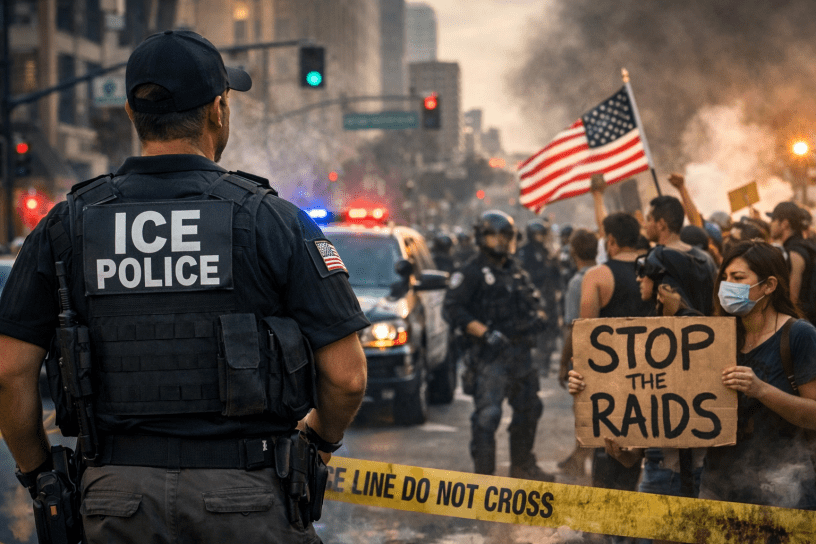
In recent weeks, immigration enforcement activity has increased in visibility and intensity in multiple urban areas. Larger operations, sudden raids, and a more pronounced law-enforcement presence have been reported in neighborhoods that historically saw limited federal activity. These operations appear designed not only to enforce policy, but to signal authority and deterrence through visibility.
At the same time, public response has shifted. Protests are occurring more frequently, though they are often smaller, localized, and short-lived. Many take place outside courthouses, detention facilities, or specific neighborhoods following enforcement actions. These events may not register nationally, but they are increasingly common at the local level and frequently involve arrests or confrontations.
What distinguishes the current moment is normalization.
Armed agents operating in routine public spaces are becoming familiar. Temporary legal protections are increasingly treated as provisional rather than stable. Communities are adjusting to rapid rule changes and delayed judicial resolution as a standard condition rather than an exception.
Alongside this, informal support systems are expanding. Mutual aid groups, legal assistance networks, and rapid-response organizations are filling gaps left by institutional retreat or policy deadlock. While these efforts demonstrate civic resilience, they also reflect declining confidence in formal mechanisms to provide consistent protection or clarity.
This pattern does not indicate immediate systemic collapse. It does, however, suggest a period of sustained pressure being applied unevenly and often outside broad public scrutiny.
For observers and residents alike, the implications are practical rather than abstract. Changes in enforcement patterns, public-order responses, and community behavior are best understood locally. The most significant indicators are not always policy announcements, but shifts in daily conditions — street closures, increased patrols, rapid protests, and the quiet reorganization of community support.
History rarely arrives with advance notice. More often, it emerges incrementally, first visible at street level before it is widely recognized.
Monitoring these developments does not require alarm, but it does require attention.
Discover more from WPS News
Subscribe to get the latest posts sent to your email.
 WPS News