By Cliff Potts, CSO, and Editor-in-Chief of WPS News
Baybay City, Leyte, Philippines — April 4, 2026
Going Meant Going Somewhere
Once, seeing a movie meant leaving the house.
It meant planning the night, coordinating rides or buses, checking times, and committing to being somewhere at a specific moment. You did not simply press play. You went out into the world, often with other people, and shared an experience that unfolded once and then moved on.
That act of going was half the point.
One Movie, One Moment
In the mid-1970s, movies arrived as singular events.
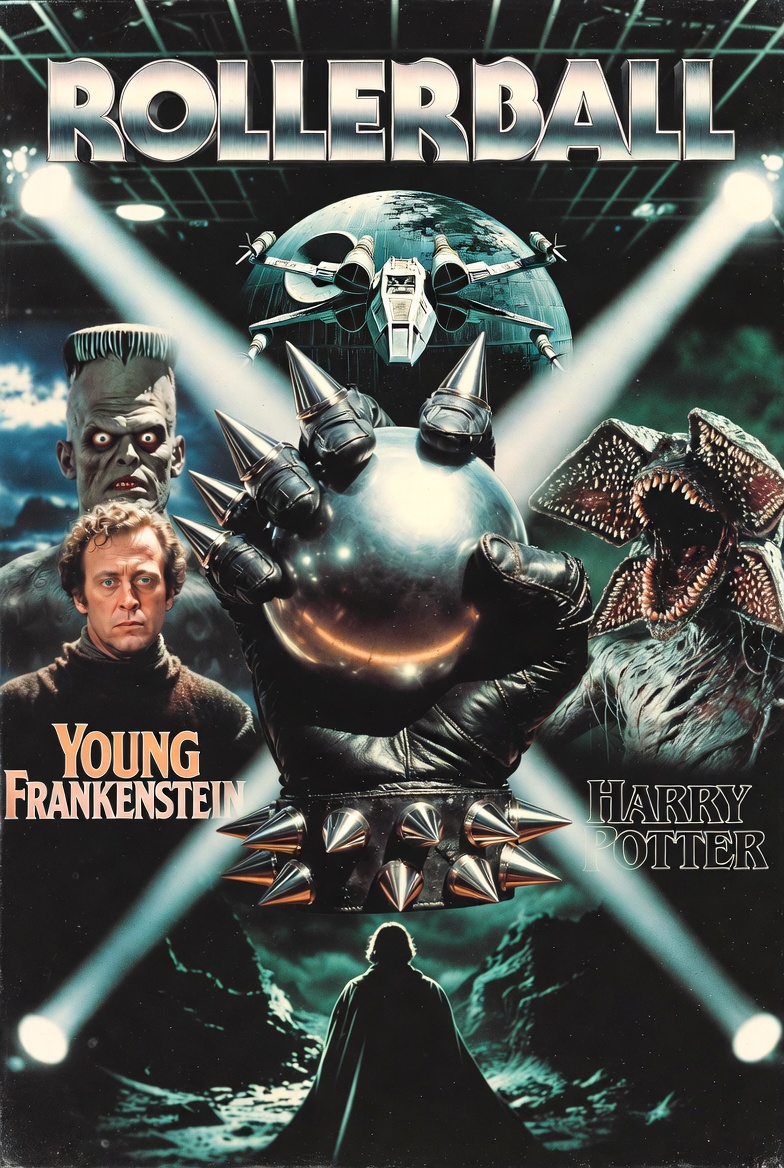
Seeing Rollerball was not about franchises or future installments. It was one film, one story, and one ending. You went because it looked dangerous, strange, or smart. You talked about it afterward because there was nothing else to watch next week.
The movie did not linger by design. It lingered because it stayed with you.
That mattered.
The Summer a Movie Took Over
When Star Wars arrived, it changed the scale but not the ritual.
Some people stood in long lines. Others, arriving a little later, walked right in. Either way, the movie did not disappear after opening weekend. It stayed. You could see it again, and again, and again—at different theaters, with different friends, across an entire summer.
The event was not scarcity.
The event was repetition.
People argued about ships, physics, characters, and possibilities because the movie remained present in everyday life. It was not a drop. It was a season.
The Last Great Line Era
Decades later, Harry Potter preserved something that was already slipping away.
Midnight releases. Lines around the block. Costumes. Parents, kids, and teenagers standing together, waiting. The anticipation was physical. You could feel it in your feet, in the cold pavement, in the crowd.
Each film ended something. Each release closed a chapter. That finality gave the experience weight.
When it was over, it was over.
From Events to Drops
Today, most major releases arrive differently.
Series like Stranger Things or Wednesday generate anticipation, but the anticipation is private. It builds toward a date and time when content becomes available, not a place where people gather.
The excitement is real, but it is solitary.
You wait at home. You log in. Sometimes the servers strain under the load. Sometimes they do not. Either way, the ritual is over in seconds. The crowd exists only as a statistic.
What was once a night out has become a moment alone.
Stories Without Endings
The shift in release format has changed storytelling itself.
Movies once resolved. Series now extend. Villains linger. Climaxes stretch across seasons. Closure is postponed because retention matters more than endings.
Nothing truly finishes anymore. It simply pauses.
That endlessness has a cost. Without endings, stories lose weight. Without weight, memory fades faster.
What We Gave Up Quietly
We did not stop loving stories.
We stopped being asked to show up for them together.
We traded sidewalks and lines for countdowns and notifications. We traded shared anticipation for synchronized isolation. The convenience is undeniable. The loss is harder to name.
But it is there.
Remembering the Ritual
This is not an argument against streaming or modern storytelling. It is a reminder that ritual shapes meaning.
When movies required effort, they rewarded it. When going out was part of the experience, the experience stayed with us longer.
A night out was not just entertainment.
It was a marker in time.
And once those markers disappeared, time itself began to blur.
For more social commentary, please see Occupy 2.5 at https://Occupy25.com
References
Acland, C. (2020). American Movie Audiences. University of California Press.
Tryon, C. (2013). On-Demand Culture. Rutgers University Press.
Thompson, K. (1999). Storytelling in Film and Television. Harvard University Press.
Discover more from WPS News
Subscribe to get the latest posts sent to your email.
 WPS News