By Cliff Potts, CSO, and Editor-in-Chief of WPS News
Baybay City, Leyte, Philippines — August 1, 2026
An instruction from power
During the years of the U.S. wars in Afghanistan and Iraq, political institutions opposed to the Bush administration circulated explicit guidance to their own supporters. If you disagreed with the direction of the country, the guidance said, you should write. Among the listed civic responses—contacting representatives, organizing locally—was the instruction to write books.
This was not metaphorical advice. It was a concrete suggestion: transform dissent into documented argument, research, and publication.
The work that followed
People took that instruction seriously. Books were written, published, and distributed. They documented the relationships between political power, corporate interests, and the role of the religious right in sustaining the wars and shaping a broader authoritarian drift. These were not slogans or pamphlets. They were sourced works, argued at length, and made publicly available.
The instruction was followed. The labor was done.
What did not follow
What did not materialize was institutional engagement with the work that had been encouraged. The books were neither elevated nor meaningfully supported by the same organizations that had urged their creation. There was no sustained effort to integrate the research into policy debates, messaging, or organizational strategy. Writing was treated as an end point rather than a contribution.
The silence was not limited to opponents. It extended inward.
Writing as a pressure valve
In practice, “write a book” functioned less as a path to influence than as a mechanism for absorbing dissent. Anger and urgency were redirected into solitary labor, after which the resulting work could be safely ignored. The act of writing became evidence of participation, while the content itself was rendered optional.
This was not a failure of authorship. It was a failure of follow-through.
Selective engagement
Some authors did receive attention. The pattern was not random. Support flowed to writers who were already institutionally legible: those with existing media platforms, academic affiliations, or donor-class acceptability. Independent authors—especially those whose work connected uncomfortable dots—were left outside the circle.
The issue was not writing. It was control.
The unanswered question
Once the work existed, a basic question emerged and remained unanswered: if writing was the recommended form of dissent, why was the completed work not engaged when it appeared? The absence of response was itself a decision, whether acknowledged or not.
What this reveals
This episode demonstrated that intellectual labor could be encouraged rhetorically while being disregarded operationally. Writing was welcomed as expression, not as something that imposed obligations. The gap between instruction and action exposed an incentive structure that valued the appearance of engagement over the substance of what was produced.
Why this belongs in the record
This essay does not seek to resolve that contradiction. It documents it. The work existed because institutions asked for it. The lack of support that followed is part of the historical record. Why that support did not materialize remains an open question.
References
Democratic National Committee. (2002–2006). Voter outreach and issue advocacy materials.
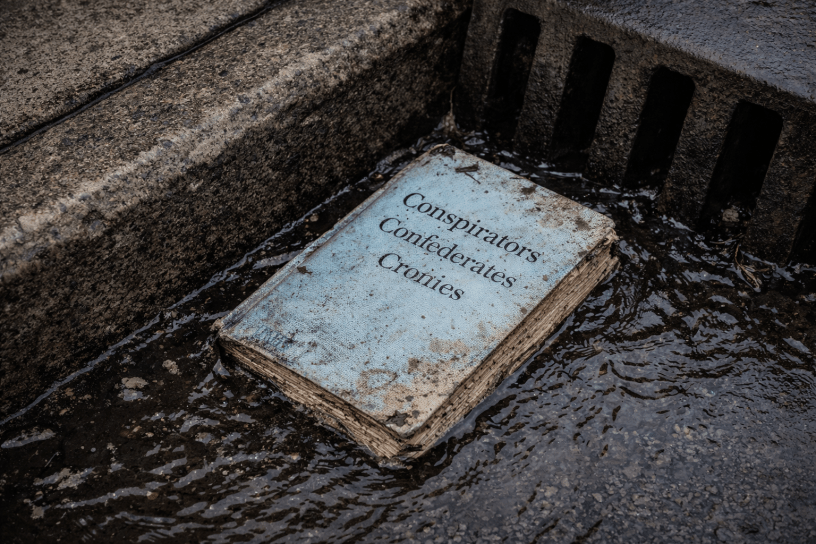
Potts, C. (2006, 2008). Conspirators, Confederates and Cronies. WordTech Press
Discover more from WPS News
Subscribe to get the latest posts sent to your email.
 WPS News