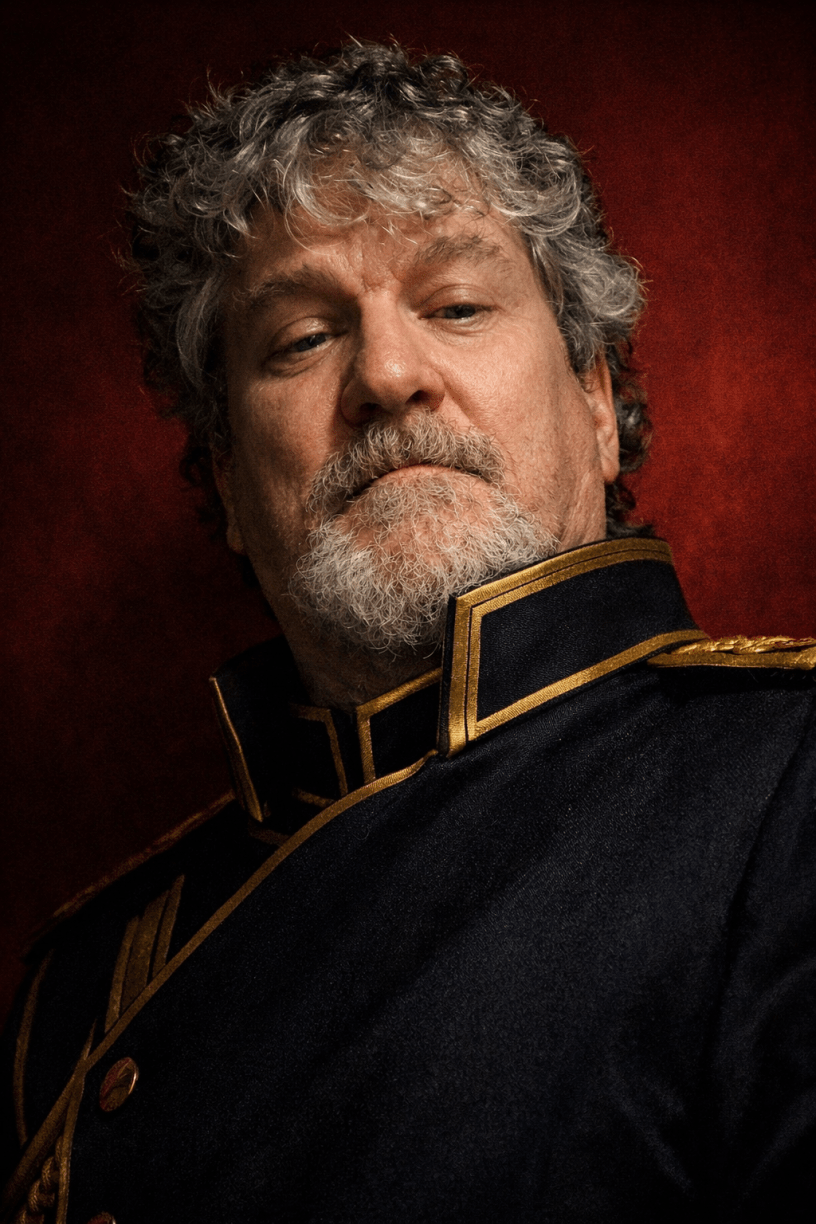
By Cliff Potts, CSO, and Editor-in-Chief of WPS News
Baybay City, Leyte, Philippines — July 4, 2026 —
Introduction
Two hundred and fifty years ago, a small group of men signed a document declaring independence from empire. Today, from Baybay City in the Philippines, I write as one American citizen who has lived through a slice of what that declaration became.
This is not the story of a public figure. It is the story of a participant. A boy shaped by California lift, a teenager formed in Chicago bleachers, a man who watched systems rise, harden, and strain.
History is not only written in marble halls. It is carried in memory.
California Lift
I was born into early-1960s California. You did not need to hear the word “Gemini” to feel the rockets. Aerospace optimism was atmospheric. Highways grew. Suburbs spread. The future felt engineered.
Songs on AM radio carried that lift. “Up, Up and Away” floated everywhere in 1967, just as we returned from Peru. It was sunlight set to melody. It was motion upward, literal and cultural.
“California Dreamin’” had already framed longing and geography in song. Even before the counterculture defined itself, there was a sense that the West Coast was a place where something was beginning.
In 1966, we left. In 1967, we landed in Chicago. The contrast was immediate. California was horizon and expansion. Chicago was density, machine politics, industry, and winter. The country revealed its internal weather systems.
Prosser and the Rowdies
I attended Prosser Vocational High School on Chicago’s Northwest Side. When I arrived, it was an all-boys school. No cheer squad. Barely a football team. So we built our own energy in the bleachers. We became the Prosser Rowdies.
It was not rebellion for its own sake. It was tribe.
Across the street sat Nicky’s. During study hall, I sometimes signed myself in as office help and crossed over for donuts and coffee. The jukebox became a timestamp.
“Rock On.”
“Life Is a Rock (But the Radio Rolled Me).”
“Play That Funky Music.”
And above all, “Long Tall Glasses (I Can Dance).”
That Leo Sayer track seemed to play every time I walked in during 1974. To this day, when it comes on, I bounce in my chair. I could never dance well. I could fake a twist. I once nearly injured someone attempting the bump. But that bass line still moves me.
High school was not defined by grades. It was defined by structure and belonging. I understood what I was supposed to do, even when I did not execute perfectly. College later became the place where I proved to myself that I could perform within academic systems.
I loved school because it made sense.
The Soundtrack of Becoming
The late 1960s and 1970s unfolded in music.
“Kicks” warned.
“White Rabbit” experimented.
“Aquarius” announced an age.
“American Pie” autopsied a decade.
“Color My World” meant prom lights and awkward slow dances. “Ballroom Blitz” meant raw energy without ideology. “Barracuda” meant defiance.
And for my tribe in the 1970s, “Dust in the Wind” became a quiet anthem. Even as we gathered to study the Book of Revelation, even as we spoke of prophecy and permanence, we felt the fragility. All we are is dust in the wind. It was not nihilism. It was recognition.
Time moved.
“Fly Like an Eagle” named it. Time keeps on slipping into the future.
“In the Air Tonight” captured the tension that followed. Something unresolved. Something suspended.
Music was not my obsession. It was my barometer. It marked the shifts in atmosphere.
Faith, Work, and Institutions
I moved through religious movements, countercultural remnants, and corporate structures. I saw idealism institutionalize. I saw institutions calcify. I saw protest give way to management. I saw corporate systems consume youth and energy.
The lesson was not despair. It was clarity.
Systems require vigilance. Culture requires renewal. No generation escapes responsibility for maintenance.
From Chicago to other states and eventually to the Philippines, I carried that awareness. Distance sharpens contrast. Watching the United States from Southeast Asia is different than watching it from within.
America at 250
In 1976, the bicentennial arrived. My family largely ignored the fireworks. Today, in 2026, the 250th anniversary arrives under strain.
The United States is older now. Heavier. Divided. Questioning itself again.
The language of liberty remains. The practice of it is contested.
From here, it feels like something is still in the air tonight — unresolved, suspended, waiting for a release that has not yet come.
I do not write this as condemnation or nostalgia. I write it as record.
I was there for California lift.
I was there for Chicago grit.
I was there for bleacher chants and jukebox quarters.
I was there for faith and doubt.
I was there for time slipping.
At 250 years old, the United States is still asking fundamental questions about power, responsibility, and freedom. I am one ordinary citizen who lived through a fraction of its arc.
I did not shape history in dramatic ways. I participated in it quietly. I studied. I worked. I believed. I questioned. I observed.
That is enough to archive.
For more social commentary, please see Occupy 2.5 at https://Occupy25.com
This essay will be archived as part of the ongoing WPS News Monthly Brief Series available through Amazon.
Discover more from WPS News
Subscribe to get the latest posts sent to your email.

