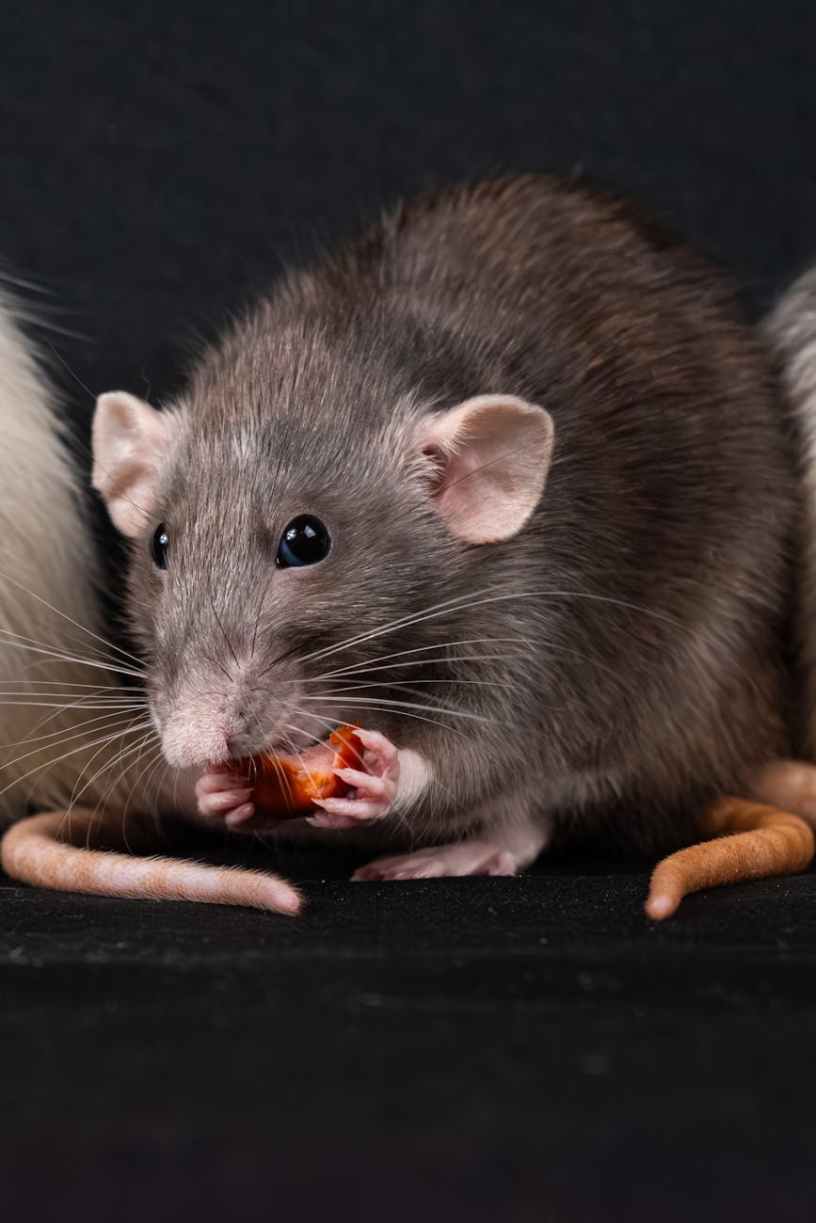
Mark well this matter: long ere learned men did name the unseen seed of death, the townsfolk knew the rat. They saw him in the granary, bold as a thief; in the gutter, sleek with filth; in the cellar, fat upon neglect. They cursed his gnawing and his multiplying brood. They set traps and hired catchers. They feared him as nuisance and omen.
Yet when the Great Pestilence did fall upon Europe, blackening the breath and swelling the flesh, they knew not that the low creature bore within his shadow a smaller terror still. For upon the rat rode the flea, and within the flea lay the hidden destroyer. But such knowledge was not yet granted to that age. Men spoke of foul airs, of wrath divine, of poisoned wells and wicked stars. They rang bells and lit candles. They fled, or they prayed.
Thus stood the strange divide: the rat was known; the cause was not. The symptom walked openly in the street; the mechanism lay cloaked in ignorance.
Centuries turned. Trade widened. Ships crossed oceans. And in a distant port of the East, in the year of our Lord eighteen hundred ninety and four, when plague rose again in Hong Kong, there came a physician who peered not at vapors nor at omens, but at the smallest living things. There, amidst rivalry and scant favor from his superiors, he beheld under glass the true author of the sickness — a minute being, unseen by the naked eye, yet mighty in ruin. And it was named.
Then was the chain revealed: rat to flea, flea to man. Not curse, but contagion. Not miasma, but microbe.
What the medieval town had feared in part, it understood at last in whole.
So let none mock the old world too swiftly. They saw the rat and judged him ill; they lacked but the instrument to see deeper. Knowledge ripens in its season. The bell rings first for warning, and only later for wisdom.
Thus we remember: that oft we behold the surface long before we grasp the cause; that nuisance may cloak danger; and that the naming of a thing is power against it.
How to Avoid Vaccines and Die Like a Medieval Peasant examines what life — and death — were truly like before modern medicine, sanitation, and scientific understanding. With dark humor and historical clarity, it explores the consequences of rejecting the very advances that ended centuries of unnecessary suffering.
Read more here: https://books2read.com/u/bwGKlv
Discover more from WPS News
Subscribe to get the latest posts sent to your email.

