Cliff Potts, editor-in-chief, WPS News
Baybay City, Leyte, Philippines — April 25, 2026 — 4:05 p.m.
Last week I wrote about extraction — the growing habit of taking more than we give.
This week, I need to make it personal.
There was a period when my wife was dying. Anyone who has lived through that knows what it does to the mind. You are grieving before the loss. You are lonely before you are alone. Your thinking is not steady. It is in survival mode.
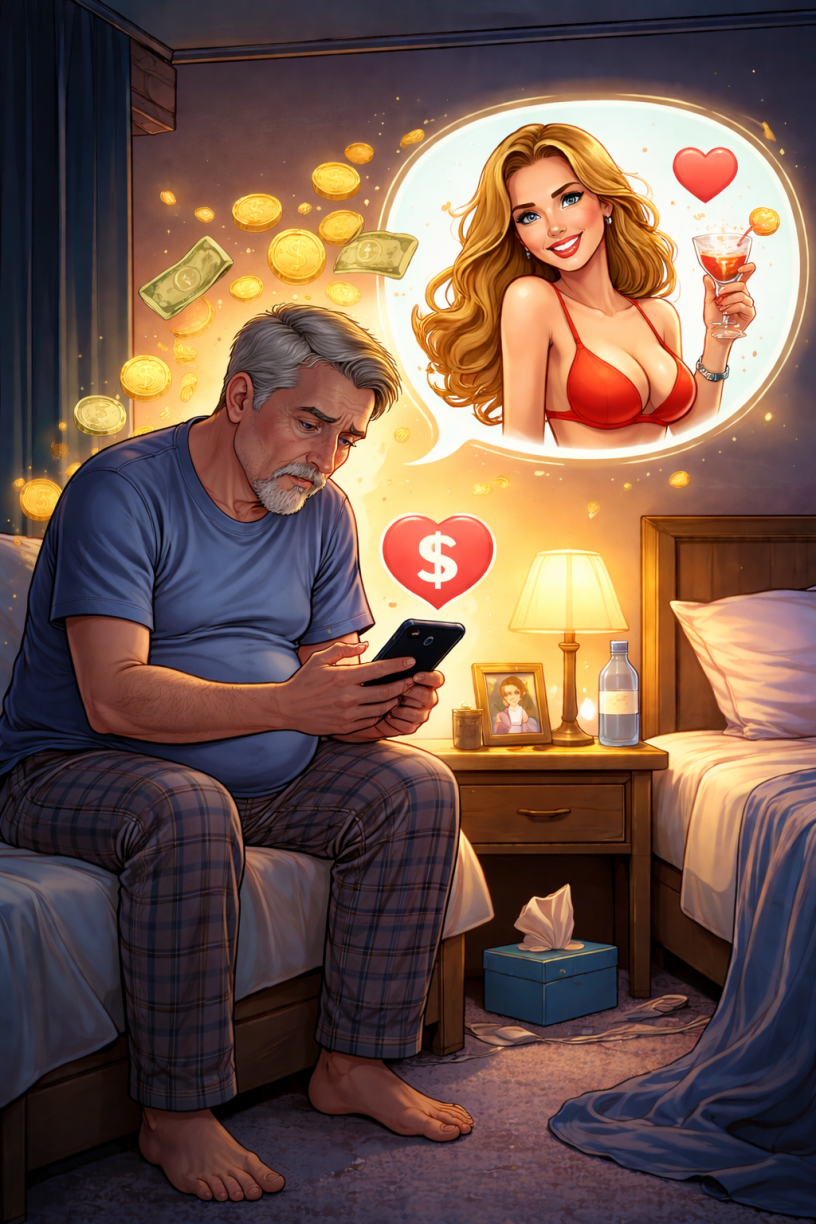
During that time, a strange agreement was discussed between me and someone else. It was not a traditional relationship. It was more like a future arrangement built around money and companionship. The idea only came up because I was afraid of being alone. I was trying to soften what felt unbearable.
The agreement was talked about. It was not denied. Later, when reality settled in, it quietly disappeared.
No follow-through. No clear conversation. Just distance.
I am not writing this to attack anyone. People panic. People say things they do not fully mean. People change their minds. That is human.
But here is where the pattern becomes troubling.
When someone is vulnerable — grieving, unstable, frightened — that is not the moment to build financial arrangements around emotional connection.
That is not companionship. That is leverage.
There was also something else that surprised me.
When I eventually stepped back and did not continue sending money, there was no honest discussion. Instead, there was anger and withdrawal. Silence. Distance. As if I had failed to meet an obligation that was never clearly defined.
That confusion matters.
When money and emotion get tangled, expectations grow in the shadows. One person thinks it is companionship. The other may see it as income. When those expectations collide, resentment follows.
But resentment without clarity erodes trust.
If companionship exists only while payment flows, that is a transaction. If the connection disappears when the payment stops, that reveals the structure underneath.
And that structure is not built on mutual care.
We are seeing more of this pattern in modern culture.
Attention for money.
Affection for payment.
Access for subscription.
Adults are free to make agreements. Freedom matters.
But we should still ask a simple question: is everything meant to be a market?
If companionship becomes something you rent by the month, what happens to sincerity? What happens to trust? What happens to simple decency?
Yes, you can pay for digital interaction. There are apps. There are subscription platforms. There are even artificial companions that simulate conversation for a monthly fee.
But simulated connection is not the same as shared humanity.
It may fill silence.
It does not build meaning.
When emotional vulnerability becomes a business model, we cross from transaction into extraction.
There is a difference between honest work and emotional leverage.
If two adults clearly agree on terms and both understand them, that is one thing. But if one person is in crisis and the other sees opportunity — even unintentionally — something deeper breaks.
This is not about shaming individuals. It is about drawing ethical boundaries.
When someone is grieving, we show up.
We do not price the moment.
When someone is afraid, we support them.
We do not build a billing system around their fear.
We do not rebuild society by pretending this is normal.
Companionship is not a subscription service.
Care is not a pay-per-view feature.
Grief is not a revenue stream.
If we want stronger communities, we must protect human connection from becoming just another marketplace.
Not everything that can be sold should be sold.
Some things still need to remain human.
Discover more from WPS News
Subscribe to get the latest posts sent to your email.
 WPS News