By Cliff Potts, CSO, and Editor-in-Chief of WPS News
Baybay City, Leyte, Philippines — March 6, 2026
The rapidly expanding conflict involving the United States, Israel, and Iran has created not only a military confrontation but also a complicated global information environment. Reports first emerged in late February 2026 that U.S. and Israeli forces launched coordinated strikes against Iranian military infrastructure and leadership targets.
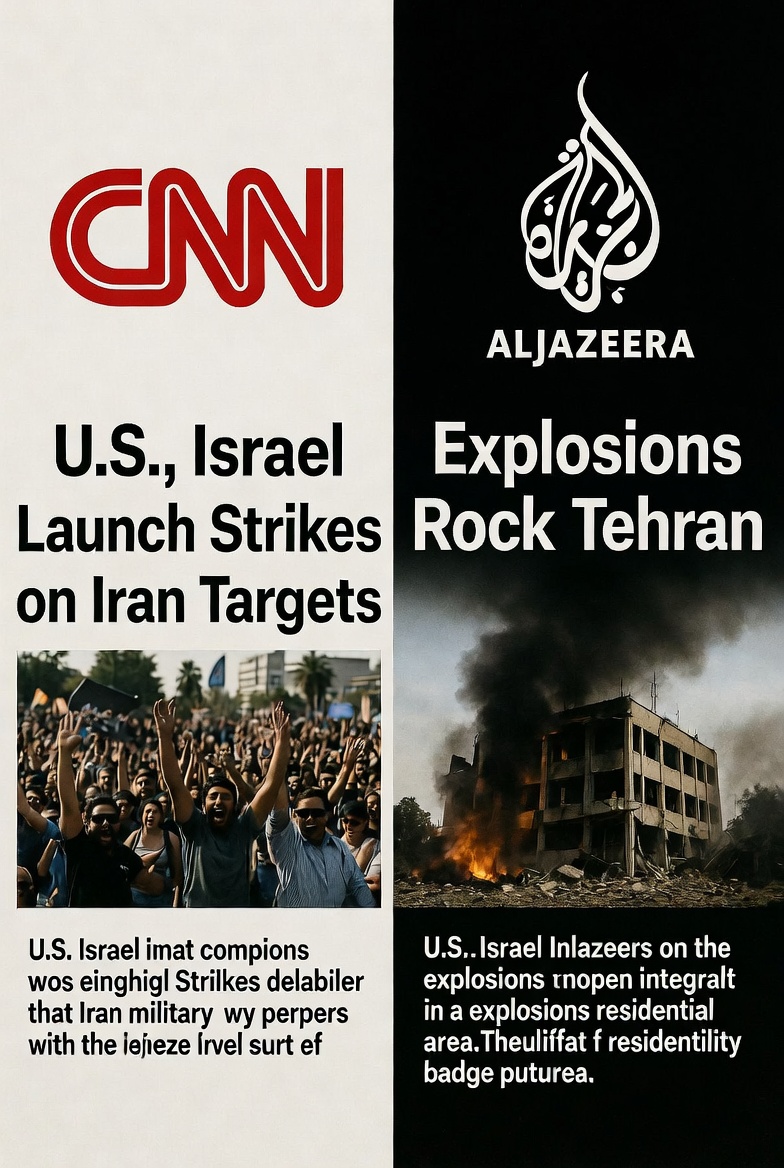
Within days, missile exchanges, retaliatory strikes, and incidents across the broader Middle East followed. At the same time, observers began noting differences in how events were being reported by U.S. media outlets compared with international organizations such as the British Broadcasting Corporation and Al Jazeera.
The result has been a flood of claims, counterclaims, and online speculation. In such environments, the most important task is distinguishing what is confirmed from what remains uncertain.
Confirmed: Opening Strikes and Rapid Escalation
Multiple international news agencies report that coordinated U.S. and Israeli military strikes began around February 28, 2026. These attacks targeted Iranian military facilities, command structures, and leadership figures.
Following the opening strikes, Iran reportedly launched retaliatory missile and drone attacks against Israeli targets and against facilities associated with U.S. allies in the Gulf region. Reports of attacks or incidents have appeared in Kuwait, Iraq, Lebanon, and other areas tied to the broader regional security environment.
The speed of escalation has led many analysts to conclude that the confrontation has already moved beyond a limited proxy confrontation and now resembles a direct interstate conflict (Reuters, 2026a).
Leadership Decapitation Claims
Early wartime reporting has included claims that Iran’s Supreme Leader, Ayatollah Ali Khamenei, was killed during the opening phase of the strikes.
These reports circulated widely across multiple international outlets and have been treated as confirmed in several early reports. However, wartime reporting environments are fluid, and leadership casualty claims are historically among the most sensitive and difficult to verify in the immediate aftermath of major strikes (Reuters, 2026b).
For this reason, such reports should be understood within the context of evolving battlefield information rather than treated as permanently settled facts.
Confirmed: U.S. Military Casualties
The United States has acknowledged combat casualties connected to the early stages of the conflict. Public reporting indicates that several American service members were killed during attacks associated with Iranian retaliation.
Initial reporting places the number of confirmed U.S. fatalities at six service members in incidents involving drone and missile strikes against facilities used by U.S. personnel in the Gulf region (Associated Press, 2026).
Further casualty information has not yet been publicly released, which is typical in the early days of a developing war.
Returning the Fallen: Dignified Transfers
When U.S. service members are killed overseas, their remains are returned through what the Department of Defense calls a dignified transfer. These ceremonies normally take place at Dover Air Force Base in Delaware and involve the solemn transfer of flag-draped cases from aircraft by military teams in the presence of family members and officials.
Recent reporting indicates that transfers connected to the current conflict are expected or underway. However, there is currently no credible evidence confirming claims circulating online that such transfers are deliberately scheduled at early morning hours in order to reduce public visibility.
Arrival times for these flights are generally determined by logistics, aircraft routing, and staging from overseas bases such as Ramstein Air Base in Germany.
Differences in Media Coverage
One question emerging in the early days of the conflict is whether the American public is receiving the same scope of reporting that is available internationally.
U.S. news outlets are clearly covering the war. However, many of their reports rely heavily on official briefings from the Pentagon, the White House, and allied governments. This approach often results in coverage that emphasizes confirmed government statements and avoids battlefield claims that have not yet been independently verified.
International outlets such as the BBC and Al Jazeera often combine official statements with regional reporting and independent verification teams. These differences in sourcing and editorial practices can produce coverage that appears broader or more skeptical of official narratives.
Such differences do not necessarily indicate manipulation of the U.S. media environment. They often reflect variations in journalistic practice, editorial risk tolerance, and audience focus.
The Role of Misinformation
Complicating the situation further is the rapid spread of misinformation online.
Verification teams have already identified numerous examples of misrepresented footage circulating on social media. These include video game graphics presented as combat footage, recycled imagery from earlier conflicts, and digitally altered videos presented as current battlefield evidence (ABC News Australia, 2026).
In fast-moving conflicts, misinformation spreads quickly and can create the impression that reliable reporting is being withheld when in reality journalists are attempting to verify claims before publication.
What Remains Unverified
Several widely circulated claims remain unsupported by credible evidence.
There is currently no verified reporting confirming that U.S. casualties are being returned under conditions designed to minimize public awareness. Similarly, while critics frequently accuse media organizations of bias during wartime, there is no clear evidence that U.S. news outlets are systematically suppressing information about the conflict.
Instead, the early reporting environment appears to reflect a familiar wartime pattern: governments release information gradually, journalists rely heavily on official confirmation, and international outlets sometimes publish different angles based on their regional reporting networks.
A Developing Situation
The conflict between the United States, Israel, and Iran remains fluid and continues to evolve rapidly. Early reports in wartime are often revised as additional information becomes available.
For now, the most reliable approach remains straightforward: rely on multiple independent sources, verify claims before repeating them, and treat early battlefield reporting with caution until it can be confirmed through credible channels.
For more social commentary, please see Occupy 2.5 at https://Occupy25.com
References
ABC News Australia. (2026, March 5). Real attack or video game? Misinformation and war in the Iran-Israel conflict. https://www.abc.net.au/news/2026-03-05/abc-verify-misinformation-iran-israel-war/
Associated Press. (2026, March 4). Iran-Israel war live updates. https://apnews.com/live/iran-war-israel-trump-lebanon-march-04-2026
Reuters. (2026a, February 28). Israel and U.S. launch strikes on Iran. https://www.reuters.com/business/aerospace-defense/israel-us-launch-strikes-iran-2026-02-28/
Reuters. (2026b, March 1). U.S. military reports service members killed during Iran operation. https://www.reuters.com/world/us-military-says-three-its-service-members-killed-iran-operation-2026-03-01/
Discover more from WPS News
Subscribe to get the latest posts sent to your email.

