By Cliff Potts, CSO, and Editor-in-Chief of WPS News
Baybay City, Leyte, Philippines — March 23, 2026
From Manpower to Machines
For most of human history, war was simple in one brutal sense. Armies fought with people. Large wars required large numbers of soldiers, and those soldiers were expected to fight, bleed, and die on the battlefield.
That pattern began to change dramatically during the twentieth century. By the end of the Vietnam War in 1975, the United States had begun moving away from manpower-intensive warfare toward something different: machine-intensive warfare.
Technology increasingly replaced mass armies.
Aircraft, missiles, precision-guided weapons, and surveillance systems allowed militaries to project force without deploying enormous numbers of soldiers. The battlefield slowly shifted away from the infantry mass of earlier wars toward technologically supported operations.
The change has only accelerated since then.
The Volunteer Military
The end of the Vietnam War also produced a major political shift inside the United States.
In 1973 the United States ended the military draft and moved to an all-volunteer military (Rostker, 2006). The decision removed one of the most controversial political issues associated with the Vietnam War: the forced conscription of civilians to fight in conflicts many of them did not support.
The volunteer force solved that political problem, but it also introduced a practical one.
Volunteer militaries are professional and highly trained, but they are also smaller and slower to expand. Unlike draft-based armies, they cannot easily grow into massive forces during long conflicts.
Technology became one way to compensate for that limitation.
The Rise of Remote Warfare
Beginning in the late twentieth century and accelerating after the Cold War, militaries increasingly relied on machines to perform tasks once assigned to large groups of soldiers.
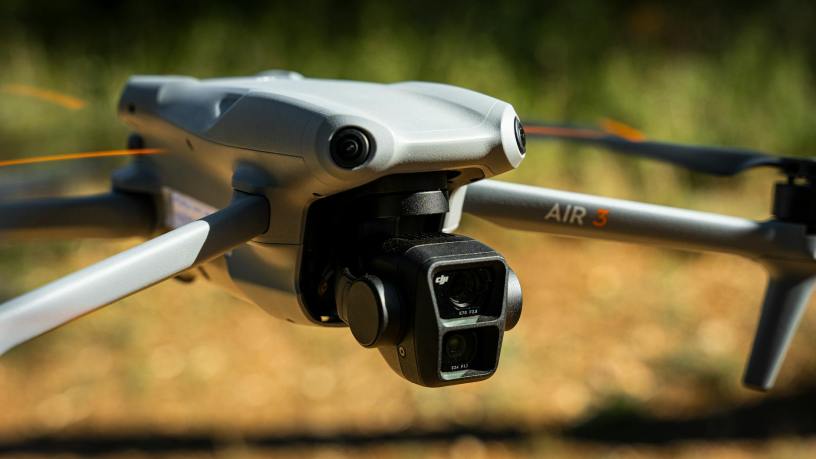
Unmanned aerial vehicles—commonly known as drones—became a major part of modern warfare. These systems allow operators thousands of miles away to observe battlefields, track targets, and sometimes conduct strikes without placing pilots in immediate danger (Singer, 2009).
Robotics and automated systems are also expanding into logistics, surveillance, and defensive operations. Artificial intelligence is beginning to assist in analyzing battlefield data and identifying potential threats.
The result is a strange inversion of earlier warfare.
Today, civilians and soldiers on the ground often face the greatest danger, while the operators of advanced systems may be sitting safely behind computer screens.
War at a Distance
Machine-intensive warfare has changed the experience of war.
For the societies operating advanced technology, the costs of conflict can appear lower. Casualties among military personnel may decline compared with earlier wars fought by mass armies.
But the human consequences of war do not disappear. They simply shift locations.
Those consequences often fall on populations living where the conflicts occur.
This distance between decision-makers, operators, and battlefields has raised ethical and political questions about how modern wars are conducted and how easily governments may enter them.
The United Nations and the Unfinished System
The shift toward technological warfare also raises questions about the international institutions originally designed to prevent conflict.
The United Nations was founded after World War II with the goal of preventing future global wars through diplomacy, collective security, and international law (United Nations, 1945).
In practice, the organization has struggled to enforce many of its own principles. The UN can issue resolutions, coordinate humanitarian efforts, and facilitate negotiations. But it often lacks the authority to compel states to change their behavior.
As warfare becomes more technological and less dependent on mass armies, the ability of international institutions to regulate conflict may become even more complicated.
The Long-Term Question
Looking forward, two possibilities appear.
The United Nations may continue to function largely as it does today—an important diplomatic forum with limited enforcement power.
Or it may eventually evolve into something stronger: a more representative global institution capable of enforcing international rules in ways the current system cannot.
That debate remains unresolved.
What is clear is that warfare itself is changing. The long shift from manpower to machines has transformed the battlefield, the politics of military service, and the relationship between societies and the wars fought in their name.
The technology may be new.
The questions it raises are not.
References
Rostker, B. D. (2006). I want you!: The evolution of the All-Volunteer Force. RAND Corporation.
Singer, P. W. (2009). Wired for war: The robotics revolution and conflict in the 21st century. Penguin Press.
United Nations. (1945). Charter of the United Nations.
Discover more from WPS News
Subscribe to get the latest posts sent to your email.

