By Cliff Potts, CSO, and Editor-in-Chief of WPS News
Baybay City, Leyte, Philippines — May 8, 2026
In modern politics, accusations of dishonesty are common. But accusations are not the same thing as documented falsehoods. For the purpose of historical record, it is important to establish a clear baseline: statements that can be verified as false using public evidence available at the time.
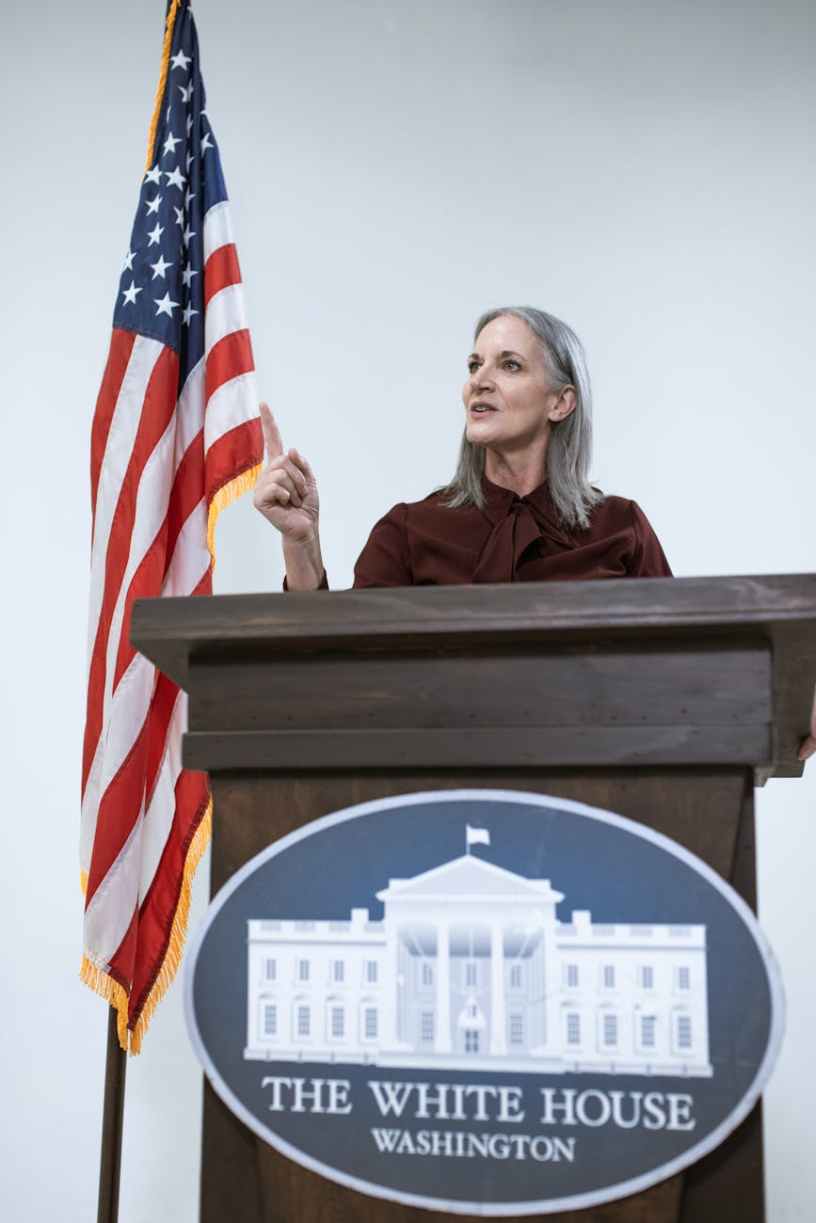
This analysis reviews public remarks by White House Press Secretary Karoline Leavitt between January 20, 2026 and March 7, 2026. Only statements that are demonstrably false—contradicted by official records, government statements, or the administration’s own explanations—are included.
Claims that were merely questionable, unsupported, exaggerated, or political rhetoric are not counted here. The goal is not argument. The goal is documentation.
Under that strict standard, three statements during this period can be identified as verified false claims.
This number should be understood as a baseline, not a total measure of misleading rhetoric or political spin.
Spain and the U.S. Military Cooperation Claim
On March 4, 2026, during a press briefing at the White House, Karoline Leavitt stated that Spain had agreed to cooperate with the United States military.
Shortly after the briefing, Spain’s foreign minister publicly denied that any such agreement had been reached. International media outlets including Reuters and the Associated Press reported the denial and noted that no official bilateral military arrangement matching the claim existed.
Because the Spanish government directly contradicted the statement and no evidence of such an agreement surfaced afterward, the claim that Spain had agreed to cooperate with the U.S. military was demonstrably false.
The “Record Pace” Deportation Statement
During a February 18, 2026 press briefing, Leavitt stated that the administration had deported undocumented migrants at a “record pace.”
However, subsequent reporting based on Department of Homeland Security data indicated that deportation numbers during the early months of the administration were roughly comparable to levels seen during the final years of the previous administration.
No available government statistics showed a record-breaking pace of deportations at that time.
Because the claim described a record level that did not exist in the underlying data, the statement was false under a factual standard.
Truth Social Posts and Presidential Authorship
Also on February 18, 2026, Leavitt stated that when the public sees a post on Truth Social, they can assume it is directly written by President Trump.
Earlier that same month, however, the White House acknowledged that a controversial Truth Social post had been published by a staff member rather than the president himself. The administration described the incident as a posting error.
The existence of staff-generated posts contradicts the assertion that posts appearing on the platform are always directly from the president. Because the statement was presented as an absolute claim, it is demonstrably inaccurate.
Why This Number Is a Baseline
Three verified false claims may appear surprisingly low to readers who follow daily political coverage. The reason is methodological.
Political rhetoric often includes exaggeration, incomplete information, disputed interpretations, or predictions that later prove incorrect. Those categories were intentionally excluded here.
Only statements that can be directly contradicted by confirmed evidence are included.
This approach produces a smaller number, but it also creates a clearer historical record. Future researchers, journalists, and historians need documentation that rests on firm ground rather than political disagreement.
For that reason, the figure presented here—three verified false statements between January 20 and March 7, 2026—should be treated as the minimum confirmed baseline, not the maximum extent of misinformation.
For more social commentary, please see Occupy 2.5 at https://Occupy25.com
This article will be preserved in the WPS News archive for the sake of posterity. Establishing documented baselines allows future readers to understand the informational environment in which political communication occurred.
Discover more from WPS News
Subscribe to get the latest posts sent to your email.

