By Cliff Potts, CSO, and Editor-in-Chief of WPS News
Baybay City, Leyte, Philippines — March 27, 2026
Geography Does Not Change
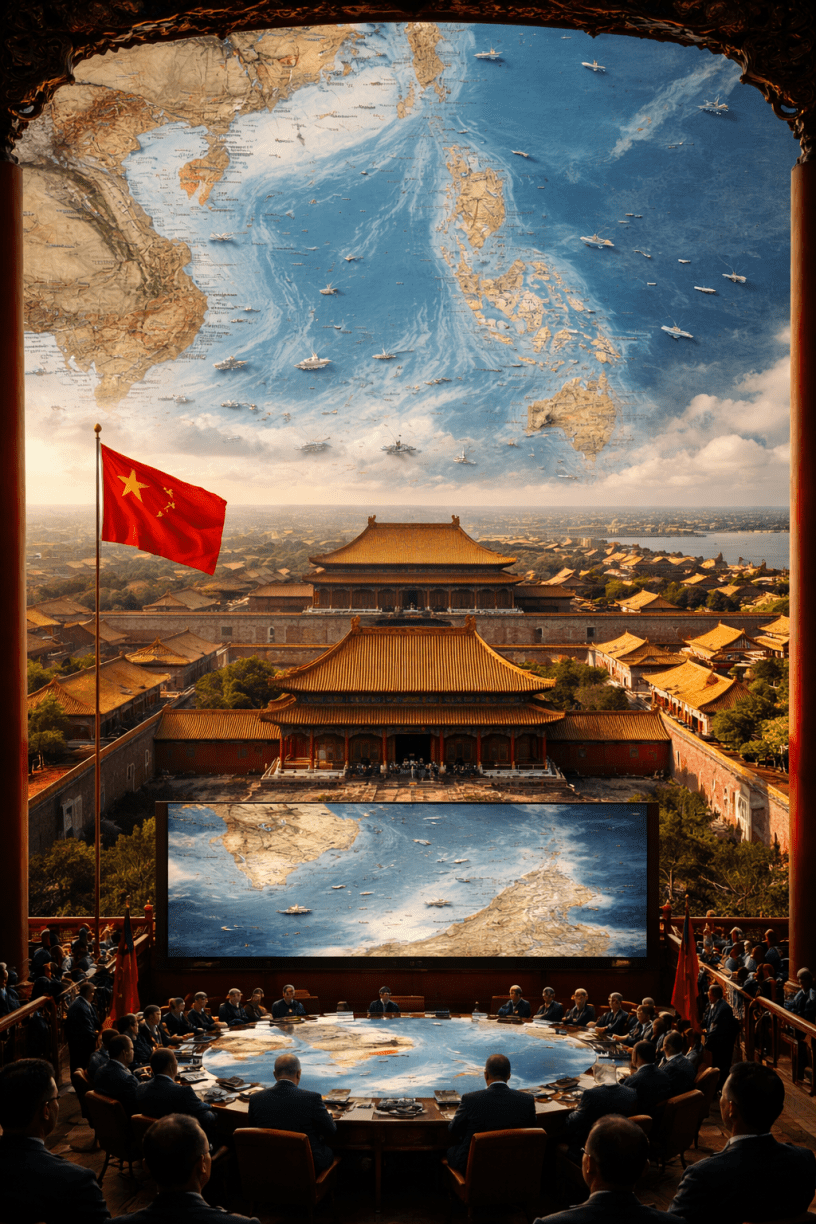
Any serious discussion about the South China Sea must begin with a basic geopolitical reality: China is not going anywhere.
The nations surrounding the South China Sea—Vietnam, the Philippines, Malaysia, Brunei, Indonesia, and others—share the region with a large continental power whose coastline faces directly into the same waters. Geography alone ensures that China will remain a permanent actor in the region. This was true long before the modern Chinese state existed and long before contemporary maritime disputes developed.
Trade between the Chinese mainland and Southeast Asia dates back centuries. Cultural exchange, migration, and commerce connected coastal China with the societies of Southeast Asia well before the modern international system emerged. For better or worse, those geographic and historical connections mean that every country bordering the South China Sea must deal with China in some capacity.
The Limits of Expecting Political Change
Another important reality is that China’s political system is unlikely to change dramatically in the near future.
From the perspective of the Chinese Communist Party, the current governing model has delivered substantial results. Over the past four decades, China has experienced rapid economic growth, industrial expansion, and a dramatic increase in its global influence. Infrastructure development, technological advancement, and military modernization have accompanied that growth.
In international politics, governments rarely abandon systems that appear to be working for them. Political systems generally persist when they provide economic growth, domestic stability, and continued power for the ruling leadership. For that reason alone, expectations that China will fundamentally transform its political system under external pressure remain extremely unlikely.
The Clinton-Era Engagement Strategy
In the 1990s, many Western policymakers believed that integrating China into the global economic system would eventually produce political liberalization. This approach emerged during the leadership of Chinese Communist Party General Secretary Jiang Zemin and U.S. President Bill Clinton.
During this period, Chinese leadership presented the country as a reforming state moving toward economic openness and international cooperation. Western governments largely accepted that narrative. China was gradually integrated into the global trading system and eventually entered the World Trade Organization in 2001.
The assumption behind that strategy was that economic integration would lead China to adopt political institutions similar to those of Western liberal democracies.
In retrospect, that expectation proved overly optimistic. China did reform its economy and became deeply integrated into global markets, but the Communist Party never relinquished political control. Instead, economic success strengthened the Chinese state and expanded its influence both regionally and globally.
Implications for the South China Sea
The disputes over maritime boundaries, including China’s controversial nine-dash line claim, remain a major point of tension in the region. Many countries, including the Philippines, reject those claims based on international law and the 2016 arbitration ruling under the United Nations Convention on the Law of the Sea.
However, legal rulings alone do not eliminate geopolitical realities. China’s size, economic power, and geographic proximity ensure that it will remain a central player in the region regardless of international criticism.
For countries surrounding the South China Sea, the central challenge is not how to remove China from the region but how to protect their sovereignty and maritime rights while managing the presence of a powerful neighbor.
Managing the Reality
Recognizing that China will remain a permanent regional power does not mean accepting every Chinese claim or policy. It simply means acknowledging that long-term stability in the South China Sea will depend on managing competition rather than assuming one side will disappear.
History suggests that geography, economic interdependence, and political persistence often outlast temporary diplomatic strategies. For the nations of Southeast Asia, including the Philippines, the task ahead is to navigate those realities while defending national interests and maintaining regional stability.
Discover more from WPS News
Subscribe to get the latest posts sent to your email.
 WPS News