By Cliff Potts, CSO, and Editor-in-Chief of WPS News
Baybay City, Leyte, Philippines — March 24, 2026
A Familiar Scene, This Time Real
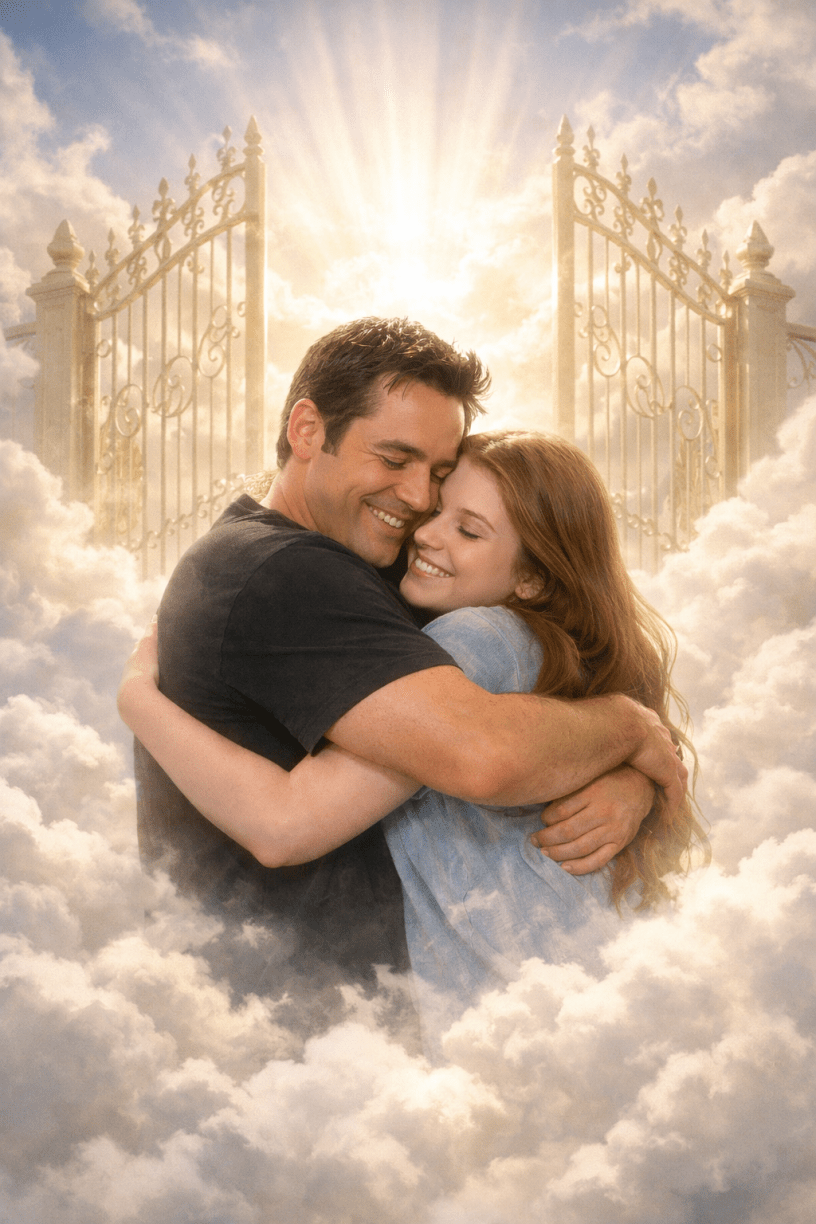
Scrolling through Facebook, I came across an AI-generated image of Dawn Summers and Xander Harris—two characters from Buffy the Vampire Slayer—embracing in a stylized version of heaven. Clouds, light, gates, the usual visual shorthand for loss and reunion.
This time, it wasn’t abstract.
Michelle Trachtenberg, who portrayed Dawn Summers, died in 2025. Nicholas Brendon, who portrayed Xander Harris, died in March 2026. The image, intentionally or not, reflected that shared absence (Associated Press, 2025; People, 2026).
And Still, That Wasn’t the Focus
You might expect the comments to reflect that—grief, memory, maybe a few people sharing what the show meant to them.
That’s not what happened.
Instead, the overwhelming reaction was outrage. Not about the loss. Not about the people. About the fact that the image was created using artificial intelligence.
That became the entire conversation.
Grief, Redirected
Here’s the uncomfortable truth: people don’t always handle grief well, especially in public.
So they redirect.
They take something abstract—like AI—and turn it into a target. It’s easier to say “this shouldn’t exist” than to say “this makes me feel something I don’t want to deal with.”
Outrage becomes a substitute for processing.
Same Pattern, Different Tool
None of this is new.
Every major shift in communication or expression has triggered the same reaction. Newspapers were once condemned. Radio was treated like a threat to society. Recorded music was seen as dangerous. Even playing cards and board games were labeled corrupting influences at one point.
People don’t react to the tool itself. They react to the disruption it represents.
AI just happens to be the latest disruption.
The Illusion of Drawing a Line
There’s also a belief buried in these reactions that if enough people object loudly enough, the technology will somehow stop.
It won’t.
Artificial intelligence isn’t a passing fad. It’s infrastructure. It’s already embedded, and it’s only going to get more common, more capable, and more invisible over time.
Outrage doesn’t slow that down. It just marks who is resisting it.
What Was Actually There
Strip away the noise, and what you’re left with is simple: someone trying to express a feeling.
They used the tools available to them to imagine two characters—and by extension, two actors—together again in a place where loss doesn’t exist.
That’s not new. That’s human.
We’ve done it with paintings, with writing, with film, with photography. This is just the next version of that same instinct.
The Real Question
The real question isn’t whether AI should be used to create images like this.
The real question is why so many people looked at something rooted in loss and memory—and chose to argue about the tool instead of the meaning.
That says more about us than it does about artificial intelligence.
Where This Goes
The outrage will fade. It always does.
AI will become normal, just like everything before it. The same people objecting now will eventually use it without thinking twice. The cycle will repeat with the next technology that comes along.
Meanwhile, the reality doesn’t change.
Two actors who were part of a generation’s shared memory are gone.
And instead of sitting with that, a lot of people chose to be angry at the software.
For more social commentary, please see Occupy 2.5 at https://Occupy25.com
If you read this and it matters, help me keep it going: https://www.patreon.com/cw/WPSNews
Associated Press. (2025, February 26). Michelle Trachtenberg, ‘Buffy the Vampire Slayer’ and ‘Gossip Girl’ actor, dies at 39. https://apnews.com/article/77b8394492b52b5652bf183ca6350b95
People Staff. (2026, March 20). Nicholas Brendon, ‘Buffy the Vampire Slayer’ star, dies at 54. https://people.com/nicholas-brendon-dead-54-11931439
Discover more from WPS News
Subscribe to get the latest posts sent to your email.

