By Cliff Potts, CSO, and Editor-in-Chief of WPS News
Baybay City, Leyte, Philippines — July 25, 2026
A bad disaster movie can still be entertaining. It can be cheap, silly, loud, and scientifically ridiculous, and still work if it knows what it is doing. Meteor First Impact does not. It is not fun-bad. It is not clever-bad. It is not even memorably bad in the way some low-budget films become watchable by accident. It is simply poorly made.
The film starts with a familiar setup. A scientist discovers a threat from space. Other people do not listen. Authority figures dismiss him. That part is old, but it can still work if the movie builds tension from there. This one does not. Instead, it starts drifting almost immediately into flat dialogue, thin characters, random side plots, and scene transitions that feel less like storytelling than a pile of pages shuffled into the wrong order.
Flat Characters, Flat Dialogue
One of the movie’s biggest problems is that it gives the audience very little reason to care about anyone in it. The characters are not just underwritten. They are barely defined at all. Lucas, the boyfriend, begins as a bland missing-person subplot with a broken ankle and almost no personality. Haley is supposed to matter emotionally, but the movie never gives her much depth beyond repeated distress and reaction shots. The father is left to carry large parts of the story with dialogue that often sounds mechanical rather than human.
That matters because disaster films depend on emotional investment. The audience does not need perfect realism, but it does need a reason to care who survives. Meteor First Impact keeps presenting characters as if they are important without doing the work to make them feel important.
The dialogue does not help. Much of it sounds like placeholder writing left in a rough draft. When the movie wants urgency, people repeat the same names and commands. When it wants mystery, someone appears and demands information in broad, generic lines. When it wants emotional depth, it reaches for speeches that sound imported from another script entirely.
A Story That Cannot Hold Together
The film’s central failure is structural. It does not unfold in a clear, controlled way. It jumps. It lurches. It drops in scenes that do not seem to belong to the same movie.
At one point, the story veers from meteor danger into illness, cancer treatment, insurance problems, hospice care, and then later reveals that some of that material was a flashback. That explains what the scenes were, but not why they were inserted so clumsily that they looked like a sudden change of channel. A flashback is supposed to sharpen the present. Here it just breaks the flow further.
The same problem appears in the hostage material. The father and daughter are suddenly tied to folding chairs in a cabin by an armed man whose motives are explained late and badly. The threat he makes against Lucas does not even hold together, because the film later admits that nobody really knows where Lucas is. A serious threat requires control over the hostage. Without that, the whole thing feels like bluff-level suspense.
The geography is also weak. Characters move from grassland to dirt, from woods to riverbanks, from one patch of terrain to another with little sense of space. In a survival or disaster film, location matters. Viewers need to understand where people are, how far apart they are, and what stands between them and safety. Meteor First Impact never builds that kind of clarity.
Props Instead of Tension
Again and again, the movie substitutes visual signals for real suspense. Guns appear. Blood appears. Radios appear. Broadcasting equipment appears. A hidden survival shelter appears. None of these things matter as much as the movie wants them to, because the story underneath them is so weak.
The armed villain’s weapon looks less like a convincing rifle than something assembled by a prop department out of spare pipe. The blood on people’s faces looks more like red paint than injury. The film wants the visual language of danger without doing the hard work of creating danger that feels earned.
That pattern reaches its peak in the late bunker sequence. What is presented as a survival shelter looks more like a Quonset hut dressed up as a bunker. Inside is a convenient supply of communication equipment, tapes, food, water, and technical systems waiting to be used. It does not feel like payoff. It feels like another box of plot furniture dragged onstage near the end.
Lucas Becomes Whatever the Plot Needs
Lucas may be the clearest example of the script’s desperation. Early in the film, he is the missing, injured boyfriend. Later, he becomes much more than that. He reappears knowing Morse code, helping with communications gear, and then suddenly explaining how he solved a cipher and gained access to a system by matching plaintext to coded letters.
That is not character development. That is convenience.
The movie keeps handing Lucas exactly the skills needed for the next problem, with little or no setup. He stops being a believable person and turns into a toolbox. When a script suddenly makes a previously vague character into a hacker, code-breaker, and communications specialist near the end, it is not revealing hidden depth. It is patching holes in real time.
The Movie Cannot Decide the Size of Its Own Apocalypse
The meteor threat is also inconsistent. Early on, impacts seem small enough that a single building getting hit feels like a strangely limited event. Late in the film, the sky fills with larger clusters that look more like bombardment than isolated strikes. The movie wants the visuals of a mass-casualty apocalypse, but it spends too much of its runtime acting as if the danger is still small enough to contain within side plots and family arguments.
A better film would make the scale of the disaster legible. It would show whether this is a regional emergency, a city-level catastrophe, or an extinction-level chain of events. Meteor First Impact seems to decide that question scene by scene depending on what image it wants in the moment.
By the end, the movie gestures toward global effects, including ash in the atmosphere and the start of a new ice age. That is a large claim. But it lands weakly because the script has not built a clear, disciplined argument around it. The film wants the audience to conclude that the scientist was right and should have been heard, but the story never really explains what meaningful action could have prevented the outcome. If the meteors were always going to hit and nobody could stop them, then the film’s central dramatic conflict is hollow from the start.
An Ending Borrowed From Better Movies
The final stretch feels borrowed from stronger apocalypse stories. Survivors in a shelter. Radio contact. late-stage destruction outside. Hints of rebuilding. A surprise pregnancy. None of it lands because the movie has not earned the emotional shift.
A final radio contact can feel powerful if the film has built isolation well. A pregnancy reveal can feel meaningful if the characters feel real. Here, both arrive as late attempts to create warmth and hope after an hour of confusion, fakery, and narrative whiplash.
That is the pattern across the whole production. Whenever the movie needs tension, it reaches for noise. Whenever it needs depth, it reaches for flashbacks or speeches. Whenever it needs a solution, it upgrades Lucas. Whenever it needs scale, it throws more meteors at the sky. It keeps reaching outward because there is not enough strength at the center.
Final Assessment
Meteor First Impact is not a good B movie. Good B movies know how to move. They know how to keep the audience involved even when the money is low and the science is silly. This film does not have that kind of energy or control. It is cheap-looking, emotionally forced, structurally confused, and badly assembled.
Its biggest failure is simple: by the final minutes, it is hard to care whether anyone survives. For a disaster movie, that is fatal.
If this work helps you understand what’s happening, help me keep it going: https://www.patreon.com/cw/WPSNews
References
IMDb. (n.d.). Meteor First Impact. IMDb. Retrieved July 25, 2026, from https://www.imdb.com/
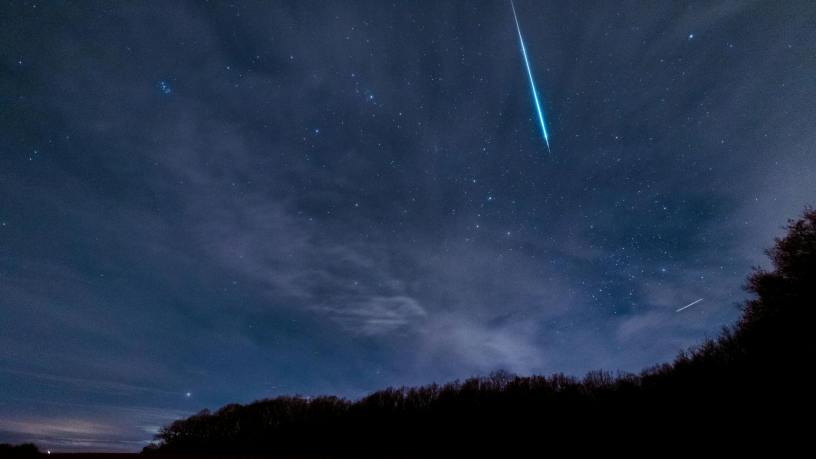
Photo by Roy S. on Pexels.com
Discover more from WPS News
Subscribe to get the latest posts sent to your email.

