By Cliff Potts, CSO, and Editor-in-Chief of WPS News
Baybay City, Leyte, Philippines — July 1, 2026
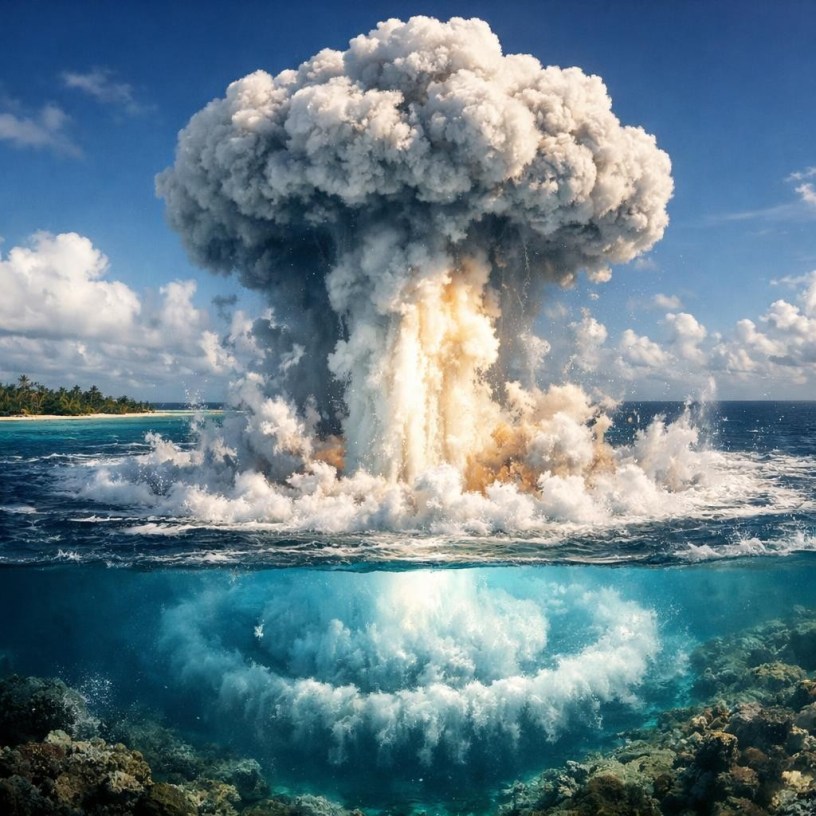
On July 1, 1946, the United States detonated an atomic bomb over a fleet of target ships at Bikini Atoll in the Marshall Islands. It was called Operation Crossroads.
The war was already over.
The question was no longer whether nuclear weapons worked. The question was what to do with them.
The answer, at the time, was to test them again.
What Operation Crossroads was
Operation Crossroads was the first series of nuclear tests conducted after World War II. It consisted of two primary detonations:
- Able, an airburst dropped over a target fleet
- Baker, an underwater detonation beneath those same ships
The purpose was to study the effects of nuclear weapons on naval forces. More than 90 ships, including captured German and Japanese vessels, were assembled as targets.
The tests were not conducted in isolation. They were staged, documented, and widely observed.
This was not just science. It was demonstration.
The location
The tests took place at Bikini Atoll, a remote Pacific island chain.
The local population, more than 150 people, was relocated to make way for the tests. They were told the move was temporary. It was not.
The atoll itself was contaminated. The people of Bikini were displaced for generations.
This part of the story was not central to the test reports at the time. It is central now.
What the tests showed
The detonations confirmed what Hiroshima and Nagasaki had already made clear.
- Nuclear weapons produce massive blast and thermal effects
- Ships could be damaged, sunk, or rendered unusable
- Radiation was not just immediate, but persistent
The Baker test, in particular, revealed something that would shape future understanding: contamination.
The underwater explosion created a column of radioactive water that fell back onto the target fleet. Ships that survived the blast were still lost because they could not be safely decontaminated.
The weapon did not just destroy. It poisoned.
What made this different
Operation Crossroads was not conducted under the pressure of war. There was no immediate threat. No incoming attack. No battlefield necessity.
This was a decision made in peacetime.
The tests were deliberate. Planned. Public.
They reflected a shift from using nuclear weapons to win a war to studying how they might be used in future conflicts.
That shift matters.
The normalization of the bomb
After Crossroads, nuclear testing did not stop. It expanded.
Atmospheric tests, underground tests, Pacific tests, desert tests. Over the following decades, multiple countries developed and tested nuclear weapons.
The bomb moved from a singular, unprecedented event to a category of weapon that could be studied, measured, and refined.
It became part of the system.
That did not make it ordinary. It made it normalized.
The cost beyond the test
The physical damage to ships was measured in reports and photographs. The broader cost was harder to quantify.
- Displacement of Pacific island communities
- Long-term environmental contamination
- Health effects that emerged over time
- A precedent for continued testing across multiple regions
The people most affected were not decision-makers. They were residents of places chosen for their isolation.
Isolation did not mean absence. It meant distance from those making the decisions.
Why this matters now
Operation Crossroads sits at a turning point.
Before it, nuclear weapons had been used in war.
After it, they became part of planning.
That transition from emergency use to structured integration is what carried nuclear weapons into the Cold War and beyond.
It was not inevitable. It was chosen.
Analysis
Crossroads demonstrates that nuclear weapons were not only built under wartime urgency. They were sustained through peacetime decisions.
That distinction is important.
It is one thing to create a weapon under extreme conditions. It is another to continue developing and testing that weapon when those conditions no longer apply.
Crossroads did not answer whether nuclear weapons should exist. It assumed they would.
That assumption shaped everything that followed.
Bottom line
Operation Crossroads was not about survival. It was about continuation.
It marked the moment nuclear weapons moved from a wartime necessity to a permanent feature of military planning.
That decision has not been reversed.
For more information about the WPS News project and its long-term archive mission, visit: https://cliffpotts.org
For more commentary, please see Occupy 2.5 at https://Occupy25.com
If this work helps you understand what’s happening, help me keep it going: https://www.patreon.com/cw/WPSNews
References
U.S. Department of Defense. “Operation Crossroads, 1946.”
National Nuclear Security Administration (NNSA). “Crossroads Nuclear Test Series.”
Atomic Heritage Foundation. “Operation Crossroads.”
United Nations. “Effects of Nuclear Weapons Testing in the Pacific.”
Marshall Islands Nuclear Claims Tribunal reports.
Discover more from WPS News
Subscribe to get the latest posts sent to your email.
 WPS News