By Cliff Potts, CSO, and Editor-in-Chief of WPS News
Baybay City, Leyte, Philippines — May 10, 2026
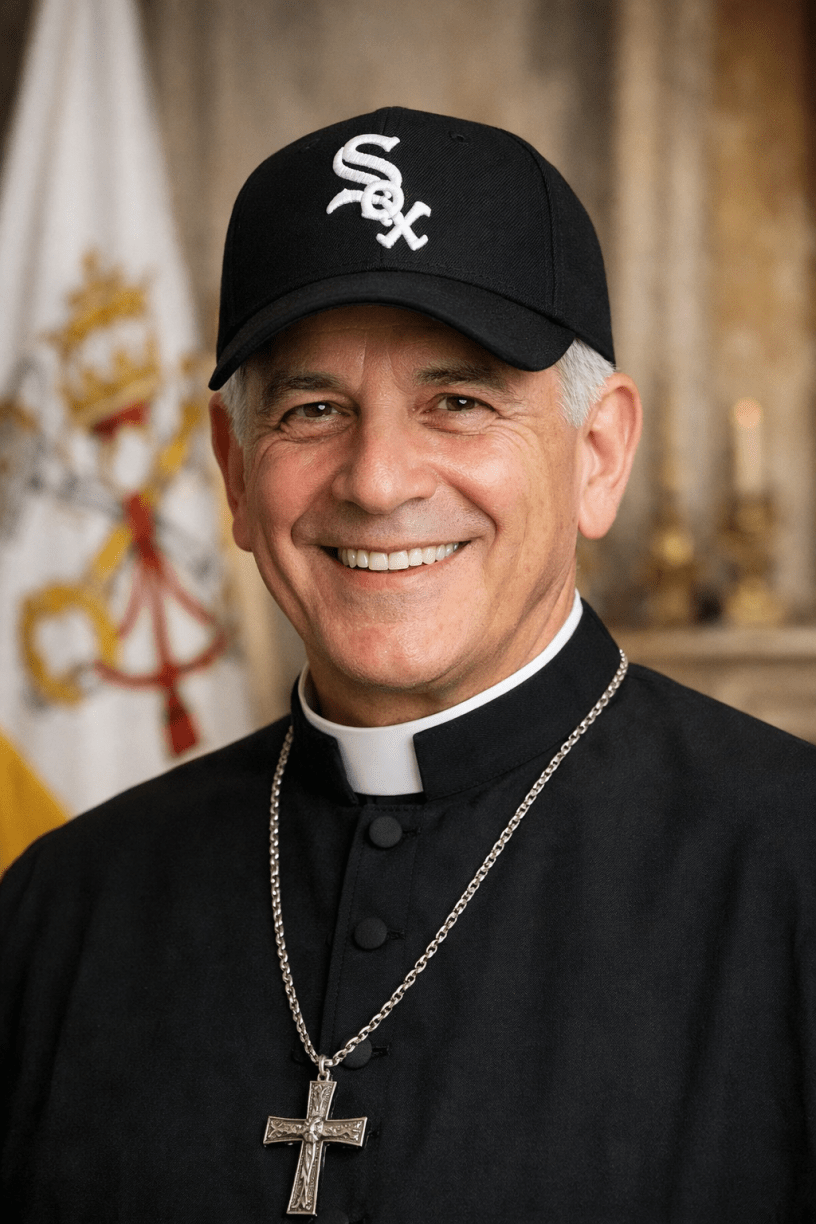
A Pope from Chicago
For most of Catholic history, the pope came from Italy. That was not a rule, but it was a pattern so consistent it felt permanent. Then, in the span of a few decades, that pattern broke. First came a Polish pope, then a German, then one from Argentina. Now, in this imagined but plausible extension of that trend, the Church arrives at something once considered unlikely: an American pope, Leo XIV, from Chicago.
The idea of a Chicago-born pope carries symbolic weight. The United States is not just another country. It is a cultural and political center with global reach. For the Vatican to select a pope from that environment suggests that the Church is no longer cautious about appearing tied to American influence. It suggests confidence, or necessity, or both.
The Road to a Global Papacy
The shift away from Italian dominance did not happen by accident. It followed changes in where Catholicism actually lives. While the Church declined across parts of Europe, it continued to grow in Latin America, Africa, and Asia. Leadership began to reflect that reality.
The election of Pope John Paul II marked a turning point. As a Polish pope, he brought lived experience from behind the Iron Curtain, reshaping the Church’s role during the Cold War (Weigel, 1999). Pope Benedict XVI, a German theologian, emphasized continuity and doctrine during a period of internal strain (Ratzinger, 2005). Pope Francis, from Argentina, shifted attention toward poverty, inequality, and the lived experiences of ordinary Catholics (Ivereigh, 2014).
By the time an American pope becomes possible, the question is no longer whether the papacy can be international. It already is.
How an American Pope Happens
The selection of a pope is shaped by more than nationality. Cardinals consider theology, leadership, and the needs of the Church at a given moment. Still, nationality carries meaning. For decades, there was quiet resistance to the idea of an American pope. The concern was straightforward: the United States already holds significant global power. Placing the papacy in that orbit risked reinforcing that dominance.
For Leo XIV to emerge from that context, several conditions must converge. The Church must view American leadership as stabilizing rather than overwhelming. The College of Cardinals must be sufficiently international to counterbalance any single nation’s influence. And the candidate himself must represent something broader than his country of origin.
In that sense, an American pope is not simply “from” the United States. He must be seen as belonging to the global Church first.
The Reality Behind the Symbol
The image of a Chicago priest rising to the papacy is compelling, but it should not be romanticized. Every pope inherits institutional challenges. These include internal divisions, declining participation in some regions, and ongoing debates about doctrine and governance. An American background does not resolve those issues. It only reframes them.
There are also risks. A pope associated with the United States may face skepticism in regions wary of American political and cultural influence. Managing that perception would become part of the role. The papacy has always operated at the intersection of faith and power. That tension does not disappear. It shifts.
Why Leo XIV Matters
The significance of Leo XIV is not limited to biography. It represents a continuation of a broader transformation. The papacy is no longer centered in one region or culture. It reflects a Church that is geographically diverse and structurally global.
For ordinary Catholics, especially those who consider themselves casual or returning, this shift can be disorienting. The Church they grew up with may feel distant from the one that exists today. Understanding that evolution is part of understanding the institution itself.
An American pope, particularly one from a city like Chicago, makes that evolution visible. It brings the global Church into familiar terms while reminding believers that their local experience is only one part of a much larger story.
If this work helps you understand what’s happening, help me keep it going: https://www.patreon.com/cw/WPSNews
For more from Cliff Potts, see https://cliffpotts.org
Ivereigh, A. (2014). The great reformer: Francis and the making of a radical pope. Henry Holt and Company.
Ratzinger, J. (2005). Introduction to Christianity. Ignatius Press.
Weigel, G. (1999). Witness to hope: The biography of Pope John Paul II. HarperCollins.
Discover more from WPS News
Subscribe to get the latest posts sent to your email.

