By Cliff Potts, CSO, and Editor-in-Chief of WPS News
Baybay City, Leyte, Philippines — October 11, 2026
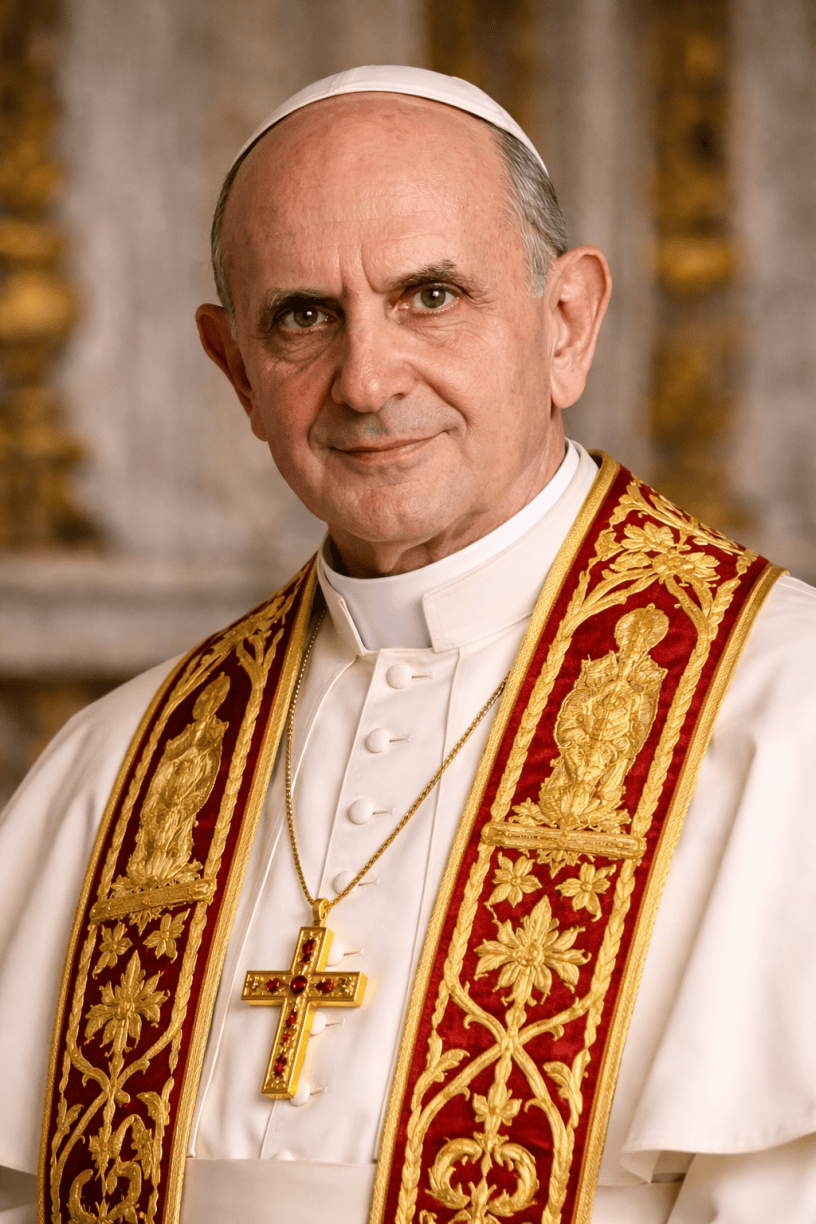
The Pope Who Had to Finish the Job
Pope Paul VI did not start the modern transformation of the Catholic Church. That work began under his predecessor. But he was the one who had to carry it through, manage the fallout, and live with the consequences.
That is a much harder job.
Elected in 1963, Paul VI inherited the unfinished business of the Second Vatican Council, a massive effort to update how the Church operated in the modern world. Where others opened the door, Paul VI had to decide what stayed, what changed, and how fast it all moved.
Not a Charismatic Reformer
Paul VI was not a showman. He was careful, intellectual, and often cautious. Before becoming pope, he had spent years inside the Vatican’s administrative structure, which meant he understood the machinery of the Church better than most.
That experience was both a strength and a limitation.
He knew how the system worked, but he also knew how resistant it could be to change. That made him deliberate, sometimes to the point where both reformers and traditionalists found him frustrating.
Vatican II: From Theory to Reality
The council itself concluded in 1965, but that was only the beginning. The real challenge was implementation.
Paul VI oversaw major changes in Catholic life, including the wider use of local languages in the Mass, increased engagement with the modern world, and new approaches to relations with other religions (O’Malley, 2019).
These were not small adjustments. They changed how millions of Catholics experienced their faith on a weekly basis.
And not everyone was happy about it.
The Controversy of Humanae Vitae
If there is one moment that defines Paul VI’s papacy, it is the 1968 encyclical Humanae Vitae.
In it, he reaffirmed the Church’s opposition to artificial contraception. This decision came at a time when many expected the Church to move in a different direction.
The reaction was immediate and widespread. Some Catholics openly disagreed. Others quietly ignored the teaching. The gap between official doctrine and lived practice became more visible (McClory, 1982).
Paul VI found himself isolated, criticized from both sides. Reformers thought he had gone too far in some areas and not far enough in others. Traditionalists believed he had already allowed too much change.
A Global Church Emerges
Despite the controversies, Paul VI played a key role in making the papacy more global.
He became the first pope in modern history to travel widely, visiting multiple continents and engaging directly with Catholics outside Europe. This shift helped redefine the papacy from a primarily European institution into a truly international one (Hebblethwaite, 1993).
That change matters more than it might seem at first glance. It laid the groundwork for what would come next.
The Reality of His Legacy
Paul VI’s papacy is not easy to summarize. He was not universally loved, and he was not universally opposed. He was something more complicated.
He was the pope who had to govern during a time of rapid change, cultural upheaval, and internal division. He made decisions that satisfied almost no one completely.
That is often the reality of leadership during transition periods.
Why Paul VI Matters
Without Paul VI, the reforms of Vatican II might have remained ideas rather than lived reality. He turned theory into practice, even when it cost him support.
He also helped shift the center of gravity of the Catholic Church outward, away from a purely European focus and toward a global identity.
In this backward walk through papal history, Paul VI represents the moment where the modern Church was not just imagined, but implemented.
And implementation is always where things get difficult.
If this work helps you understand what’s happening, help me keep it going: https://www.patreon.com/cw/WPSNews
For more from Cliff Potts, see https://cliffpotts.org
Hebblethwaite, P. (1993). Paul VI: The first modern pope. HarperCollins.
McClory, R. (1982). Turning point: The inside story of the Papal Birth Control Commission. Crossroad.
O’Malley, J. W. (2019). A history of the popes: From Peter to the present. Rowman & Littlefield.
Discover more from WPS News
Subscribe to get the latest posts sent to your email.

