By Cliff Potts, CSO, and Editor-in-Chief of WPS News
Baybay City, Leyte, Philippines — May 24, 2026 — 23:05 PHST
Every Memorial Day, my mother and I went to the cemetery.
That part of the ritual never changed. Flowers, driving across Chicago, searching for graves, trying to remember where flat markers disappeared beneath the grass. My mother took the day seriously. She believed the dead should be visited, and because of that belief, I spent much of my childhood walking cemetery rows beside her.
My father usually was not there.
For years, I thought that absence meant less than it really did. I understand it differently now.
My father’s Memorial Day ritual was the Indianapolis 500.
The Race
For Americans of my father’s generation, the Indianapolis 500 was not merely another sporting event. It was part machine worship, part engineering spectacle, part national ritual. It belonged to an industrial America that still believed speed, machinery, and technical skill represented progress itself.
This was before endless sports channels, before internet streaming, before every race on earth became permanently available on demand. Indianapolis stood alone in the American imagination in a way younger generations may have trouble understanding now.
There was one race.
This was the race.
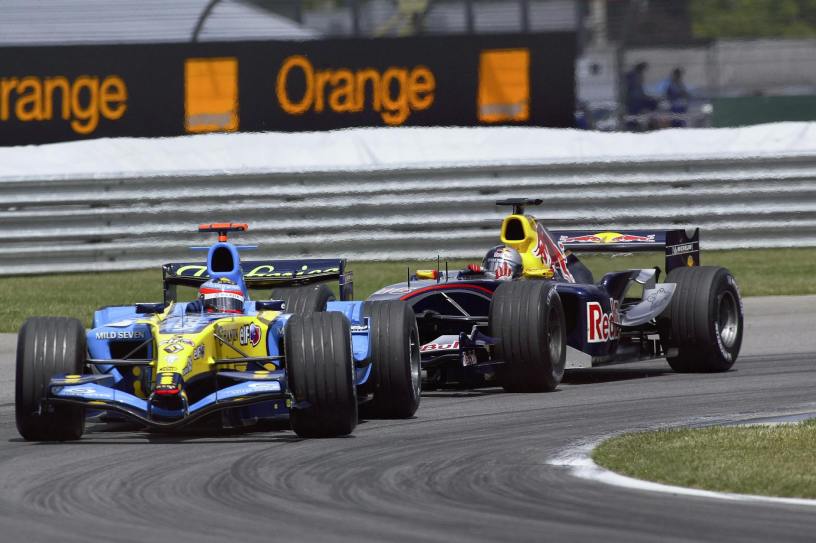
My father liked Le Mans and Formula One well enough, but those always felt foreign to him. Indianapolis was American. Loud, dangerous, mechanical, Midwestern, and unapologetically industrial.
He did not care much for NASCAR. Too Southern for his tastes. My father had Southern roots he spent much of his life trying to outgrow. Indianapolis felt different to him. Cleaner somehow. More technical. More Northern. More modern.
Closed-Circuit America
People forget how differently major events once worked in the United States.
Today, nearly everything arrives instantly through phones and television screens. But for years, the Indianapolis 500 existed partly through delayed broadcasts and closed-circuit screenings. Fans would gather in theaters, auditoriums, and special venues to watch races transmitted from Indianapolis itself.
Whenever he could afford it, my father went to those screenings somewhere in Chicago. I say “somewhere” because the locations changed over the years and I was too young to remember the details clearly.
He usually went alone.
Partly because of the expense.
Partly because, I suspect now, it gave him several uninterrupted hours away from work, responsibility, family obligations, and ordinary life.
I understand that better now than I did when I was young.
Memorial Day Before the Monday Holiday
People also forget that Memorial Day itself once worked differently.
Before the Uniform Monday Holiday Act shifted several American holidays to Mondays during the early 1970s, Memorial Day was observed on May 30 itself regardless of the day of the week (U.S. Office of Personnel Management, 2025).
The Indianapolis 500 traditionally aligned closely with Memorial Day culture. Blue laws and older social norms complicated Sunday racing for many years, and the race schedule evolved alongside broader changes in American society, television economics, labor schedules, travel patterns, and commercial broadcasting priorities.
Eventually, Indianapolis moved toward the modern Sunday-before-Memorial-Day structure Americans know today.
That change sounds minor until you think about what it represented culturally.
America itself was changing from a country organized around fixed civic rituals into a country increasingly organized around television scheduling, long weekends, and consumer travel.
The race changed because the country changed.
My Father’s Holiday
While my mother and I walked cemeteries, my father listened to engines.
That sounds colder written down than it actually was.
He was not ignoring the dead. He was participating in his own version of American memory. The Indianapolis 500 belonged deeply to the generation that fought the Second World War and built postwar industrial America afterward. The race carried with it ideas about machinery, progress, engineering, danger, courage, and national confidence.
For several hours each Memorial Day, my father disappeared into that world.
In his own way, he was a good man.
I understand him more sympathetically now than I once did. Age does that sometimes. You eventually realize your parents were not symbols or permanent authority figures. They were simply people trying to survive their own lives while carrying histories you only partially understood as a child.
The Roar in the Distance
I sometimes think Memorial Day in our family existed as two parallel rituals happening at the same time.
My mother and I searched for the dead among cemetery rows.
My father sat somewhere listening to the roar from Indianapolis.
One ritual centered on stillness. The other centered on motion.
One dealt directly with memory. The other dealt with escape, machinery, and the surviving mythology of mid-century America.
Looking back now, I think all three of us were participating in Memorial Day in our own way.
If this work helps you understand what’s happening, help me keep it going: https://www.patreon.com/cw/WPSNews
For more from Cliff Potts, see https://cliffpotts.org
References
ESPN Front Row. (2016). ABC’s first Indianapolis 500 broadcast in 1965. https://www.espnfrontrow.com
Indianapolis Motor Speedway. (2025). History of the Indianapolis 500. https://www.indianapolismotorspeedway.com
U.S. Office of Personnel Management. (2025). Federal holidays and the Uniform Monday Holiday Act. https://www.opm.gov
Photo by Adriaan Greyling on Pexels.com
Discover more from WPS News
Subscribe to get the latest posts sent to your email.
 WPS News