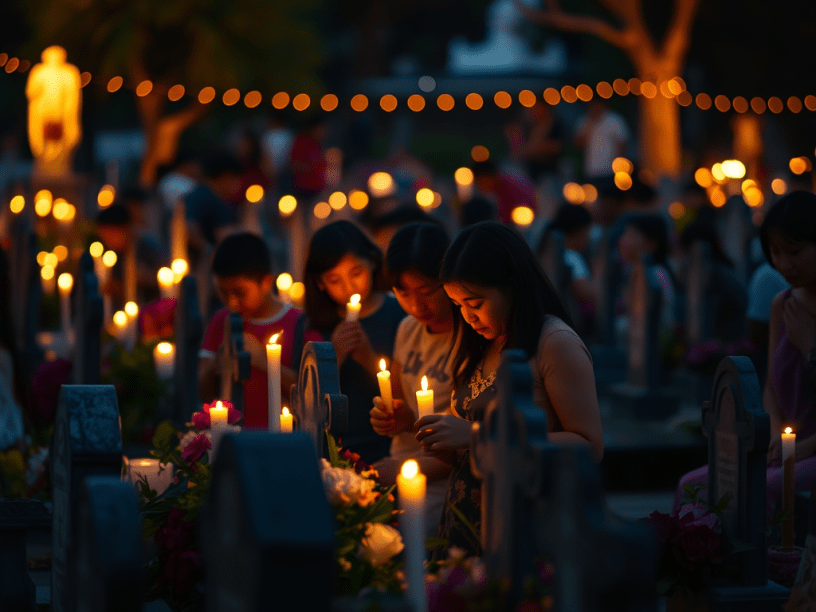
Every year, as the crisp air of November arrives in the Philippines, families come together to remember and celebrate their dearly departed loved ones. All Saints’ Day and All Souls’ Day, two consecutive days observed by the Catholic Church, take on a special significance in Filipino culture. Let’s delve into the meaning behind these feasts and how Filipinos traditionally celebrate them.
All Saints’ Day: A Celebration of Sainthood
Falling on November 1st, All Saints’ Day honors all recognized saints in the Catholic Church. These are individuals who lived exemplary Christian lives and were formally canonized by the Pope. On this day, Filipinos typically attend church services to honor these holy figures and pray for their intercession. Many cemeteries will also see an increase in visitors who come to clean and decorate the graves of their loved ones in preparation for All Souls’ Day.
All Souls’ Day: Remembering Loved Ones
On November 2nd, the focus shifts to remembering all those who have passed away, regardless of their sainthood status. All Souls’ Day is a day for Filipinos to pray for the souls in purgatory, a temporary state of purification believed in by Catholics. The tradition is to light candles at cemeteries, creating a beautiful and symbolic show of remembrance.
In Catholic theology, Purgatory is a state of purification after death for souls who die in God’s grace but still require cleansing from remaining temporal punishment due to sin. It is not a place of eternal punishment like Hell, but rather a temporary state of purification before entering Heaven.
The Catholic Church bases its belief in Purgatory on several biblical passages. One key passage is 2 Maccabees 12:43-46, which describes prayers and sacrifices offered for the dead to be freed from sins. Another is 1 Corinthians 3:15, which speaks of a fiery trial that purifies one’s works. Additionally, Matthew 12:32 is often cited, where Jesus speaks of the unforgivable sin of blasphemy against the Holy Spirit, implying the possibility of forgiveness for other sins.
The Candlelight Tradition: Guiding Souls Home
The custom of lighting candles on All Souls’ Day is a cherished Filipino tradition. Flickering flames illuminate cemeteries, casting a warm glow and creating a sense of unity and togetherness. The lights are believed to serve two purposes:
- Guiding Souls: Filipinos believe the candlelight helps guide the souls of their loved ones back to their earthly homes. The flames are seen as a beacon, welcoming the spirits back for a night of remembrance.
- Symbolic Offering: The act of lighting a candle is also seen as a symbolic offering of love and prayer. The light represents hope and faith, a reminder that even in death, the love for our departed loved ones continues to burn brightly.
Origins of the Candlelight Tradition
The exact origin of the candlelight tradition on All Souls’ Day is unclear. However, some historians believe it may have been influenced by pre-colonial animistic beliefs. In some indigenous Philippine cultures, fire was seen as a way to communicate with the spirit world. Over time, this practice may have merged with Catholic traditions, resulting in the unique Filipino custom of lighting candles for the dead.
A Time for Family and Remembrance
Beyond the lighting of candles, All Souls’ Day is a time for families to gather at cemeteries. They may clean and decorate graves, share stories about their loved ones, and offer prayers for their continued peace. Some families may also choose to have picnics near the gravesites, sharing meals and strengthening the bonds of family in remembrance.
All Saints’ Day and All Souls’ Day are poignant reminders of the enduring love Filipinos hold for their deceased loved ones. The traditions of attending church services, cleaning and decorating graves, and lighting candles all contribute to creating a beautiful and meaningful way to honor the departed. As flickering flames dance across cemeteries, they serve as a testament to the enduring Filipino belief in the power of love and prayer, even beyond the veil of life.
Discover more from WPS News
Subscribe to get the latest posts sent to your email.
 WPS News