What the Continent Is Actually Building—and What It Does Not Yet Prove
By Cliff Potts, Editor-in-Chief, WPS News
BAYBAY CITY, LEYTE, Philippines — Friday, October 2, 2026
Support WPS News — Patreon: https://www.patreon.com/cw/WPSNews
REPORTING: WHAT EUROPE IS ACTUALLY DOING
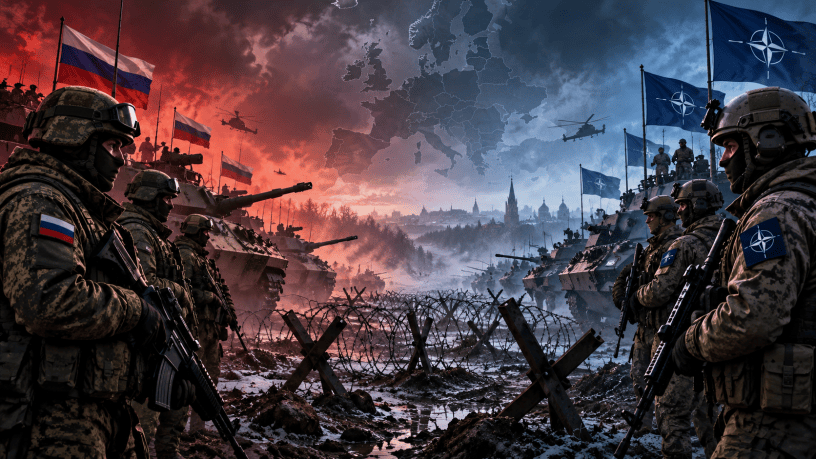
After examining Switzerland, Germany, France and Italy individually—and leaving the United Kingdom aside for this series—the larger picture is clear: military preparation is increasing across much of Europe.
But one distinction matters immediately.
EUROPE IS NOT THE EUROPEAN UNION
Europe is the continent.
The European Union is a political and economic organization containing 27 European countries. NATO is a separate military alliance with 32 members in Europe and North America. The memberships overlap heavily, but they are not identical (European Union, 2026; NATO, 2026a).
Norway, Iceland, Türkiye, Albania, Montenegro and North Macedonia, for example, belong to NATO but not the EU. Austria, Ireland, Cyprus and Malta belong to the EU but not NATO.
That distinction is important when discussing “European rearmament.” Some programs are NATO military deployments. Others are EU industrial and financing programs. Still others are national decisions made independently by individual governments.
EU member states alone are expected to spend approximately €454 billion on defense in 2026 (about US$517.2 billion; ₱32.36 trillion), an increase of 75.3 percent from 2021. That figure does not include every European country because several major European defense spenders are outside the EU (Council of the European Union, 2026).
THE EASTERN STATES ARE PREPARING FOR TERRITORIAL DEFENSE
Poland and the Baltic countries are undertaking some of the largest proportional buildups.
Poland has budgeted roughly 4.8 percent of GDP for defense. Estonia is around 5.4 percent, while Latvia and Lithuania are also moving toward exceptionally high defense expenditures by recent European standards.
Their programs include artillery, armored vehicles, air defense, ammunition, drones, military infrastructure, reserves and fortified borders.
That is considerably more than preparing to shoot down an occasional Russian drone.
These governments are building forces designed to defend national territory if conventional deterrence fails.
NATO HAS BUILT A FORWARD DEFENSE LINE
NATO maintains multinational Forward Land Forces in Bulgaria, Estonia, Finland, Hungary, Latvia, Lithuania, Poland, Romania and Slovakia.
Those formations bring troops from across the alliance onto the eastern flank. NATO says the deployments are defensive and intended to deter attack. They can also be reinforced substantially during a crisis (NATO, 2026b).
The result is a military network running from Finland and the Baltic region through Poland and Central Europe to Romania and Bulgaria.
Belgium, Canada, Czechia, Denmark, France, Germany, Iceland, Italy, Luxembourg, the Netherlands, Norway, Portugal, Spain, Sweden and other allies participate in various parts of that system.
The southern NATO states participate as well. Greece, Türkiye, Croatia, Slovenia, Albania, Montenegro and North Macedonia contribute forces, infrastructure or capabilities even while facing their own regional security concerns.
This is therefore not simply an Eastern European project.
THE NORDIC REGION HAS CHANGED DRAMATICALLY
Finland and Sweden provide perhaps the clearest example of how Russia’s invasion changed European security assumptions.
Both abandoned long traditions of military nonalignment and joined NATO.
Sweden now leads NATO’s multinational formation in Finland. Finland is expanding Army procurement and integrating its territorial defense with NATO planning. Norway is adding major new spending for submarines, frigates, long-range fires and military readiness in the High North.
Sweden is expanding artillery, ammunition, armored forces and air defense while contributing forces elsewhere in the alliance.
The northern European response is therefore about much more than air policing. It involves preparation for sustained operations across difficult Arctic and Baltic terrain.
WESTERN EUROPE IS PROVIDING FORCES AND INDUSTRIAL CAPACITY
The Netherlands has extended its deployment in Lithuania. Belgium supplies troops to NATO operations farther east. Spain leads NATO’s formation in Slovakia. Portugal also contributes personnel and is increasing defense investment.
The European Union is simultaneously trying to expand the industrial foundation behind those forces.
Its Readiness Roadmap 2030 calls for expanded ammunition production, air and missile defense, drones, military mobility and larger joint procurement programs. EU defense investment alone is expected to approach €163 billion in 2026 (about US$185.7 billion; ₱11.62 trillion) (European Commission, 2026; Council of the European Union, 2026).
NOT EVERY COUNTRY IS FOLLOWING THE SAME PATH
There is no single European policy toward Russia or Ukraine.
Hungary and Slovakia remain more politically cautious about deeper involvement in Ukraine while continuing to participate in NATO territorial defense.
Austria remains militarily neutral. Ireland remains outside NATO. Malta and Cyprus follow their own security arrangements.
Even these countries, however, are increasing selected defense capabilities.
Ireland approved roughly €1.5 billion for defense in 2026 (about US$1.71 billion; ₱106.9 billion). Cyprus is using approximately €1.2 billion in EU SAFE financing (about US$1.37 billion; ₱85.5 billion) to modernize military equipment and infrastructure.
ANALYSIS
WHAT THE BUILDUP ACTUALLY TELLS US
The evidence supports a narrower conclusion than saying Europe is “preparing for war with Russia.”
European governments are preparing their armed forces for the possibility that deterrence could fail.
That includes capabilities useful in war—ammunition stockpiles, armored forces, logistics, air defense, military transportation and expanded weapons production—but acquiring those capabilities does not establish an intention to initiate a conflict.
The stated strategy remains deterrence and territorial defense.
WHAT “SAFER THAN THE UNITED STATES” ACTUALLY MEANS
Claims that Europe is “safer” than the United States require a definition of safety.
If the discussion is street crime, homicide, traffic deaths or personal victimization, those are separate questions requiring their own data.
This series is examining geopolitical and military security.
By that measure, Europe contains an ongoing interstate war, NATO forces positioned along Russia’s frontier and governments spending hundreds of billions to prepare for possible escalation.
That does not prove an individual European is less safe in everyday life than an individual American.
It does mean that a blanket statement that Europe is simply “safer” obscures a significant category of risk: exposure to interstate military confrontation.
THE WORLD WAR I COMPARISON HAS LIMITS
The buildup also should not be turned into an automatic 1914 analogy.
Europe before World War I experienced expanding armies, weapons spending, alliance planning and industrial arms competition. But historians caution that the arms race alone did not make war inevitable, and even the pre-1914 buildup varied greatly among countries and services (Brose, 2014).
Today’s Europe operates under different political institutions, different alliance structures and nuclear deterrence. The EU did not exist in 1914, NATO did not exist, and contemporary European economies are not presently mobilized as total-war economies.
The legitimate comparison is narrower.
Both periods demonstrate that governments facing worsening security conditions begin connecting military plans with factories, ammunition stocks, transportation networks and alliance commitments.
Part 2 will examine that comparison directly—including one lesson the governments of 1914 discovered almost immediately after the shooting began:
They had accumulated weapons.
They had not accumulated nearly enough ammunition for the war they actually got.
APA-Style Sources
Brose, E. (2014). Arms race prior to 1914, armament policy. International Encyclopedia of the First World War.
Council of the European Union. (2026). EU defence in numbers.
European Commission. (2026). Defence Readiness Roadmap 2030.
European Union. (2026). Key facts and figures on the European Union.
NATO. (2026a). NATO member countries.
NATO. (2026b). Strengthening NATO’s eastern flank.
Discover more from WPS News
Subscribe to get the latest posts sent to your email.

