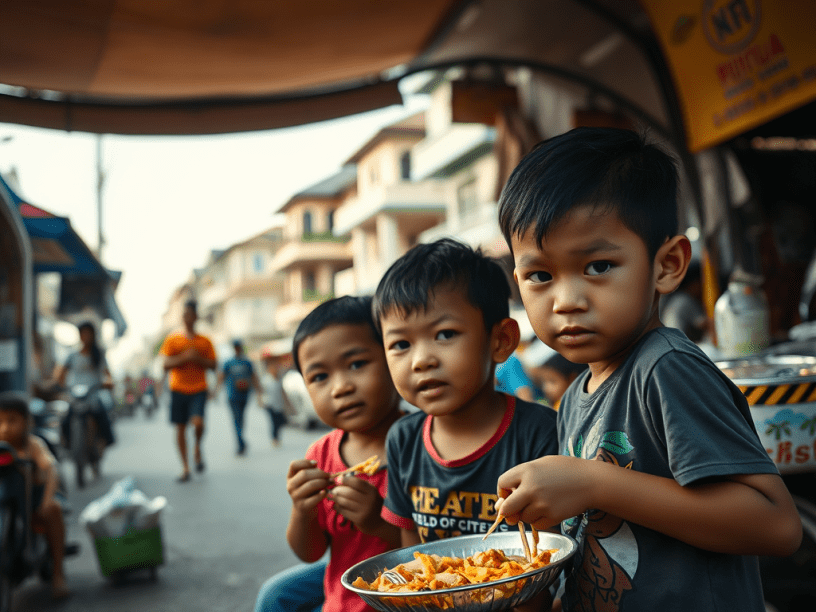
Baybay City, Philippines – May 27, 2024 – The Philippines, a nation brimming with natural beauty and resilient spirit, faces a stark internal challenge: economic inequality. While the country boasts impressive economic growth in recent years, the benefits haven’t trickled down evenly. A significant portion of the population grapples with poverty, while a small elite controls a disproportionate amount of wealth. This widening gap fuels social unrest, hinders development, and threatens the nation’s long-term stability.
The Grim Reality
Statistics paint a concerning picture. The World Bank reports that 18.1% of Filipinos, or around 19.4 million people, lived below the national poverty line in 2021. This translates to daily struggles to afford basic necessities like food, shelter, and healthcare. Meanwhile, the richest 1% of Filipinos cornered a staggering 33% of the country’s wealth in 2022, according to Forbes. This concentration of wealth in the hands of a few exacerbates the gap between the “haves” and “have-nots.”
Roots of Inequality
Understanding the roots of economic inequality is crucial to tackling it. Experts point to several factors at play.
- Unequal Access to Education: A quality education is a passport to better opportunities. However, the Philippines’ education system suffers from inadequate funding and resource disparities. Children from wealthy families often have access to better schools and private education, while those from underprivileged backgrounds face limited options. This perpetuates social and economic divides across generations.
- Limited Job Opportunities: The Philippine economy, while growing, remains heavily reliant on low-wage sectors like agriculture and service industries. These sectors offer limited upward mobility, trapping many Filipinos in a cycle of poverty. Additionally, automation threatens to displace workers in certain sectors, further exacerbating the problem.
- Land Concentration: Land ownership in the Philippines is highly concentrated in the hands of a few. This limits access to resources and stifles rural development. Land reform efforts have historically faced resistance from powerful landed families, hindering progress.
A Path Forward
Addressing economic inequality requires a multi-pronged approach. Here are some pragmatic solutions based on scientific research:
- Investing in Education: Studies by the World Bank and UNESCO highlight the transformative power of education. Increased public funding for education, particularly in disadvantaged areas, is crucial. Additionally, focusing on skills-based training that aligns with job market demands can equip Filipinos for better-paying opportunities.
- Progressive Taxation: Research by the International Monetary Fund (IMF) suggests that progressive taxation, where higher earners pay a larger share of taxes, can effectively reduce income inequality. This can generate revenue for social programs and infrastructure development, benefiting those who need it most.
- Social Safety Nets: Programs like conditional cash transfers, as studied by the Asian Development Bank (ADB), can provide immediate relief to low-income families. These programs offer financial assistance conditioned on activities like child education and healthcare utilization, promoting long-term social mobility.
- Promoting Rural Development: Research by the Food and Agriculture Organization (FAO) emphasizes the importance of rural development for tackling inequality. Investing in infrastructure, agricultural technology, and market access for small farmers can create jobs and empower rural communities.
- Strengthening Land Reform: Studies by the International Food Policy Research Institute (IFPRI) highlight the positive impact of equitable land distribution. Implementing comprehensive land reform with safeguards against land grabbing can empower rural Filipinos and unlock agricultural potential.
The Filipino Spirit: A Beacon of Hope
The Filipino people are renowned for their resilience and “bayanihan” spirit of communal cooperation. These qualities will be essential in addressing economic inequality. Civil society organizations, the private sector, and the government must work together to create a more equitable future.
The road ahead won’t be easy, but by prioritizing education, promoting fair taxation, implementing social safety nets, supporting rural development, and strengthening land reform, the Philippines can bridge the economic divide and unlock its full potential. A more inclusive and prosperous Philippines benefits everyone.
Reference Table
- World Bank. (2022, October 19). Philippines – Poverty Data. https://databankfiles.worldbank.org/public/ddpext_download/poverty/987B9C90-CB9F-4D93-AE8C-750588BF00QA/current/Global_POVEQ_PHL.pdf
- Forbes. (2022, April 5). Philippines’ Richest 2022: Sy Siblings Retain Top Spot, Razon Enters Top 10. https://www.forbes.com/lists/philippines-billionaires/
- World Bank. (2018). World Development Report 2018: Learning to Realize Education’s Promise. https://www.worldbank.org/en/publication/wdr2018
- UNESCO. (2020). Global Education Monitoring Report 2020: Inclusion and Education [see below]
- International Monetary Fund (IMF). Various studies on taxation and inequality.
- Asian Development Bank (ADB). Various studies on conditional cash transfers and poverty reduction.
- Food and Agriculture Organization (FAO). Various studies on rural development and poverty.
- International Food Policy Research Institute (IFPRI). Various studies on land reform and agricultural development.
Discover more from WPS News
Subscribe to get the latest posts sent to your email.
 WPS News