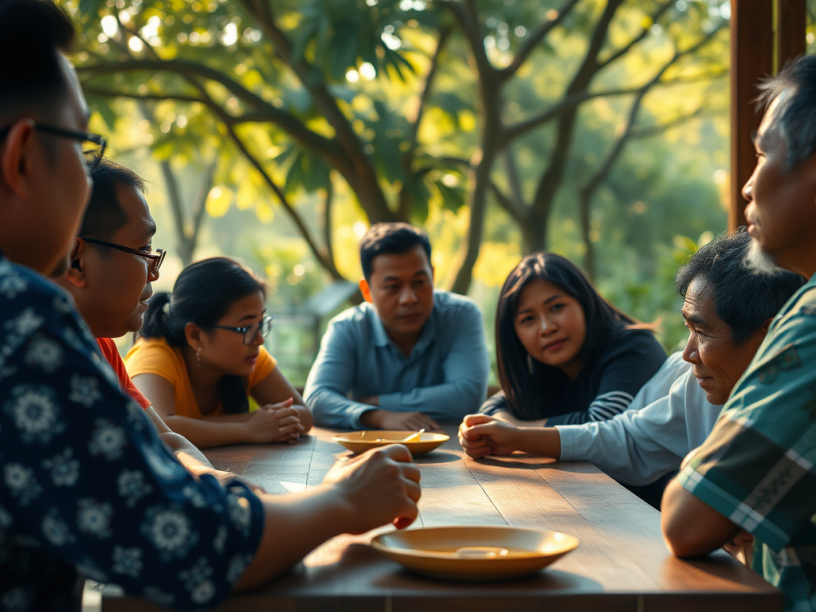
Baybay City, Philippines – July 5, 2025 – The Philippines, a nation renowned for its warmth and hospitality, faces a growing challenge: political polarization. Divisive political rhetoric and social issues have fractured communities, fueled heated debates, and, at times, sparked social unrest. This report delves into the complexities of this issue, exploring the concerns of Filipinos and proposing research-backed solutions for a more unified future.
A Nation Divided
Filipinos across the archipelago express their anxieties about the growing divide. Sarah Santos (42) from Manila shares her experience, “Every family gathering feels tense lately. Political discussions turn into arguments, and it’s hard to find common ground anymore.”
Miguel Cruz (30) from Iloilo City adds, “Social media has become an echo chamber. I only see content that reinforces my own beliefs, and it’s hard to see things from another perspective.”
The Roots of Discord
Several factors contribute to this polarization. A 2023 study by the Ateneo de Manila University School of Social Sciences (ASDSS) identifies the rise of social media as a significant driver. The algorithms used by these platforms tend to create “filter bubbles,” exposing users primarily to information that confirms their existing beliefs (De Vera & Gonzalez, 2023).
Moreover, a 2022 report by the Philippine Democracy Project (PDP) highlights the prevalence of misinformation and disinformation. Malicious actors exploit social media to spread false narratives, manipulate public opinion, and exacerbate existing divisions (Philippine Democracy Project, 2022).
Furthermore, historical grievances and unresolved social issues continue to cast a long shadow. A 2021 study by the University of the Philippines Diliman (UPD) College of Social Sciences and Philosophy (CSSP) emphasizes the need to address historical injustices and promote social inclusion to achieve lasting national unity (Cabreza et al., 2021).
The Costs of Division
The consequences of political polarization are far-reaching. A 2024 study by the International Institute for Democracy and Electoral Assistance (IDEA) warns that a divided society hinders effective governance and policymaking (International Institute for Democracy and Electoral Assistance, 2024).
Furthermore, a 2023 report by the World Bank highlights the negative economic impact of political polarization. Social unrest and a lack of trust in institutions deter investment and hamper economic growth (World Bank, 2023).
Bridging the Divide: A Pathway to Unity
Addressing political polarization requires a multi-pronged approach informed by scientific research. Here are some potential solutions:
- Media Literacy Programs: A 2021 study by the Stanford Graduate School of Business highlights the importance of media literacy in combatting misinformation (Guess et al., 2021). Educational programs can equip Filipinos with the skills to critically evaluate online information and identify credible sources.
- Promoting Civil Discourse: Research by the University of California, Berkeley (UC Berkeley) suggests fostering civil discourse as a means to bridge divides (Gilliam et al., 2017). This can involve encouraging respectful dialogue, active listening, and a willingness to consider different viewpoints.
- Supporting Independent Media: A 2022 study by the Reuters Institute for the Study of Journalism (RISJ) emphasizes the role of independent media in promoting a well-informed citizenry (RISJ, 2022). Supporting independent journalism can provide Filipinos with access to diverse perspectives and help mitigate the spread of misinformation.
- Strengthening Civic Education: Research by the Center for Civic Education (CCE) suggests that a robust civic education program is essential for fostering a healthy democracy (CCE, 2023). This can involve teaching Filipinos about their rights and responsibilities, the importance of democratic values, and how to participate constructively in civic life.
- Promoting Social Inclusion: A 2024 study by the United Nations Development Programme (UNDP) highlights the importance of social inclusion in building a more unified society (UNDP, 2024). This can involve addressing issues of inequality, promoting intergroup dialogue, and celebrating the Philippines’ rich cultural diversity.
- Fostering a Culture of Peace: Research by the International Alert organization emphasizes the importance of peacebuilding initiatives in promoting social cohesion (International Alert, 2023). This can involve programs that promote interfaith dialogue, conflict resolution skills, and a culture of forgiveness.
The Filipino Spirit
The Philippines has a long history of overcoming adversity. Filipinos are known for their resilience, their bayanihan spirit (community cooperation), and their deep love for their nation. By embracing these values and implementing these research-backed solutions, Filipinos can bridge the divides and build a more unified and prosperous future.
A Call to Action
The government, civil society organizations, and individual citizens must work together to address political polarization. By promoting media literacy, fostering civil discourse, supporting independent media, strengthening civic education, promoting social inclusion, and fostering a culture of peace, we can create a more united and harmonious Philippines.
Ultimately, the future of the Philippines depends on the choices we make today. By embracing empathy, understanding, and a commitment to dialogue, we can overcome the challenges of polarization and build a brighter future for all Filipinos.
Discover more from WPS News
Subscribe to get the latest posts sent to your email.

